Nothofagus procera
Oerst.
Rauli roble, Raoul
(c) Alexandra, some rights reserved (CC BY-NC)
(c) Alexandra, some rights reserved (CC BY-NC)

(c) Miguel A. Casado, some rights reserved (CC BY-NC)
What to Eat
Edible parts: Nuts
None known
Where to Find It
It grows in temperate regions. It suits a moist soil. The soil needs to be deep and well-drained.
Australia, Britain, Chile, Europe, South America*,
How to Identify
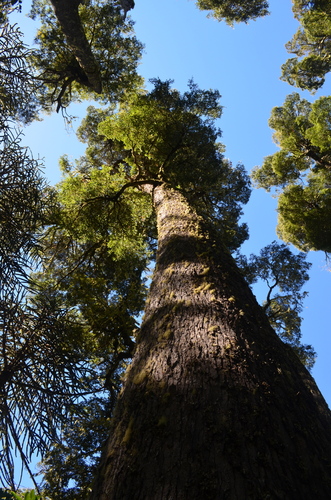
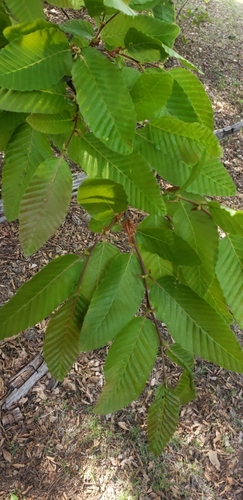
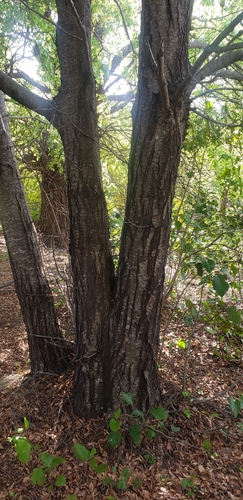
A conical shaped tree. It grows up to 14 m high. The leaves are alternate and prominently ridged between the veins. There are 15-18 pairs of veins. The leaves turn golden, red and pink in autumn. Female flowers are smaller, green and nut shaped.
How to Grow
Propagation: Seed is best sown as soon as it is ripe in a cool greenhouse or cold frame. Spring-sown seed requires 2–3 months stratification at 1–5°C. Prick seedlings into individual pots when large enough to handle and grow on in a lightly shaded position in a cold frame for at least their first winter. Plant out into permanent positions in late spring or early summer, after the last expected frosts. One source advises against letting the seed dry out, while another states it can be stored dry at 2°C for long periods. Cuttings of half-ripe wood, 6–10cm with a heel, taken July/August in a frame. Layering.
Medicinal Uses
None known
Other Uses
The wood is heavy, hard, durable, and of very good quality. It is widely used for furniture and cabinet making. It also makes an excellent fuel.
Wikipedia
Deciduous tree growing to 20m tall by 15m wide at a fast rate. Hardy to UK zone 7, not frost tender. Flowers in May with seeds ripening in September. Monoecious with wind-pollinated flowers. Grows in light, medium, or heavy soils with good drainage; tolerates mildly acid and neutral pH. Requires full sun and moist soil.
Production
It is fast growing.
Notes
There are about 35 Nothofagus species.
Names & Synonyms
References (5)
- Bidr. Egefam. 24. 1871; Kongel. Danske Vidensk. Selsk. Skr., Naturvidensk. Math. Afd. ser. 5, 9:354. 1873 - originally based on Fagus procera Poepp. & Endl., an illegitimate later homonym (ICBN Art. 53) (non Salisb.)
- Harris, E & J., 1983, Field Guide to the Trees and Shrubs of Britain. Reader's Digest. p 75
- Heywood, V.H., Brummitt, R.K., Culham, A., and Seberg, O. 2007, Flowering Plant Families of the World. Royal Botanical Gardens, Kew. p 227
- Ryan, S., 2008, Dicksonia. Rare Plants Manual. Hyland House. p 43
- Wickens, G.E., 1995, Edible Nuts. FAO Non-wood forest products. FAO, Rome. p 127