Lecythis lurida
(Miers) S. A. Mori
Castanha-jarana
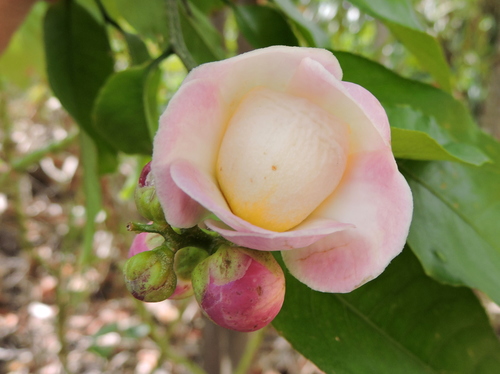
(c) Lucas C. Marinho, some rights reserved (CC BY-NC), uploaded by Lucas C. Marinho

(c) Gustavo Gonsioroski, some rights reserved (CC BY-NC), uploaded by Gustavo Gonsioroski

(c) Geison Mesquita, some rights reserved (CC BY-NC)
What to Eat
Edible parts: Nuts, Seeds
The nuts and seeds are edible.
Where to Find It
A tropical plant.
Brazil, South America,
How to Identify
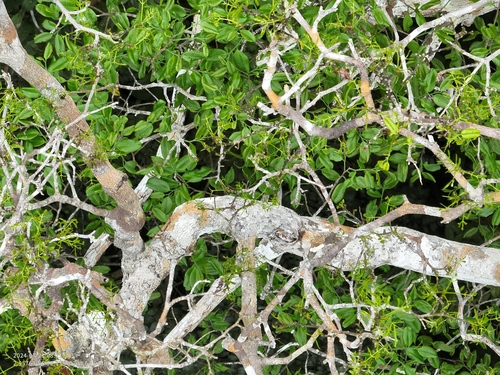
A tree. It grows 20-30 m tall. The trunk is straight and 20-40 cm across. The bark is deeply cracked.
How to Grow
Plants can be grown from fresh seeds.
Propagation: Seed - it has a very short viability and so is best sown as soon as it is ripe in a partially shaded position in individual containers. A germination rate in excess of 60% can be expected, with the seed sprouting within 20 - 40 days. The seedlings grow away slowly, but they should be ready to plant out 7 - 9 months later.
Other Uses
The fresh heartwood is light brown to blood-red in colour, becoming salmon-pink to brownish-red when dry; the 6 - 7cm wide band of sapwood is yellowish-cream. The texture is uniformly fine; the grain straight; lustre is low; there is no distinctive odour or taste. The wood is heavy, hard, with good mechanical properties and good durability even when exposed to the elements. In laboratory tests the wood is rated very durable in resistance to brown-rot and white-rot fungi, but is low in resistance to marine borers. The wood is easy to season, air drying rapidly with only slight warp and surface checking. It is moderately difficult to work because of its high density, but smooth surfaces are obtained in sawing, planing, and boring. No pronounced dulling of cutting edges was reported. The wood is used particularly for outdoor purposes requiring toughness such as railroad ties (which are reported to last 10 - 12 years on well-drained soil in Brazil), heavy construction, poles, stakes etc; it is also used in carpentry and, because of its outstanding shock resistance, should be suitable for handle stock and other applications requiring toughness.
Wikipedia
Source ↗Lecythis lurida is a species of woody plant in the family Lecythidaceae of the order Ericales. It is endemic to Brazil, where is known as castanha-jarana. It is found in the states of Amazonas, Bahia, Espírito Santo, Pará, Pernambuco, Piauí, Rio de Janeiro, and Sergipe. It is threatened by habitat loss.
Notes
There are 85 Eschweilera species.
Names & Synonyms
References (3)
- Menninger, E.A., 1977, Edible Nuts of the World. Horticultural Books. Florida p 35 (As Holopyxidium jarana)
- Useful Tropical Plants.
- Wickens, G.E., 1995, Edible Nuts. FAO Non-wood forest products. FAO, Rome. p 139 (As Eschweilera jarana)