Lecythis lanceolata
Poir.
Sapucaia-mirim

(c) Geovane Siqueira, some rights reserved (CC BY-NC), uploaded by Geovane Siqueira

(c) Geovane Siqueira, some rights reserved (CC BY-NC), uploaded by Geovane Siqueira

(c) Geovane Siqueira, some rights reserved (CC BY-NC), uploaded by Geovane Siqueira
What to Eat
Edible parts: Seeds, Nuts, Seeds - oil
Seed - raw. Rich in oil, they are similar to the Brazil nut in size and shape. When ripe, the ivory-white kernels have a delicious flavour with a soft, almost creamy texture. The seeds are said to be sweeter than Brazil nuts, with a superior flavour and easier to digest. A very nutritious seed, containing about 63% oil or fat and 20% protein. Seeds are about 5cm long and 2.5cm thick. The shell is thin and easily broken, when quite fresh, however, this shell is said to contain a poisonous principle. An edible oil can be obtained from the seed. Pale yellow in colour, suggestive of almond oil in both taste and smell.
Where to Find It
A tropical plant. It grows in forests near the Atlantic in Brazil.
Africa, Brazil*, Guiana, Mauritius, Puerto Rico, South America, West Indies,
How to Identify
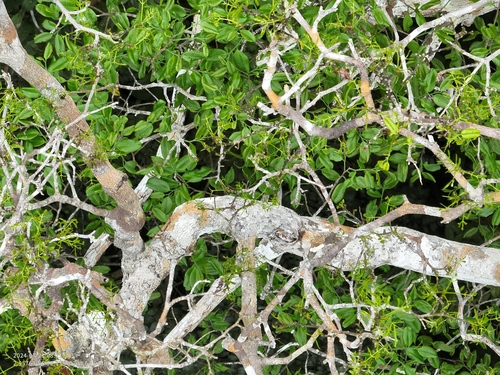
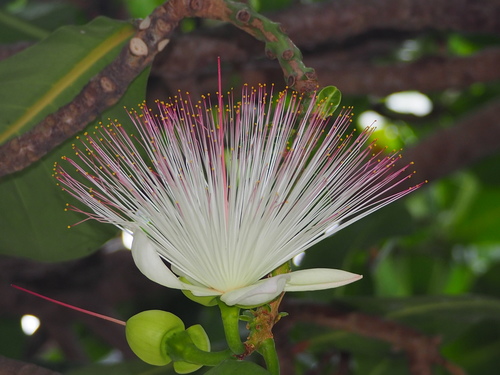
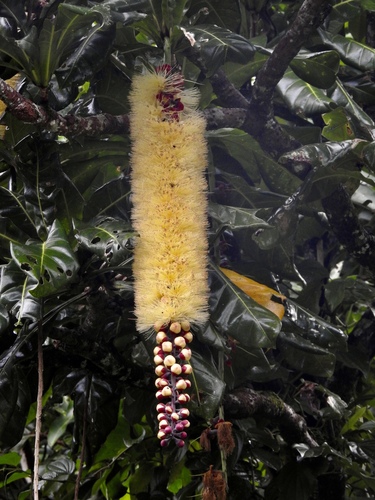
A tree. It grows 12-28 m high. The crown is round and dense. The trunk is upright and 50-70 cm across. The bark is thick and has deep cracks along it. The leaves have wavy edges. They are 3-9 cm long and 2-5 cm wide. The leaf stalks are 5-10 cm long and hairy. The flowers are in groups below the leaves. The flowering groups are 8-16 cm long. There are 2-25 flowers that are red. The fruit is hard and has a cap. It is 20 cm long by 20 cm wide and has 4-12 seeds. The aril is white.
How to Grow
Plants are grown from seed. The ripe fruit are put in the sun to open then the seeds planted fresh. Seeds germinate in 5-7 weeks. Seedlings are transplanted in 7-8 months.
Propagation: Seed - it only has a short period of viability so should be sown as soon as it is ripe. Sow the seed in individual containers in a lightly shaded position. Germination rates in excess of 50% can be expected, with the seeds sprouting within 5 - 7 weeks. Seedlings are ready for planting into their permanent positions when about 7 - 8 months old.
Other Uses
An oil obtained from the seed is used for making soap and as an illuminant. The hard wooden 'fruits' that contain the seeds are put to various domestic or kitchen uses. By cutting them away slightly at the stalk end they can be made to stand upright. The wood is medium-textured, tough, heavy, of good resistance to wood eating organisms. It is difficult to work, however, so it is not extensively used. It can be used for poles, fence posts, bridge structures, stakes, railway ties etc. We have no more specific information on the wood of this species. A general description of the wood from this genus is as follows:- The heartwood is light to dark salmon; the sapwood is creamy-yellow. The texture is medium fine and uniform; the grain fairly straight or slightly interlocked; lustre is mostly low but high in some species; there is no distinctive odour or taste. the wood is reported to be very durable upon exposure to both a white-rot and a brown-rot fungus confirming its reputation for high resistance to decay; it is also highly resistant to dry-wood termites and is reported to be moderately resistant to marine borer attack. It is rated as easy to moderately difficult to air season, depending on species; a slow to rapid drying rate is reported; warp and checking ranged from slight to moderate. The wood is moderately difficult to work because of its high density; however, surfaces obtained in planing, boring, sawing, and shaping were smooth and rated as good to excellent. Silica content varies with species and dulling of cutters is also variable. The wood is used for purposes such as heavy construction, ship keels and beams, railroad crossties, industrial flooring and other uses requiring high impact resistance (wagon wheels, tool handles), turnery.
Wikipedia
Source ↗Lecythis lanceolata is a species of woody plant in the family Lecythidaceae of the order Ericales. It is endemic to the Atlantic Forest ecoregion in southeast Brazil, where is known as sapucaia-mirim. It was described by Jean Louis Marie Poiret in 1804.
Other Information
The nuts are not particularly popular.
Notes
There are 26 Lecythis species.
Names & Synonyms
Sapucaia-miuda, Sapucaia, Sapucaua-branca, Sapucaiu
References (11)
- Fouqué, A. 1972. Espèces fruitières d'Amérique tropicale. Institut français de recherches fruitierès outre-mer (As Lecythis pohlii)
- Grandtner, M. M. & Chevrette, J., 2013, Dictionary of Trees, Volume 2: South America: Nomenclature, Taxonomy and Ecology. Academic Press p 345
- Kermath, B. M., et al, 2014, Food Plants in the Americas: A survey of the domesticated, cultivated and wild plants used for Human food in North, Central and South America and the Caribbean. On line draft. p 474
- Kew Plants of the World Online
- Lorenzi, H., 2002, Brazilian Trees. A Guide to the Identification and Cultivation of Brazilian Native Trees. Vol. 02 Nova Odessa, SP, Instituto Plantarum p 154
- Lorenzi, H., Bacher, L., Lacerda, M. & Sartori, S., 2006, Brazilian Fruits & Cultivated Exotics. Sao Paulo, Instituto Plantarum de Estuados da Flora Ltda. p 155
- Martin, F. W., et al, 1987, Perennial Edible Fruits of the Tropics. USDA Handbook 642 p 98
- Mori, S. A. & G. T. Prance. 1990. Lecythidaceae-Part II. The zygomorphic-flowered New World genera (Couroupita, Corythophora, Bertholletia, Couratari, Eschweilera, & Lecythis). In: Organization for Flora Neotropica, ed., Fl. Neotrop. Monogr. 21(2):294–295
- TodaFruta.com.br
- Wickens, G.E., 1995, Edible Nuts. FAO Non-wood forest products. FAO, Rome. p 139
- World Checklist of Useful Plant Species 2020. Royal Botanic Gardens, Kew