Prunus bucharica
(Korsh.) Hand.-Mazz.
Bukhara almond
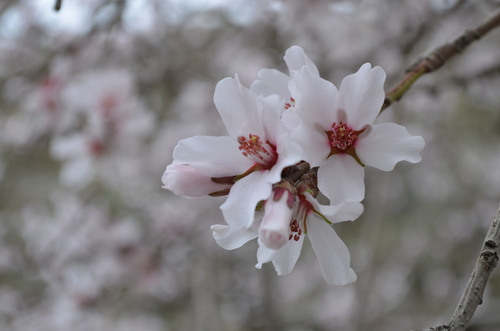
(c) Aleksandr Naumenko, some rights reserved (CC BY-NC), uploaded by Aleksandr Naumenko

(c) Harrison J Elkins, some rights reserved (CC BY)

(c) Harrison J Elkins, some rights reserved (CC BY)
What to Eat
Edible parts: Kernels, Nuts, Seeds - oil
The kernels and seeds are eaten; seed oil is extracted.
Known Hazards
Where to Find It
It is a temperate plant.
Asia, Central Asia, Kyrgyzstan, Tajikistan, Turkmenistan, Uzbekistan,
How to Identify
A temperate tree in the Rosaceae family with edible seeds high in oil.
Wikipedia
Source ↗Prunus bucharica is a species of wild almond native to Tajikistan, Uzbekistan and Afghanistan, preferring to grow at 1000-1800 m above sea level. Long thought to be one of the wild species that contributed to the origin of the cultivated almond (Prunus dulcis), genetic testing of both nuclear and chloroplast DNA has shown that to be untrue; the closest relative (and presumed lone ancestor) of Prunus dulcis is Prunus fenzliana.
Notes
There are about 200 Prunus species. It is an at risk species.
Names & Synonyms
References (6)
- Ann. Naturhist. Hofmus. Wien 27:70. 1913
- Eastwood, A., et al, 2009. The Red List of Trees of Central Asia. Fauna & Flora International. (As Amygdalus bucharica)
- Facciola, S., 1998, Cornucopia 2: a Source Book of Edible Plants. Kampong Publications, p 193
- INFOODSUpdatedFGU-list.xls
- Wickens, G.E., 1995, Edible Nuts. FAO Non-wood forest products. FAO, Rome. p148
- Zeven, A. C. & de West, J. M. J., 1982, Dictionary of cultivated plants and their regions of diversity. Wageningen. p 84
More from Rosaceae


