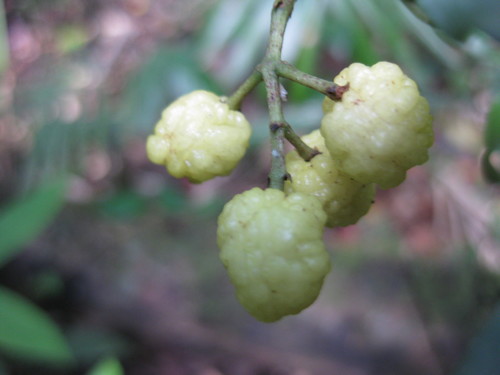
Calodendrum capense
(L.f.) Thunb.
Cape chestnut

(c) James Kuria NDUNG’U, some rights reserved (CC BY-NC), uploaded by James Kuria NDUNG’U
(c) Flip, some rights reserved (CC BY-NC)
(c) Flip, some rights reserved (CC BY-NC)
What to Eat
Edible parts: Nuts, Seeds
Cape chestnut oil, obtained from the seeds, otherwise known as Yangu oil, is a popular oil in African skin care. Its inherent ultraviolet protection, its high content of essential fatty acids and antioxidants and its mild odour destined it for natural cosmetics. The seeds are eaten by birds and monkeys.
Where to Find It
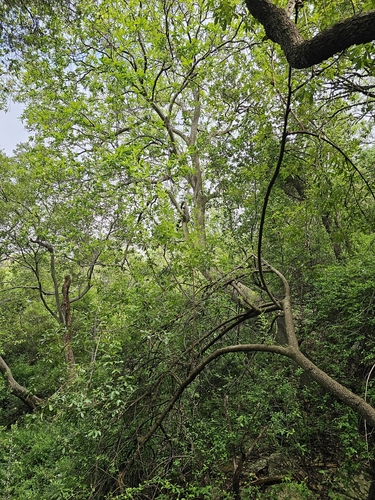
A subtropical plant. It is native to the southern half of Africa. It grows in forest and wooded ravines. It South Africa it grows from sea level to 2000 m altitude. It needs protection from frost when young. It does best in full sunlight. In Wittunga Botanical Gardens Adelaide. It suits the subtropics. It suits hardiness zones 9-11. Brisbane Botanical gardens.
Africa, Australia, East Africa, Eswatini, Hawaii, Kenya, Malawi, Mozambique, North America, South Africa*, Southern Africa, Swaziland, Tanzania, Uganda, USA, Zimbabwe,
How to Identify
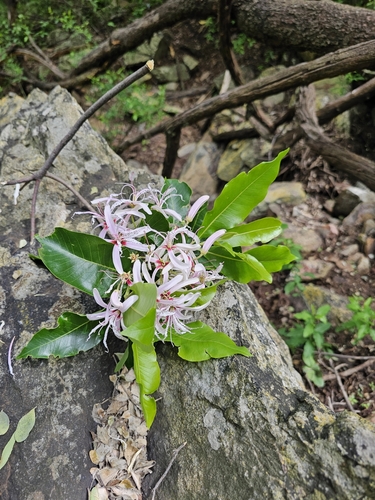
A small to medium sized tree. It grows 7-20 m high. The bark is grey and smooth. It has buttresses. It has a spreading crown. The leaves are opposite and simple. They are large and oblong. They are 6-13 cm long by 3.5-7.5 cm wide. They can be 22 cm long. They are dark green with scattered gland-dots. The edges can be wavy. The flowers are large and striking. The petals can be white or pink. They are like feathers. The flowers are long and narrow. They are 4 cm long by 0.5 cm wide. Flowers have both sexes. The fruit is a brown capsule. It is 3.5 cm across. It has 5 lobes and is woody. It has a knobbly surface.
How to Grow
It is grown from fresh seed. It can also be grown from cuttings.
Propagation: Seed - best sown as soon as ripe, old seed germinates erratically. Trees are easily cultivated from seed. Fresh seed can be sown in deep seedling trays filled with river sand and normally germinate in 10-40 days, with a germination rate of 80-90%. Young plants transplant easily. Seeds can be stored for up to a year if kept insect-free. Cuttings made from half-grown shoots, but they must be treated with a root-stimulating hormone.
Medicinal Uses
The oil from the seed is emollient.
Other Uses
The kernel yields a lemon-yellow, rather bitter, non-drying oil that can be used for making soap. Called 'yangu oil', it is popular in Africa as a skin-care product, e.g. In Kenya it is used as a skin emollient. The oil also has a high potential for use as lubricant and as fuel in diesel engines. The bark, which is sold in local markets as ‘white umemezi’, is used in cosmetics to dye the skin a whitish colour. The white or light yellow wood is straight grained, fairly hard, tough, moderately heavy, bends well and is easily worked. There is little difference between the sapwood and heartwood. It is used for making tent bows, wagon making, yokes, planking, shovel handles and furniture. The wood is suitable for firewood and charcoal. The leaf-fall is very heavy so trees provide mulch. The trees provide valuable shade and can be used as windbreaks. The tree provides good bee forage.
Wikipedia
Source ↗Calodendrum capense, the Cape chestnut, is an African tree which was first studied at The Cape in South Africa and cultivated widely for its prolific flower display. The tree obtained the common name of "Cape chestnut" because explorer William Burchell saw a resemblance to the horse chestnut in terms of flowers and fruit, though the two are not closely related.
Production
It is slow growing. Seedling trees can take 12 years to flower. Grafted trees flower sooner.
Notes
There is only one (2) Calodendrum species. It is natural in South Africa. The oil from the seeds is used for soap.
Names & Synonyms
Movuli, Mpisili, Murarachi, Ol-larashi, Umbaba, Umbhaba, Wildekastaiing, Yangu oil
References (21)
- Barwick, M., 2004, Tropical and Subtropical Trees. A Worldwide Encyclopedic Guide. Thames and Hudson p 81
- Bodkin, F., 1991, Encyclopedia Botanica. Cornstalk publishing, p 200
- Cundall, P., (ed.), 2004, Gardening Australia: flora: the gardener's bible. ABC Books. p 289
- Dharani, N., 2002, Field Guide to common Trees & Shrubs of East Africa. Struik. p 63
- Etherington, K., & Imwold, D., (Eds), 2001, Botanica's Trees & Shrubs. The illustrated A-Z of over 8500 trees and shrubs. Random House, Australia. p 164
- Hibbert, M., 2002, The Aussie Plant Finder 2002, Florilegium. p 50
- Llamas, K.A., 2003, Tropical Flowering Plants. Timber Press. p 339
- Lord, E.E., & Willis, J.H., 1999, Shrubs and Trees for Australian gardens. Lothian. p 49
- Martin, F. W., et al, 1987, Perennial Edible Fruits of the Tropics. USDA Handbook 642 p 75
- Mbuya, L.P., Msanga, H.P., Ruffo, C.K., Birnie, A & Tengnas, B., 1994, Useful Trees and Shrubs for Tanzania. Regional Soil Conservation Unit. Technical Handbook No 6. p 158
- Morley, B. & Everard, B., 1970, Wild Flowers of the World. Ebury press. Plate 77
- Nov. gen. pl. 2:43. 1782
- Palgrave, K.C., 1996, Trees of Southern Africa. Struik Publishers. p 345
- Swaziland's Flora Database http://www.sntc.org.sz/flora
- van Wyk, B, van Wyk, P, and van Wyk B., 2000, Photographic guide to Trees of Southern Africa. Briza. p 76
- von Breitenbach, F., 1985, Southern Cape Tree Guide. Department of Environment Affairs, Forestry Branch. Pamphlet 360 Pretoria p 11
- White, F., Dowsett-Lemaire, F. and Chapman, J. D., 2001, Evergreen Forest Flora of Malawi. Kew. p 508
- Wickens, G.E., 1995, Edible Nuts. FAO Non-wood forest products. FAO, Rome. p149
- World Checklist of Useful Plant Species 2020. Royal Botanic Gardens, Kew
- www.zimbabweflora.co.zw 2011
- Young, J., (Ed.), 2001, Botanica's Pocket Trees and Shrubs. Random House. p 172