Asparagus albus
L.
White Asparagus, Garden-hedge
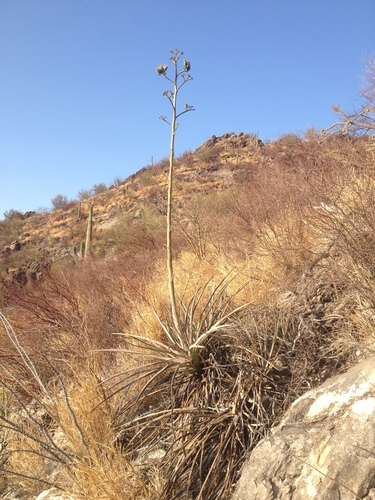
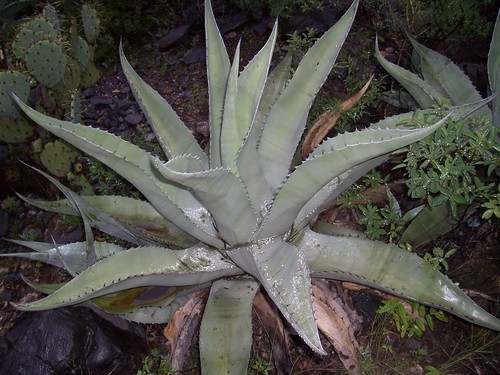
(c) faluke, some rights reserved (CC BY-NC), uploaded by faluke
(c) faluke, some rights reserved (CC BY-NC), uploaded by faluke

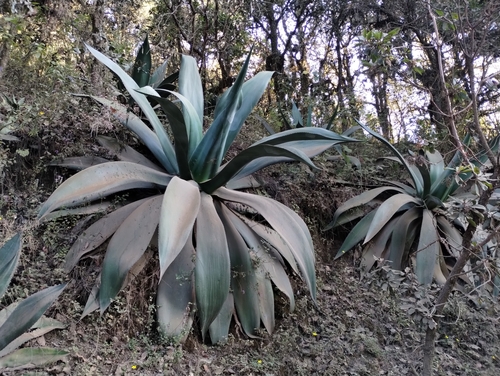
(c) Ester Serrao, some rights reserved (CC BY-NC), uploaded by Ester Serrao
What to Eat
Edible parts: Shoots, Vegetable
Edible Parts: Shoots Stem Edible Uses: Young shoots - cooked. A poor substitute for the cultivated asparagus.
Where to Find It
It is a Mediterranean climate plant. It grows in hedgerows and scrub.
Africa, Algeria, Australia, Europe, France, Gibraltar, Greece, Italy, Mediterranean, Morocco, North Africa, Portugal, Sicily, Spain,
How to Identify
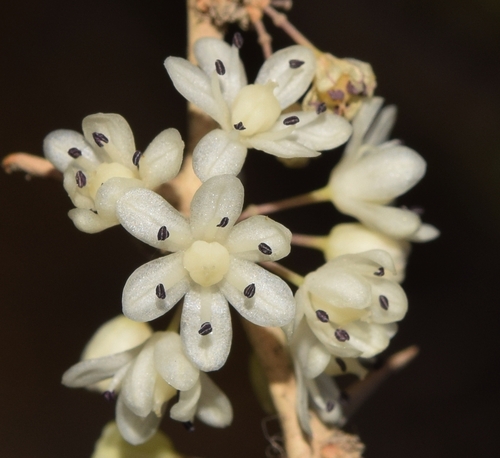
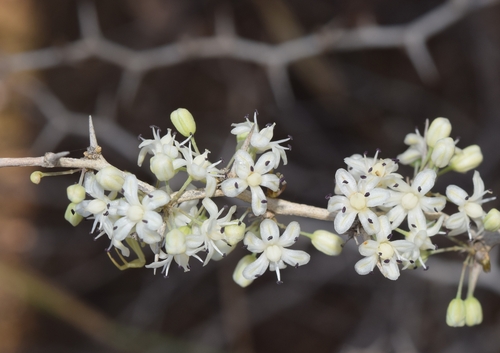
A tall plant. It can be 2 m tall. The stems are woody and have many branches. They are whitish or grey. The flattened green stems occur singly or in groups of 10-30. They are 5-25 mm long and have spines at their tips. They fall off to leave bare spiny stems. The flowers are in groups of 2-4. They are 3-4 mm long. They are yellowish green. They have a sweet scent. The flowers are mixed with the leaves. The fruit is a berry which is black when ripe. It is 5.5-8 mm across.
How to Grow
Easily grown in any good garden soil. Prefers a rich sandy loam. This species is not hardy in the colder areas of the country, it tolerates temperatures down to between -5 and -10°c. The edible young shoots of this plant are sold in local markets in the Mediterranean area. Unlike most members of this genus, this species has hermaphrodite flowers
Propagation: Seed - pre-soak for 12 hours in warm water and then sow in spring or as soon as the seed is ripe in early autumn in a greenhouse. It usually germinates in 3 - 6 weeks at 25°c. Prick out the seedlings into individual pots when they are large enough to handle and grow them on in a sunny position in the greenhouse for their first winter. Plant them out into their permanent positions in late spring or early summer. Division in early spring as the plant comes into growth.
Medicinal Uses
None known
Other Uses
None known Special Uses
Wikipedia
Source ↗Asparagus albus is a widespread species of flowering plant in the family Asparagaceae, native to the western and central Mediterranean. It is found in the coastal maquis shrubland biome, and in ruderal situations.
Notes
There are between 160-300 Asparagus species.
Names & Synonyms
Azzou, Esparrago blanco, Hmissou, Sekoum, Sparaciu jancu, Sparaciu spinosu
References (17)
- Bircher, A. G. & Bircher, W. H., 2000, Encyclopedia of Fruit Trees and Edible Flowering Plants in Egypt and the Subtropics. AUC Press. p 45
- Blamey, M and Grey-Wilson, C., 2005, Wild flowers of the Mediterranean. A & C Black London. p 483
- Geraci, A., et al, 2018, The wild taxa utilized as vegetables in Sicily (Italy): a traditional component of the Mediterranean diet. Journal of Ethnobiology and Ethnomedicine (2018) 14:14
- Ghanimi, R., et al, 2022, Ethnobotanical study on wild edible plants traditionally used by Messiwa people, Morocco. Journal of Ethnobiology and Ethnomedicine. 18:16
- Hedrick, U.P., 1919, (Ed.), Sturtevant's edible plants of the world. p 80
- Jardin, C., 1970, List of Foods Used In Africa, FAO Nutrition Information Document Series No 2.p 56
- Licata, M., et al, 2016, A survey of wild plant species for food use in Sicily (Italy) – results of a 3-year study in four Regional Parks. Journal of Ethnobiology and Ethnomedicine 12:12
- Martin, F.W. & Ruberte, R.M., 1979, Edible Leaves of the Tropics. Antillian College Press, Mayaguez, Puerto Rico. p 202
- Nassif, F., & Tanji, A., 2013, Gathered food plants in Morocco: The long forgotten species in Ethnobotanical Research. Life Science Leaflets 3:17-54
- Pasta, S., et al, 2020, An Updated Checklist of the Sicilian Native Edible Plants: Preserving the Traditional Ecological Knowledge of Century-Old Agro-Pastoral Landscapes. Frontiers in Plant Science. Volume 11|Article 388
- Rivera, D. et al, 2006, Gathered Mediterranean Food Plants - Ethnobotanical Investigations and Historical Development, in Heinrich M, Müller WE, Galli C (eds): Local Mediterranean Food Plants and Nutraceuticals. Forum Nutr. Basel, Karger, 2006, vol 59, pp 18–74
- Signorini, M. A., et al, 2009, Plants and traditional knowledge: An ethnobotanical investigation on Monte Ortobene (Nuoro, Sardinia). Journal or Ethnobiology and Ethnomedicine, 5:6
- Sp. pl. 1:314. 1753
- Tanji, A and Nassif, F., 1995, Edible Weeds in Morocco. Weed Technology. Vol. 9, No. 3, pp. 617-620
- Tardio, J., et al, 2006, Ethnobotanical review of wild edible plants in Spain. Botanical J. Linnean Soc. 152, 27-71
- Tbatou, M, et al, 2016, Wild Edible Plants traditionally used in the countryside of El Jadida, Coastal Area in the Center of Morocco. Life Sciences Leaflets 75:28-48
- World Checklist of Useful Plant Species 2020. Royal Botanic Gardens, Kew