Wrightia tomentosa
Roem. and Schult.
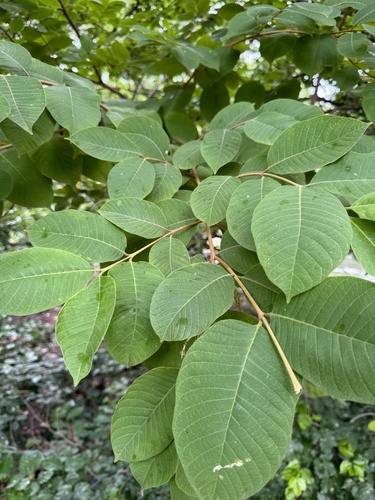
(c) Shivam Bhatt, some rights reserved (CC BY-NC-SA)
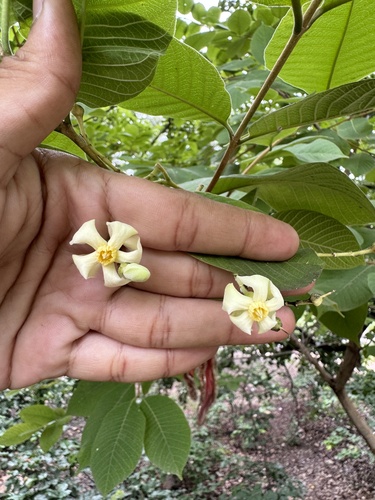
(c) Shivam Bhatt, some rights reserved (CC BY-NC-SA)
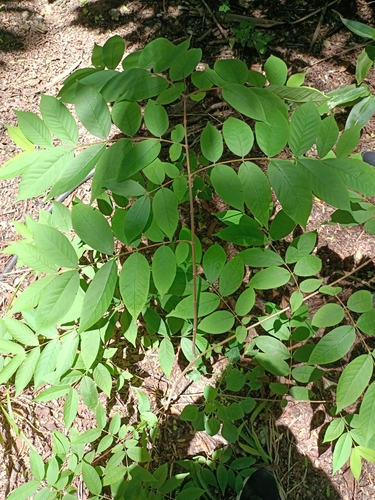
(c) thananthon, some rights reserved (CC BY-NC)
What to Eat
Edible parts: Leaves, Flowers, Fruit
The cooked leaves are eaten as a vegetable. The flowers are stir-fried and eaten. The tender fruit are edible.
Where to Find It
A tropical plant. It grows in the lower Himalayas regions. It grows up to 1,200 m above sea level.
Asia, China, Himalayas, India, Indochina, Laos, Myanmar, Nepal, Northeastern India, Pakistan, SE Asia, Sikkim, Sri Lanka,
How to Identify
A small tree. The branches have a covering when young. The leaves are 8-15 cm long by 3-7 cm wide. They are narrowly oval. The base is rounded and they taper to the tip. The edges of the leaves are wavy. The flowers are white but turn yellow. The fruit occur as pods and in pairs. The pod(s) are covered with brown specks. The pods are 15-18 cm long by 1.25 cm wide. They are narrow and hang down. The seeds are slender and have a beak. They are 1.25 mm long.
Names & Synonyms
Atkuri, Bilikudegidda, Billiganagalugidda, Bolmatra, Burali code, Daira, Danti-kuvad, Dharauli, Dieng-panganai, Dudhi, Dudhkoraiya, Dudhlo, Garo dudhkuri, Harido, Kadujanagalu, Kala inderjau, Karinghi, Karingi, Kirra, Mailam pala, Nilampala, Pal kurwan, Peddapaala, Tambada kuda, Tellapaala, Thouthapala
References (9)
- Ambasta, S.P. (Ed.), 2000, The Useful Plants of India. CSIR India. p 691
- Bole, P.V., & Yaghani, Y., 1985, Field Guide to the Common Trees of India. OUP p 85
- Chauhan, S. H., et al, 2018, Consumption patterns of wild edibles by the Vasavas: a case study from Gujarat, India. Journal of Ethnobiology and Ethnomedicine (2018) 14:5
- Llamas, K.A., 2003, Tropical Flowering Plants. Timber Press. p 72
- Savita, et al, 2006, Studies on wild edible plants of ethnic people in east Sikkim. Asian J. of Bio Sci. (2006) Vol. 1 No. 2 : 117-125
- Sharma, B.D., & Lakshminarasimhan, P., 1986, Ethnobotanical Studies on the Tribals of Nasik District (Maharashtra). J. Econ. Tax. Bot. Vol. 8 No. 2 pp 439-446
- Singh, H.B., Arora R.K.,1978, Wild edible Plants of India. Indian Council of Agricultural Research, New Delhi. p 38
- Syst. veg. 4:414. 1819
- Wild edible plants of Himachal Pradesh


