Mangifera sylvatica
Roxburgh
Winter mango
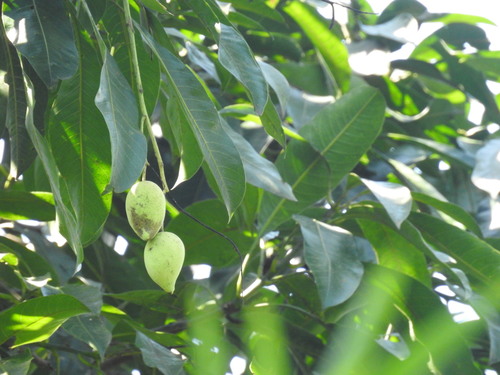
(c) Aparajita Datta, some rights reserved (CC BY-NC), uploaded by Aparajita Datta
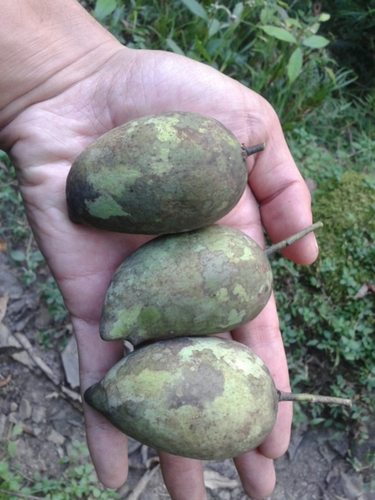
(c) Phuentsho, some rights reserved (CC BY-NC-SA), uploaded by Phuentsho
What to Eat
Edible parts: Fruit
Unripe fruit are sliced and used for tarts, pickles, jellies, and curries—they are acidic. Ripe fruit are eaten raw like mangoes.
Where to Find It
A tropical plant. They grow in the humid tropics. It is native to the eastern Himalayas. It grows in forests along streams in southern China. In Sikkim it grows between 500-1,000 m above sea level. In Yunnan.
Andamans, Asia, Bangladesh, Bhutan, Cambodia, China, Himalayas, India, Indochina, Laos, Myanmar, Nepal, Northeastern India, SE Asia, Sikkim, Thailand,
How to Identify
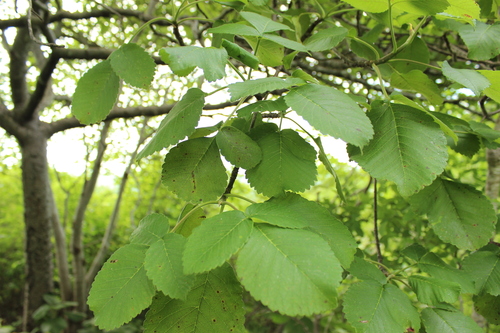
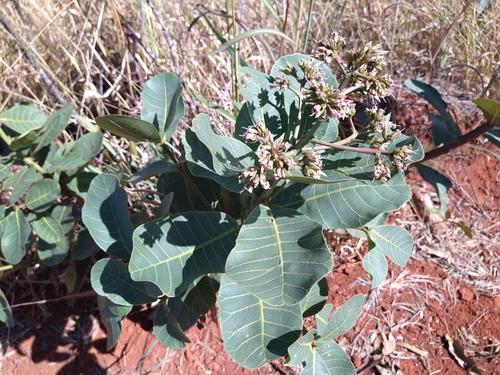
A large tree. It grows 20-45 m tall. The leaves are stiff. They are 15-20 cm long and 3-6 cm wide. The flowers are yellow, pink or red. They do not have an odour. They are in groups at the ends of branches. The fruit are yellow. They are 8-16 cm long. There are both sweet and tart kinds. The fruit hang on the tree in winter.
Medicinal Uses
The dried fruit is used medicinally.
Other Uses
The wood is a source of 'machang' timber. We do not have a specific description for the wood of this speices, but a general description of machang timber is as follows:- The heartwood is light brown or light grey brown, occasionally with chocolate or black streaky coreword; it is not clearly differentiated from the wide band of sapwood. The texture is moderately coarse to coarse and even; the grain interlocked and wavy. The wood is moderately heavy to heavy; moderately hard; not durable under exposed conditions, being susceptible to fungi, dry wood borers and termites. The wood seasons somewhat rapidly with only a slight risk of checking or distortion; once dry it is moderately stable in service. It can be worked with ordinary tools, there is a slight difficulty resawing when green, but is easy when dry; planing is easy but the surface produced is moderately smooth with grain pick-up on the radial side; nailing and screwing is excellent; gluing is correct. The wood is suitable for light construction, turnery, flooring, interior panelling, boxes, crates, pallets and plywood manufacture. Corewood can be used for decorative veneer production.
Wikipedia
Source ↗Mangifera sylvatica, also known as the Himalayan mango, pickling mango, or Nepal mango, is a species of plant in the family Anacardiaceae. It is found in Bangladesh, Cambodia, China (Yunnan), India (Assam, Darjeeling, Sikkim), Myanmar, Nepal, Bhutan and Thailand. It is a tree 6–20 m (20–66 ft) tall. The fruit measures 6 cm–8 cm × 4 cm–5 cm (2.4 in–3.1 in × 1.6 in–2.0 in).
Production
In SE Asia plants flower January to March and September to October and fruit May to June and December to January. A tree can produce 50 kg of fruit a year.
Notes
There are about 40 Mangifera species.
Names & Synonyms
Aanp, Amtsukuli, Arem titi, Ban-am, Bon am, Chetchetsu, Chuchche aarp, Chuche anp, Chuckey amp, Chuchiam, Dong lao miu, Gam thaihai, Haibamin, Hnamba chi, Jangali aamp, Jangli, Jat aam, Jharbuo aam, Jungali amp, Kathorkung, Kho-maeng-saa, Lagulamjio, Lakshi am, Lakshmi am, Mak-mong-sang-yip, Mamen, Mamnang ki tai, Mamuang paep, Mong wo, Motum toggu, Siminthayet, Sinna-thayet, Som muang kluai, Tagol, Tagung, Taw-thayet, Thaichual, Thaiju mairong, Uriaam, Uri am, Vekek, Yumrang kedi
References (45)
- Ambasta, S.P. (Ed.), 2000, The Useful Plants of India. CSIR India. p 354
- Angami, A., et al, 2006, Status and potential of wild edible plants of Arunachal Pradesh. Indian Journal of Traditional Knowledge 5(4) October 2006, pp 541-550
- BARC, 2016, State of Biodiversity for Food and Agriculture in Bangladesh. Bangladesh Agricultural Research Council.
- Chayamarit, K., 1994, Preliminary Checklist of the Family Anacardiaceae in Thailand. Thai For. Bull. 22:1-25
- Cao, Y., et al, 2020, Ethnobotanical study on wild edible plants used by three trans-boundary ethnic groups in Jiangcheng County, Pu’er, Southwest China. Journal of Ethnobiology and Ethnomedicine (2020) 16:66
- Das, S. and Mohiuddin, M., 2012, Gender role in Home Garden Management in the Indigenous Community: A case study in Bandarban Hill District, Bangladesh. International Journal of Social Forestry. 5(1):22-37
- Dobriyal, M. J. R. & Dobriyal, R., 2014, Non Wood Forest Produce an Option for Ethnic Food and Nutritional Security in India. Int. J. of Usuf. Mngt. 15(1):17-37
- Fl. ind. 2:438. 1824
- Gardner, S., et al, 2000, A Field Guide to Forest Trees of Northern Thailand, Kobfai Publishing Project. p 143
- Gautam, R. S., et al, 2020, Wild Edible Fruits of Nepal. Int. J. Appl. Sci. Biotechnol. Vol 8(3): 289-304
- Gautam, R. S., et al, 2022, Ethnobotanical Review of Wild Edible Plants of Nepal. Journal of Natural History Museum Volume 32, 2021-22 p 102
- Ghimeray, A. K., Lamsal, K., et al, 2010, Wild edible angiospermic plants of the Illam Hills (Eastern Nepal) and their mode of use by local community. Korean J. Pl. Taxon. 40(1)
- Ghorbani, A., et al, 2012, A comparison of the wild food plant use knowledge of ethnic minorities in Naban River Watershed Nature Reserve, Yunnan, SW China. Journal of Ethnobiology and Ethnomedicine; 8:17
- Hazarika, B. et al. (2020). An overview of the unexplored underutilized fruit crops of Assam, India. Journal of Applied and Natural Science, 12(3): 442 - 453
- Hedrick, U.P., 1919, (Ed.), Sturtevant's edible plants of the world. p 401
- Hu, Shiu-ying, 2005, Food Plants of China. The Chinese University Press. p 518
- Jin, Chen et al, 1999, Ethnobotanical studies on Wild Edible Fruits in Southern Yunnan: Folk Names: Nutritional Value and Uses. Economic Botany 53(1) pp 2-14
- Karki, S., et al, 2017, Minor Fruits in Nepal: Utilization and Conservation Efforts. Proceedings of 2nd National Workshop on CUAPGR, 2017.
- Lungphi, P., Wangpan, T. & Tangjang, S., 2018, Wild edible plants and their additional uses by the Tangsa community living in the Changlang district of Arunachal Pradesh, India. Pleione 12(2): 151 - 164. 2018.
- Luo, B., et al, 2019, Wild edible plants collected by Hani from terraced rice paddy agroecosystem in Honghe Prefecture, Yunnan, China. Journal of Ethnobiology and Ethnomedicine 15:56
- Majumdar, K and Datta, N., 2009, Traditional wild edible fruits for the forest dwellers of Tripura, India. Pleione 3(2) 167-178
- Manju, S., and Sundriyal, R. C., 2001, Wild Edible Plants of the Sikkim Humalaya: Nutritive Values of Selected Species. Economic Botany 55(3): 377-390
- Medhi, P. & Borthakur, S. K., 2012, Phytoresources from North Cachur Hills of Assam -3: Edible plants sold at Hflong market. Indian Journal of Natural Products and Resources. 3(1) pp 84-109
- Medhi, P., Sarma, A and Borthakur, S. K., 2014, Wild edible plants from the Dima Hasao district of Assam, India. Pleione 8(1): 133-148
- Morton, J. F., 1987, Fruits of Warm Climates. Wipf & Stock Publishers p 237
- Mozhui, R., et al, 2011, Wild edible fruits used by the tribals of Dimapur district of Nagaland, India. Pleione 5(1): 56 - 64.
- Mukhia, P.K., et al, 2013, Wild plants as Non Wood Forest Products used by the rural community of Dagana, a southern foothill district of Bhutan, SAARC Journal, 27 pages
- Murtem, G. & Chaudhrey, P., 2016, An ethnobotanical note on wild edible plants of Upper Eastern Himalaya, India. Brazilian Journal of Biological Sciences, 2016, v. 3, no. 5, p. 63-81.
- Natuhara, Y., et al, 2011, Uses of trees in paddy fields in Champasak Province, Southern Lao PDR. Landscape and Ecological Engineering. p 6
- Pasha, M. K. & Uddin, S. B., 2019, Minor Edible Fruits of Bangladesh. Bangladesh J. Plant Taxon. 26(2): 299–313
- Patiri, B. & Borah, A., 2007, Wild Edible Plants of Assam. Geethaki Publishers. p 32
- Paul, A., 2013, Minor and uncultivated fruits of Eastern India, 2nd International Symposium on Minor Fruits and Medicinal Plants
- Pegu, R., et al, 2013, Ethnobotanical study of Wild Edible Plants in Poba Reserved Forest, Assam, India. Research Journal of Agriculture and Forestry Sciences 1(3):1-10
- Phangchopi, U., et al, 2015, Diversity of wild edible plants in Marat Longri Wildlife Sanctuary, Assam. Indian Journal of Natural Products and Resources Vol. 6(4), December 2015 pp. 305-313
- PROSEA No. 2
- Savita, et al, 2006, Studies on wild edible plants of ethnic people in east Sikkim. Asian J. of Bio Sci. (2006) Vol. 1 No. 2 : 117-125
- Shin, T., et al, 2018, Traditional knowledge of wild edible plants with special emphasis on medicinal uses in Southern Shan State, Myanmar. Journal of Ethnobiology and Ethnomedicine (2018) 14:48
- Singh, H.B., Arora R.K.,1978, Wild edible Plants of India. Indian Council of Agricultural Research, New Delhi. p 66, 76
- Singh, V. B., et al, (Ed.) Horticulture for Sustainable Income and Environmental Protection. Vol. 1 p 217
- Sundriyal, M., et al, 1998, Wild edibles and other useful plants from the Sikkim Himalaya, India. Oecologia Montana 7:43-54
- Sundriyal, M., et al, 2004, Dietary Use of Wild Plant Resources in the Sikkim Himalaya, India. Economic Botany 58(4) pp 626-638
- Sundriyal, M. & Sundriyal, R. C., 2004, Structure, Phenology, Fruit Yield, and Future Prospects of some Prominent Wild Edible Plant Species of the Sikkim Himalaya, India. Journal of Ethnobiology 24(1): 113-138
- Taram, M., et al, 2018, Wild Food Plant Resources of Komkar Adi Tribe of Upper Siang District in Arunachal Pradesh, India. Bulletin of Arunachal Forest Research, Vol. 33(2), 27-35
- Thitiprasert, W., et al, 2007, Country report on the State of Plant Genetic Resources for Food and Agriculture in Thailand (1997-2004). FAO p 95
- Uprety, Y., et al, 2016, Traditional use and management of NTFPs in Kangchenjunga Landscape: implications for conservation and livelihoods. Journal of Ethnobiology and Ethnomedicine (2016) 12:19