Sarcostigma kleinii
Wight and Arn.
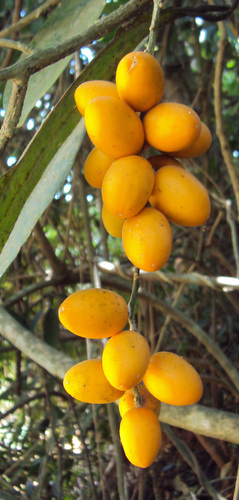
(c) Vinayaraj, some rights reserved (CC BY-SA)

(c) Dinesh Valke, some rights reserved (CC BY-SA)
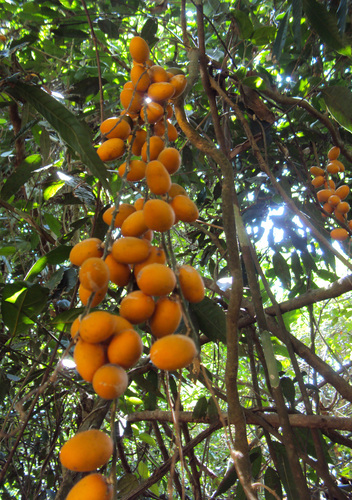
(c) Vinayaraj, some rights reserved (CC BY-SA)
What to Eat
Edible parts: Fruit, Leaves
The ripe fruits are eaten fresh, featuring thin edible flesh around the seed. The leaves are also edible.
Where to Find It
A tropical plant. It grows in forests and up to 550 m above sea level. It occurs in the Western Ghats in India.
Andaman Islands, Asia, India, Indonesia, Malaysia, Myanmar, SE Asia,
How to Identify
A large woody climber. It grows 26 m long and can be 8 cm across. It has many branches. The leaves are oblong and have short leaf stalks. The leaves are 9-25 cm long by 4-7 cm wide. The fruit are fleshy and oblong and unequal. They are orange colour. They have a thin edible flesh around the nut.
How to Grow
Sarcostigma kleinii is a plant of the tropics, where it is usually found under seasonal climatic conditions. A dioecious species, both male and female forms need to be grown if fruit and seeds are required.
Medicinal Uses
The oil is anaphrodisiac, anthelmintic, bitter, depurative and vulnerary. It is useful in vitiated conditions of vata, and for treating conditions such as helminthiasis, foul ulcers, leprosy and skin diseases. The oil obtained from the seeds is highly esteemed in India for the treatment of rheumatism. The bark and leaves are acrid, anaphrodisiac, anthelmintic, carminative, bitter, depurative, digestive, diuretic, stomachic, thermogenic and vulnerary. They are useful in the treatment of vitiated conditions of vata, and for conditions such as cephalalgia, gastropathy, anorexia, flatulence, helminthiasis, strangury, indolent ulcers, leprosy, skin diseases, hysteria and epilepsy. Methanolic extracts of the leaf and bark have shown high antioxidant activity. They can be considered as potential new sources of natural antioxidants for food and nutraceutical products.
Other Uses
An oil obtained from the seeds is used as an illuminant in lamps.
Wikipedia
Source ↗Sarcostigma kleinii is a large liana seen extensively in the Western Ghats. An oil is extracted from the seeds. This plant is used widely in Ayurveda.
Names & Synonyms
Ingudi, Kanaras, Karat, Odal, Odalvalli, Puvenna, Tangkilan, Velleiodal
References (5)
- Ambasta S.P. (Ed.), 2000, The Useful Plants of India. CSIR India. p 551 (Also as Sarcostigma edule)
- Awasthi, A.K., 1991, Ethnobotanical studies of the Negrito Islanders of Andaman Islands, India - The Great Andamanese. Economic Botany 45(2) pp274-280 (As Sarcostigma wallachii)
- Singh, H.B., Arora R.K.,1978, Wild edible Plants of India. Indian Council of Agricultural Research, New Delhi. p 71
- Sleumer, 1971, Icacinaceae. Flora Malesiana Series 1. Vol 7: 1 p 74
- Yesodharan, K. & Sujana, K. A., 2007, Wild edible plants traditionally used by the tribes in the Parambokulam Wildlife Sanctuary, Kerala, India. Natural Product Radiance 6(1) pp 74-80


