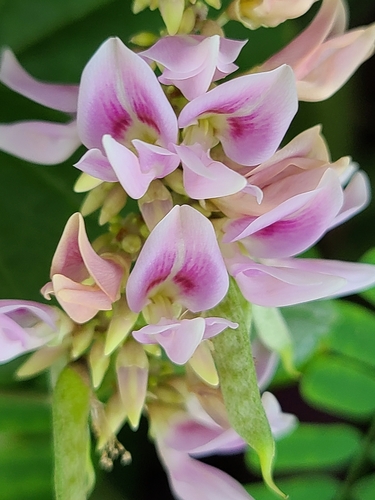
Archidendron bigeminum
(L.) I. C. Nielsen
Dogfruit, Soap-bark tree, Ta nyen
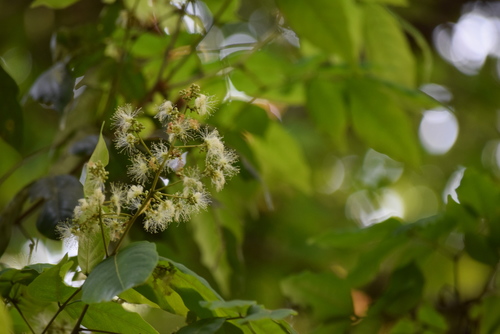
(c) Ansil B.R., some rights reserved (CC BY), uploaded by Ansil B.R.
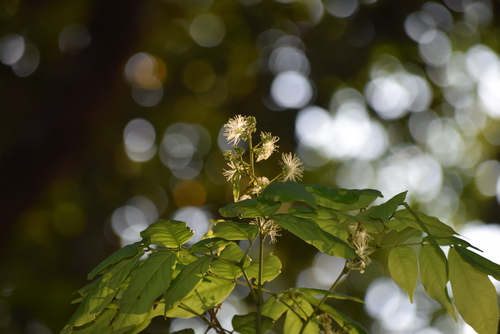
(c) Ansil B.R., some rights reserved (CC BY), uploaded by Ansil B.R.
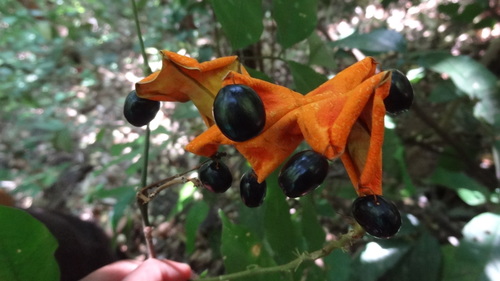
(c) Siddarth Machado, some rights reserved (CC BY), uploaded by Siddarth Machado
What to Eat
Edible parts: Seeds, Spice
The seeds are used as a spice, traditionally to preserve fish.
Known Hazards
Where to Find It
A tropical plant.
Asia, India, Indochina, Indonesia, Malaysia, Myanmar, SE Asia, Sri Lanka,
How to Identify
A tree. It grows 12 m tall. The bark is reddish-brown. The leaves are alternate and twice divided. The leaf stem is 10-11 cm long with leaflets along the side. These are 11-13 cm long and slender. The flowers are white and in round heads. The tree have long twisted pods. They are 10 cm long by 2 cm wide. There are 3-8 seeds.
Wikipedia
Source ↗Archidendron bigeminum is a tree species in the legume family (Fabaceae). It is found in India and Sri Lanka. It is known as "kalitiya - කලටිය" in Sinhala. The World Conservation Monitoring Centre (WCMC) in the 1998 IUCN Redlist reviewed Abarema bigemina and Pithecellobium gracile as Vulnerable species. These are nowadays both considered junior synonyms of Archidendron bigeminum. It may be that the Indian population consists of a smaller-growing variety than that on Sri Lanka.
Notes
There are 20-37 Pithecellobium species. Also as Mimosaceae.
Names & Synonyms
Atthaperantha, Kattukonna, Muthakolappan, Pannivaka, Varikiri
References (5)
- Ambasta, S.P. (Ed.), 2000, The Useful Plants of India. CSIR India. p 464 (As Pithecellobium bigeminum)
- Arora, R. K., 2014, Diversity in Underutilized Plant Species - An Asia-Pacific Perspective. Bioversity International. p 108 (As Pithecellobium bigeminum)
- Flora 20(Beibl. 2):115. 1837 (As Pithecellobium bigeminum)
- Hedrick, U.P., 1919, (Ed.), Sturtevant's edible plants of the world. p 506 (As Pithecellobium bigeminum)
- Singh, H.B., Arora R.K.,1978, Wild edible Plants of India. Indian Council of Agricultural Research, New Delhi. p 86 (As Pithecellobium bigeminum)