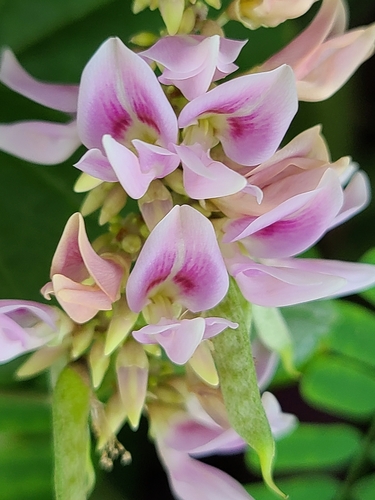
Acacia pallida
Humb. & Bonpl. ex Willd.
iNaturalist · cc-by-nc
(c) kfortmann, some rights reserved (CC BY-NC)
(c) kfortmann, some rights reserved (CC BY-NC)

iNaturalist · cc-by-nc
(c) kfortmann, some rights reserved (CC BY-NC)
(c) kfortmann, some rights reserved (CC BY-NC)

iNaturalist · cc-by-nc
(c) kfortmann, some rights reserved (CC BY-NC)
(c) kfortmann, some rights reserved (CC BY-NC)
What to Eat
Edible parts: Seeds, Roots
The roots of young plants are roasted and eaten. The seeds are also edible.
Known Hazards
Where to Find It
It is a subtropical plant. It occurs in Australia. It occurs on moist flats on river soils. It suits tropical and inland regions. It needs good drainage.
Australia*,
Countries: Australia
How to Identify
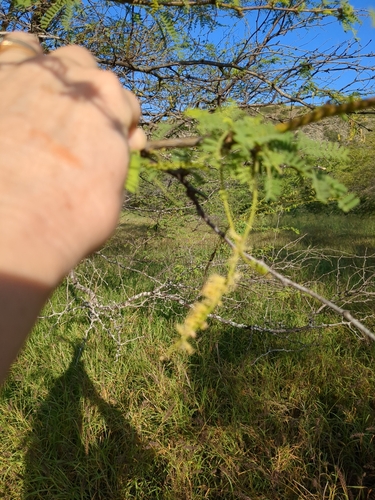
A shrub or small tree. It grows 5 m tall. There are prickles along the stem. The leaves are twice divided and there are 8-18 pairs of pinnae. There are up to 50 pairs of pinnules on each pinnae. The flowers are yellow. They are in large clusters at the ends of branches. The pods are flattened.
How to Grow
It is grown from seed.
Notes
There are about 1,350 Acacia species. Over 1,000 occur in Australia. Also as Mimosaceae.
References (6)
- Bircher, A. G. & Bircher, W. H., 2000, Encyclopedia of Fruit Trees and Edible Flowering Plants in Egypt and the Subtropics. AUC Press. p 5
- Cherikoff V. & Isaacs, J., The Bush Food Handbook. How to gather, grow, process and cook Australian Wild Foods. Ti Tree Press, Australia p 47
- Elliot, W.R., & Jones, D.L., 1982, Encyclopedia of Australian Plants suitable for cultivation. Vol 2. Lothian. p 93
- Hedrick, U.P., 1919, (Ed.), Sturtevant's edible plants of the world. p 20
- Sp. pl. 4(2):1059. 1806
- Usher, G., 1974, A Dictionary of Plants Used by Man. Constable. p 13