Rhus verniciflua
Stokes
Lacquer tree, Varnish tree
iNaturalist · cc-by-nc
(c) Yao Li, some rights reserved (CC BY-NC)
(c) Yao Li, some rights reserved (CC BY-NC)
iNaturalist · cc-by-nc
(c) Yao Li, some rights reserved (CC BY-NC)
(c) Yao Li, some rights reserved (CC BY-NC)
iNaturalist · cc-by-nc
(c) Yao Li, some rights reserved (CC BY-NC)
(c) Yao Li, some rights reserved (CC BY-NC)
What to Eat
Edible parts: Leaves
The leaves are edible.
Known Hazards
Where to Find It
It is a temperate plant.
Asia, Australia, Britain, China, Europe, India,
Countries: Andorra, United Arab Emirates, Afghanistan, Albania, Armenia, Austria, Australia, Azerbaijan, Bosnia & Herzegovina, Bangladesh, Belgium, Bulgaria, Bahrain, Brunei, Bhutan, Belarus, Switzerland, China, Cyprus, Czechia, Germany, Denmark, Estonia, Spain, Finland, France, United Kingdom, Georgia, Greece, Croatia, Hungary, Indonesia, Ireland, Israel, India, Iraq, Iran, Iceland, Italy, Jordan, Japan, Kyrgyzstan, Cambodia, North Korea, South Korea, Kuwait, Kazakhstan, Laos, Lebanon, Liechtenstein, Sri Lanka, Lithuania, Luxembourg, Latvia, Monaco, Moldova, Montenegro, North Macedonia, Myanmar, Mongolia, Malta, Maldives, Malaysia, Netherlands, Norway, Nepal, Oman, Philippines, Pakistan, Poland, Portugal, Qatar, Romania, Serbia, Russia, Saudi Arabia, Sweden, Singapore, Slovenia, Slovakia, San Marino, Syria, Thailand, Tajikistan, Timor-Leste, Turkmenistan, Turkey, Taiwan, Ukraine, Uzbekistan, Vietnam, Yemen
How to Identify
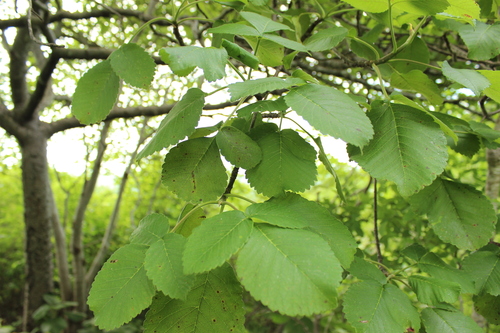
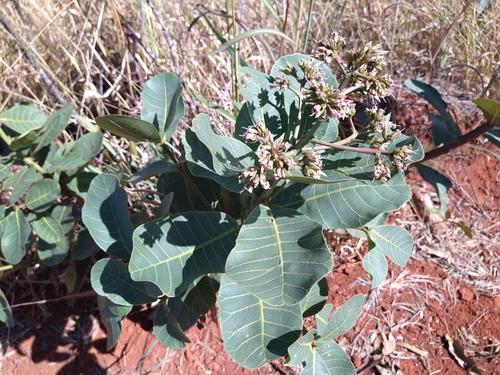
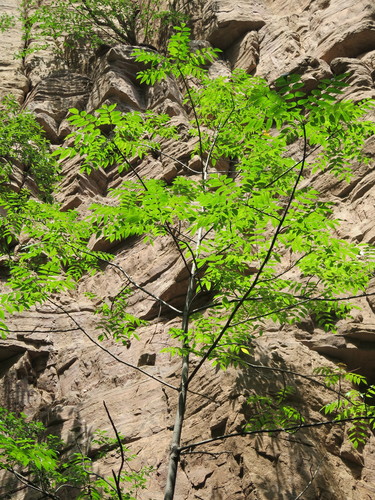
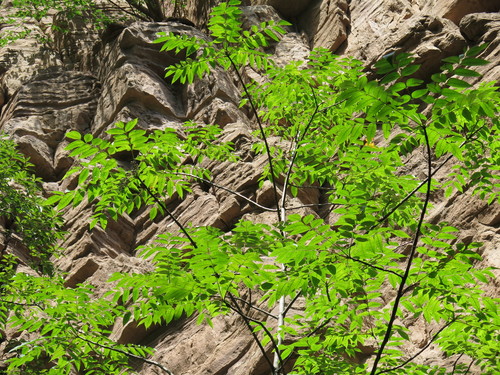
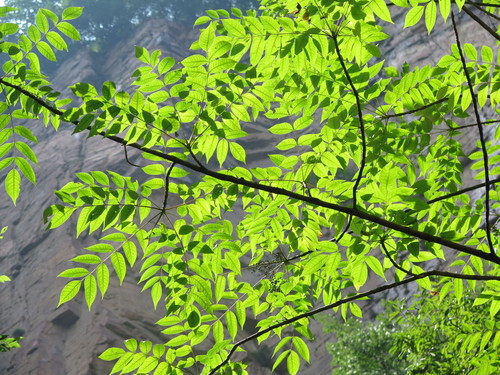
An upright tree. It grows to 14 m high. The crown is open and domed. The bark cracks into long vertical cracks. The leaves are large and alternate. Each leaf is made up of several leaflets in pairs along the stalk. These leaflets have stalks. The flowers are small and yellowish. They are produced in branching spikes. The fruit are green and poisonous. They ripen to pale cream.
Notes
There are about 200 Rhus species. The sap is used as varnish.
Names & Synonyms
Loščevec, Qishu, Qishuya
Rhus vernicifera DC. in partRhus succedanea var. himalaica Hook.f.
References (7)
- Ambasta S.P. (Ed.), 2000, The Useful Plants of India. CSIR India. p 524
- Bot. mat. med. 2:164. 1812
- Harris, E & J., 1983, Field Guide to the Trees and Shrubs of Britain. Reader's Digest. p 179
- http://www.botanic-gardens-ljubljana.com/en/plants
- Kang, Y., et al, 2012, Wild food plants and wild edible fungi in two valleys on the Qinling Mountains (Shaanxi, central China) Journal of Ethnobiology and Ethnomedicine; 9:26
- Kang, Y., et al, 2014, Wild food plants used by the Tibetans of Gongba Valley (Zouqu country, Gansu, China) Journal of Ethnobiology and Ethnomedicine 10:20
- Lord, E.E., & Willis, J.H., 1999, Shrubs and Trees for Australian gardens. Lothian. p 71