Wrightia annamensis
Eberh. & Dubard
Chhe dai khla
ApocynaceaeSeeds/Nuts
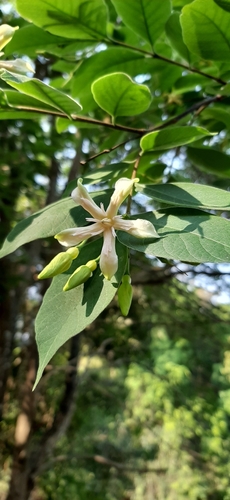
iNaturalist · cc-by-nc
(c) Mitchell Scott, some rights reserved (CC BY-NC), uploaded by Mitchell Scott
(c) Mitchell Scott, some rights reserved (CC BY-NC), uploaded by Mitchell Scott

wikimedia · cc-by-sa
Wikimedia Commons - Roy Bateman
Wikimedia Commons - Roy Bateman
What to Eat
Edible parts: Seeds - oil
The oil seeds are used in cooking.
Where to Find It
A tropical plant.
Asia, Cambodia, Indochina, SE Asia, Vietnam,
Countries: United Arab Emirates, Afghanistan, Armenia, Azerbaijan, Bangladesh, Bahrain, Brunei, Bhutan, China, Georgia, Indonesia, Israel, India, Iraq, Iran, Jordan, Japan, Kyrgyzstan, Cambodia, North Korea, South Korea, Kuwait, Kazakhstan, Laos, Lebanon, Sri Lanka, Myanmar, Mongolia, Maldives, Malaysia, Nepal, Oman, Philippines, Pakistan, Qatar, Saudi Arabia, Singapore, Syria, Thailand, Tajikistan, Timor-Leste, Turkmenistan, Turkey, Taiwan, Uzbekistan, Vietnam, Yemen
How to Identify
A shrub. It grows 3-4 m tall. Flora of China and The Plant List have different synonyms.
Wikipedia
Source ↗Wrightia annamensis is a small tree species in the family Apocynaceae. Its distribution includes: southern China, Cambodia and Viet Nam: where it may be called: lòng mức trung bộ. At the time of writing (July 2018) there is a database conflict, with some authorities placing this species as a heterotypic synonym of Wrightia pubescens subsp. lanitii (Blanco).
Notes
There are 10-16-24 Wrightia species.
Names & Synonyms
Anasser laniti BlancoWrightia annamensis Eberh. & DubardWrightia annamensis var. coronata Pit.Wrightia kwangtungensis TsiangWrightia laniti (Blanco) MerrillWrightia pubescens
References (3)
- Agron. Colon. 1:38. 1915 (As Wrightia annamensis)
- Cengel, D. J. & Dany, C., (Eds), 2016, Integrating Forest Biodiversity Resource Management and Sustainable Community Livelihood Development in the Preah Vihear Protected Forest. International Tropical Timber Organization p 120
- Phon, P., 2000, Plants used in Cambodia. © Pauline Dy Phon, Phnom Penh, Cambodia. p 634 (As Wrightia annamensis)


