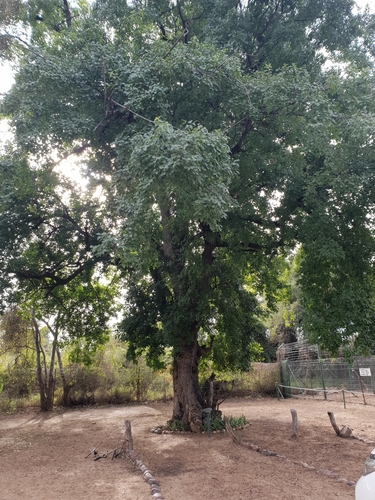
Colubrina longipes
Back.
Colubrina
What to Eat
Edible parts: Leaves
The sweet-smelling leaves are used to flavour steamed fish by being placed on them during cooking and are also used in soup.
Where to Find It
A tropical plant. It is found in wasteland and by the coast.
Asia, Indochina, Laos, SE Asia, Thailand,
How to Identify
A shrub. It grows about 1 m high. The leaves are alternate. They are oval with a pointed tip. There are fine teeth around the edge. Leaves are 2.5-8 cm long and 1-3 cm wide. The leaf stalk is 5-10 mm long. Flowers occur in the axils of leaves. The individual flowers are 1 mm long. They are yellow. The fruit is oval with 3 furrows along it. It is 6-8 mm long. There are 3 seeds. These have a keel on one side.
Other Information
It is sold in markets.
Notes
There are about 20 Colubrina species. There are 20 species in tropical America.
Names & Synonyms
Kaan thueng, Phak kan tong
References (2)
- Jacquat, C., 1990, Plants from the Markets of Thailand. D.K. Book House p 79
- Luczaj, L., et al, 2021, Wild food plants and fungi sold in the markets of Luang Prabang, Lao PDR. Journal of Ethnobiology and Ethnomedicine (2021) 17:6