Astragalus boeticus
L.
Swedish coffee, Milk vetch, Loco
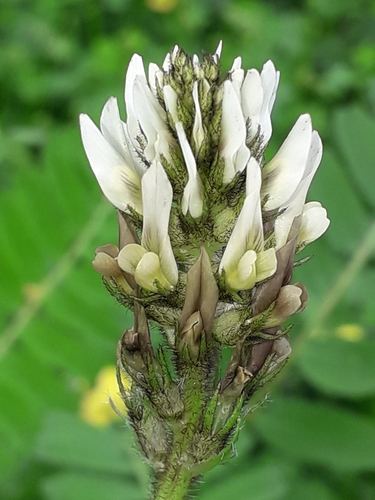
(c) Associação Vita Nativa, some rights reserved (CC BY-NC), uploaded by Associação Vita Nativa

(c) Muriel Bendel, some rights reserved (CC BY-NC), uploaded by Muriel Bendel
What to Eat
Edible parts: Seed pod, Seeds, Seeds -coffee
Edible Parts: Seedpod Edible Uses: Coffee Young seedpods are edible. The roasted seed is used as a coffee substitute.
Known Hazards
Where to Find It
It grows in Mediterranean climate places. It grows below 1,150 m above sea level. It can grow in arid places.
Africa, Albania, Algeria, Balkans, Britain, Canary Islands, Cyprus, Egypt, Europe, France, Germany, Greece, Hungary, Iran, Israel, Italy, Jordan, Kuwait, Lebanon, Libya, Mediterranean, Middle East, Morocco, North Africa, Palestine, Portugal, Scandinavia, Sicily, Sinai, Spain, Syria, Tunisia, Turkey, Türkiye, Yugoslavia,
How to Identify
A short annual herb. It is hairy. The hairs are simple. The stems are erect. The leaves have 10-15 pairs of oblong leaflets. The leaflets have a notch at the tip. The leaflets have a few hairs underneath. The flowers are yellow. They are 12-14 mm long. They are on stalks half as long as the leaves. The pod is oblong and triangle shaped in cross section. They are 20-40 mm long. The pods have a groove underneath and a beak at the end.
How to Grow
Requires a dry well-drained soil in a sunny position. This species is not hardy in the colder areas of the country, it tolerates temperatures down to between -5 and -10°c. Cultivated in some parts of N. Europe for its seed which is used as a coffee substitute. Plants are intolerant of root disturbance and are best planted in their final positions whilst still small. This species has a symbiotic relationship with certain soil bacteria, these bacteria form nodules on the roots and fix atmospheric nitrogen. Some of this nitrogen is utilized by the growing plant but some can also be used by other plants growing nearby. When removing plant remains at the end of the growing season, it is best to only remove the aerial parts of the plant, leaving the roots in the ground to decay and release their nitrogen. Many members of this genus can be difficult to grow, this may partly be due to a lack of their specific bacterial associations in the soil.
Propagation: Seed - best sown as soon as it is ripe in a cold frame. A period of cold stratification may help stored seed to germinate. Stored seed, and perhaps also fresh seed, should be pre-soaked for 24 hours in hot water before sowing - but make sure that you do not cook the seed. Any seed that does not swell should be carefully pricked with a needle, taking care not to damage the embryo, and re-soaked for a further 24 hours. Germination can be slow and erratic but is usually within 4 - 9 weeks or more at 13°c if the seed is treated or sown fresh. As soon as it is large enough to handle, prick the seedlings out into individual pots and grow them on in the greenhouse for their first winter, planting them out into their permanent positions in late spring or early summer, after the last expected frosts.
Medicinal Uses
None known
Other Uses
None known Special Uses Nitrogen Fixer
Wikipedia
Source ↗Astragalus boeticus, the yellow milk vetch, or Swedish coffee is a species of annual herb in the family Fabaceae. It is native to the Mediterranean and the Middle East.
Other Information
It is a cultivated plant.
Notes
There are 2,000 Astragalus species.
Names & Synonyms
Krinbou-ch, Milk vetch
References (16)
- Bircher, A. G. & Bircher, W. H., 2000, Encyclopedia of Fruit Trees and Edible Flowering Plants in Egypt and the Subtropics. AUC Press. p 46
- Blamey, M and Grey-Wilson, C., 2005, Wild flowers of the Mediterranean. A & C Black London. p 86
- Facciola, S., 1998, Cornucopia 2: a Source Book of Edible Plants. Kampong Publications, p 102
- Hedrick, U.P., 1919, (Ed.), Sturtevant's edible plants of the world. p 83
- ILDIS Legumes of the World http:www;ildis.org/Legume/Web
- Kew Plants of the World On line
- Middleditch, B. S., 1991, Kuwaiti Plants: Distribution, Traditional Medicine, Phytochemistry, Pharmacology and Economic Value. Studies in Plant Science, 2. Elsevier p 13
- Nassif, F., & Tanji, A., 2013, Gathered food plants in Morocco: The long forgotten species in Ethnobotanical Research. Life Science Leaflets 3:17-54
- Pasta, S., et al, 2020, An Updated Checklist of the Sicilian Native Edible Plants: Preserving the Traditional Ecological Knowledge of Century-Old Agro-Pastoral Landscapes. Frontiers in Plant Science. Volume 11|Article 388
- Plants for a Future database, The Field, Penpol, Lostwithiel, Cornwall, PL22 0NG, UK. http://www.scs.leeds.ac.uk/pfaf/
- Royal Botanic Gardens, Kew (1999). Survey of Economic Plants for Arid and Semi-Arid Lands (SEPASAL) database. Published on the Internet; http://www.rbgkew.org.uk/ceb/sepasal/internet [Accessed 28th April 2011]
- Sp. pl. 2:758. 1753
- Tanji, A and Nassif, F., 1995, Edible Weeds in Morocco. Weed Technology. Vol. 9, No. 3, pp. 617-620
- Tbatou, M, et al, 2016, Wild Edible Plants traditionally used in the countryside of El Jadida, Coastal Area in the Center of Morocco. Life Sciences Leaflets 75:28-48
- World Checklist of Useful Plant Species 2020. Royal Botanic Gardens, Kew
- Zeven, A. C. & de West, J. M. J., 1982, Dictionary of cultivated plants and their regions of diversity. Wageningen. p 113




