Sideroxylon persimile
(Hemsley) Pennington
Acoma piquant, Limoncillo
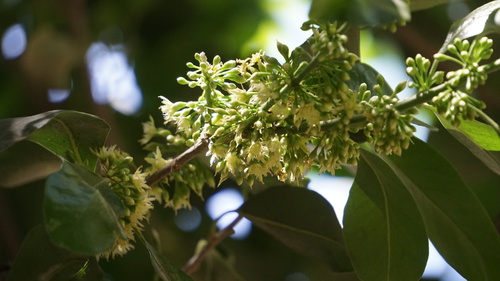
(c) Sindy Monserrat Cortes Echeagaray, some rights reserved (CC BY-NC)
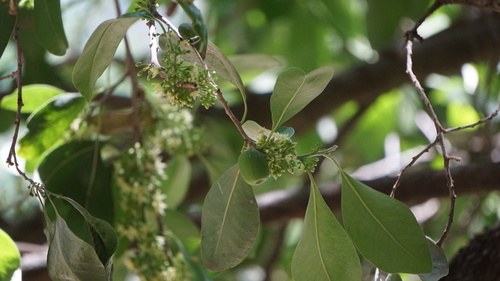
(c) Sindy Monserrat Cortes Echeagaray, some rights reserved (CC BY-NC)
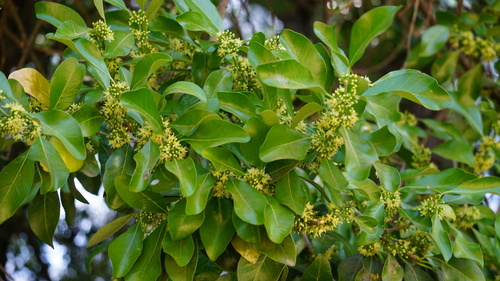
(c) Sindy Monserrat Cortes Echeagaray, some rights reserved (CC BY-NC)
What to Eat
Edible parts: Fruit
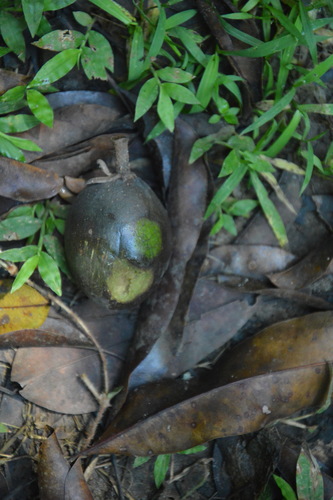
Fruit - raw. Eaten when fully ripe. A thin layer of flesh with a sweet flavour. The oblong to ellipsoid, deep blue to black fruit is around 15 - 25mm long and 10 - 20mm wide, containing a single, large seed.
Known Hazards
Where to Find It
A tropical plant. They grow in moist seasonal evergreen forest. They are common between 800-2000 m altitude.
Belize, Central America*, Colombia, Costa Rica, El Salvador, Guatemala, Hawaii, Mexico, Nicaragua, North America, Panama, South America, Trinidad, USA, Venezuela,
How to Identify
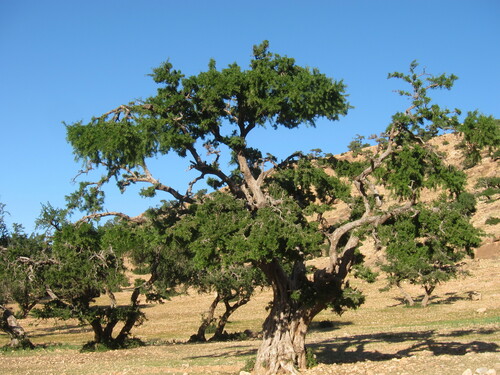
A tree. It grows to 20 m high. The trunk is sometimes fluted. The bark is dark brown to black and finely cracked and scales off in small square pieces. The tree has a dense crown. It keeps its leaves throughout the year. The leaves are dark green and glossy. They are arranged in spirals. The leaves are 5-12 cm long by 2.5-3 cm wide. They are oblong or narrowly oval. The flowers are in the axils of leaves. There are 5-10 flowers in a cluster on branches coming out from a common point. The flowers are greenish-yellow and have a scent. The fruit are 1.2-2 cm long. The fruit are purplish-black when ripe. There is one seed.
How to Grow
Plants are usually grown from seed.
Other Uses
The wood is used for making the handles of tools such as axes. The wood isused for fuel. The tree has been used in reforestation projects in Hawaii.
Names & Synonyms
Alfiler, Bebelama de la sierra, Bumelia, Corpus espina, Palo de clavo
References (9)
- Grandtner, M. M., 2008, World Dictionary of Trees. Wood and Forest Science Department. Laval University, Quebec, Qc Canada. (Internet database http://www.wdt.qc.ca)
- Grandtner, M. M. & Chevrette, J., 2013, Dictionary of Trees, Volume 2: South America: Nomenclature, Taxonomy and Ecology. Academic Press p 604
- Grandtner, M. M. & Chevrette, J., 2013, Dictionary of Trees, Volume 2: South America: Nomenclature, Taxonomy and Ecology. Academic Press p 604
- Kermath, B. M., et al, 2014, Food Plants in the Americas: A survey of the domesticated, cultivated and wild plants used for Human food in North, Central and South America and the Caribbean. On line draft. p 804
- Pennington, T.D., 1990, Sapotaceae in Flora Neotropica Monograph 52. New York Botanical Gardens. p 102
- Piedra-Malagón, E. M., et al, 2022, Edible native plants of the Gulf of Mexico Province. Biodiversity Data Journal 10: e80565 p 29
- Roa, J. A. G. & Boada, D. S. G., 2018, Fundación para el Fortalecimiento de la Fruticultura y Plantas Alimenticias no Convencionales en Colombia.
- Segura, S., et al, 2018, The edible fruit species in Mexico. Genet Resour Crop Evol (2018) 65:1767–1793
- Staples, G.W. and Herbst, D.R., 2005, A tropical Garden Flora. Bishop Museum Press, Honolulu, Hawaii. p 522