Sideroxylon palmeri
(Rose) T. D. Pennington
Bebelama

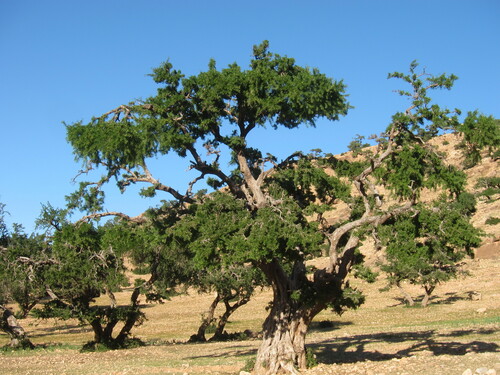
(c) Neptalí Ramírez Marcial, some rights reserved (CC BY), uploaded by Neptalí Ramírez Marcial

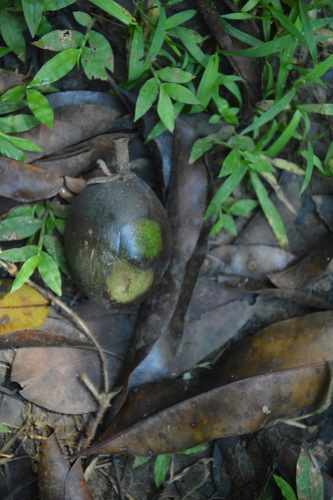
(c) conabio-pj010, some rights reserved (CC BY-NC)
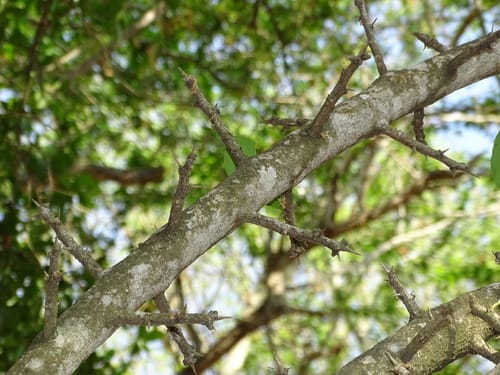
(c) conabio-pj010, some rights reserved (CC BY-NC)
What to Eat
Edible parts: Fruit
The ripe fruit are eaten fresh or dried, and can be cooked using various methods. Young fruit are pickled.
Where to Find It
A tropical plant. It grows in dry forest. It grows from sea level to 1600 m altitude.
Central America, Mexico*, North America,
How to Identify
A spreading tree. The crown is dense. It grows 15-25 m high. The young branches often have spines. The leaf stalks are slender. The leaves are arranged in spirals, and not clustered. They are 5.8-12 cm long by 3.5-5.6 cm wide. The flowers contain both sexes. They occur in the axils of leaves. There are 5-20 flowers in a group on branches coming from a common point. The flowers are white and have a smell. The fruit are 1.5-2 cm long and rounded. The fruit are purplish-black when ripe. The seeds are brown and shiny.
How to Grow
The white flowers are fragrant.
Medicinal Uses
A decoction of the leaves is dropped into the ears and nostrils to allay pain. A decoction of the leaves is used as a painkiller, and particularly to help relieve toothache. The leaves are heated and applied to the teeth for the same purpose, as well as to harden the gums.
Production
Plants take 5 years before fruiting.
Names & Synonyms
Bebelama, Caipoqui liso, Capulin prieto, Coma, Coma real, Cupia, Tempesquistle, Tempixquistle
References (12)
- Arellanes, Y., et al, 2013, Influence of traditional markets on plant management in the Tehuacan Valley. Journal of Ethnobiology and Ethnomedicine 9:38
- Bircher, A. G. & Bircher, W. H., 2000, Encyclopedia of Fruit Trees and Edible Flowering Plants in Egypt and the Subtropics. AUC Press. p 68 (As Bumelia laetevirens)
- Casas, A., et al, 2016, Evolutionary Ethnobotanical Studies of Incipient Domestication of Plants in Mesoamerica. In Lira, R., et al, (eds.) Ethnobotany of Mexico, Ethnobiology. Springer p 258
- Cruz, I. M., et al, 2015, Edible fruits and seeds in the State of Mexico. Revista Mexicana de Ciencias Agricolas. Vol. 6. Num. 2 pp 331-346
- Fl. neotrop. 52:104. 1999
- Gonzalez-Insuasti, M. S. and Caballero, J., 2007, Managing Plants Resources: How Intensive Can it be? Human Ecology, 35:303-314
- Gonzalez-Insuasti, M. S., et al, 2011, Intra-cultural Differences in the Importance of Plant Resources and Their Impact on Management Intensificaton in the Tehuacan Vallet, Mexico. Human Ecology 39:191-202
- Kermath, B. M., et al, 2014, Food Plants in the Americas: A survey of the domesticated, cultivated and wild plants used for Human food in North, Central and South America and the Caribbean. On line draft. p 804
- Pennington, T.D., 1990, Sapotaceae in Flora Neotropica Monograph 52. New York Botanical Gardens. p 104
- Piedra-Malagón, E. M., et al, 2022, Edible native plants of the Gulf of Mexico Province. Biodiversity Data Journal 10: e80565 p 29
- Segura, S., et al, 2018, The edible fruit species in Mexico. Genet Resour Crop Evol (2018) 65:1767–1793
- Whitaker, T. W. & Cutler, H. C., 1966, Food Plants in a Mexican Market. Economic Botany, Vol 20, No. 1. pp 6-16 (As Bumelia laetevirens)