Micropholis crotonoides
(Pierre) Pierre
Caimitillo, Croton like micropholis

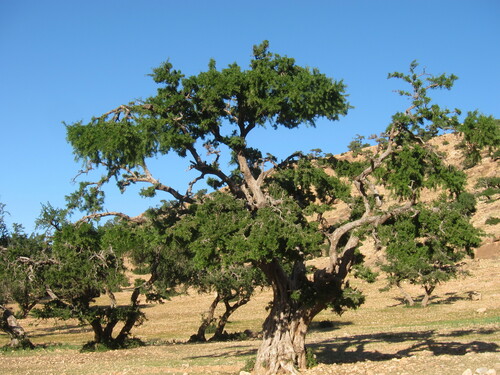
(c) Reinaldo Aguilar, some rights reserved (CC BY-NC-SA)

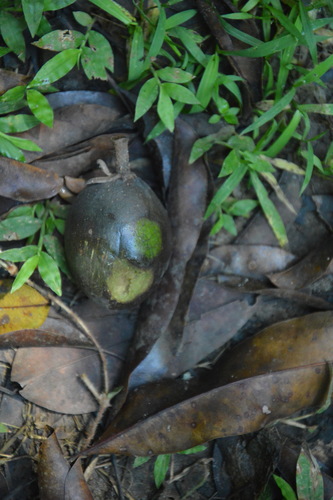
(c) Leo R Quirós, some rights reserved (CC BY-NC)
What to Eat
Edible parts: Fruit
The fruit is edible.
Where to Find It
A tropical plant. It grows in wet mountain and cloud forest. It grows between 1,300 - 2,600 m altitude. It can grow down to sea level.
Central America, Colombia, Costa Rica, Ecuador, Panama, Peru, South America, St Lucia, Venezuela,
How to Identify
A tree. It grows 40 m high. The trunk can be 80 cm across. It has narrow buttresses. The young shoots have fine hairs at first. The bark becomes greyish-brown and rough and cracked. The leaves are spaced and alternate. They can be arranged in spirals. They are 5.3-19 cm long by 1.9-9.2 cm wide. They are oval or sword shaped. The lower surface is usually silvery. There are 12-25 pairs of secondary veins. The leaf stalk is 1-2.8 cm long. The flowers have only one sex but both are on the same plant. There are 3-20 flowers in a tuft near the axils of leaves. The flowers are yellowish-green. The fruit are 1.6-3.5 cm long and oval. The fruit are purple to black at maturity. The fruit is edible. There is one seed. It is 1.4-2.3 cm long. It has a hard, smooth, shiny coat.
Notes
There are 38 Micropholis species in tropical America.
Names & Synonyms
Balata chien, Vara de mar
References (5)
- Grandtner, M. M., 2008, World Dictionary of Trees. Wood and Forest Science Department. Laval University, Quebec, Qc Canada. (Internet database http://www.wdt.qc.ca)
- Grandtner, M. M. & Chevrette, J., 2013, Dictionary of Trees, Volume 2: South America: Nomenclature, Taxonomy and Ecology. Academic Press p 412
- Kermath, B. M., et al, 2014, Food Plants in the Americas: A survey of the domesticated, cultivated and wild plants used for Human food in North, Central and South America and the Caribbean. On line draft. p 538
- Pennington, T.D., 1990, Sapotaceae in Flora Neotropica Monograph 52. New York Botanical Gardens. p 181
- Smith, N., Mori, S.A., et al, 2004, Flowering Plants of the Neotropics. Princeton. p 342