Micropholis venulosa
(Martius & Eichler) Pierre
Caimitillo negro
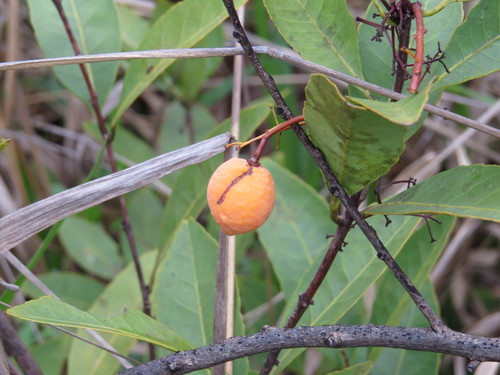
(c) Rosa Cartagenes, some rights reserved (CC BY-NC), uploaded by Rosa Cartagenes

(c) Ymber Flores B, some rights reserved (CC BY-NC)
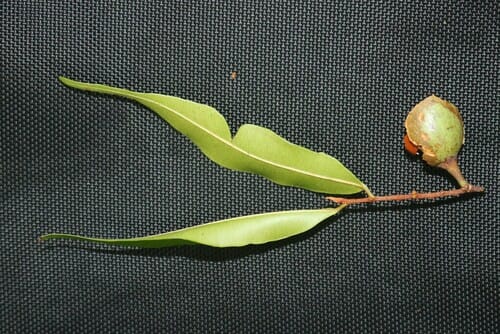
(c) Ymber Flores B, some rights reserved (CC BY-NC)
What to Eat
Edible parts: Fruit
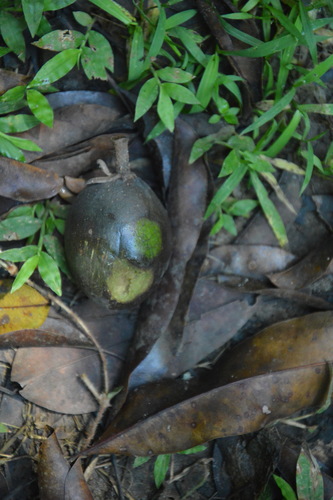
The rounded fruits are edible.
Where to Find It
A tropical plant. It is often in non flooded forest from sea level to 700 m altitude. It also occurs in flooded forest. In some areas it grows up to 1200 m altitude.
Amazon, Andes, Bolivia, Brazil, Central America, Colombia, Costa Rica, Ecuador, French Guiana, Guianas, Guyana, Panama, Peru, South America*, Suriname, Venezuela,
How to Identify
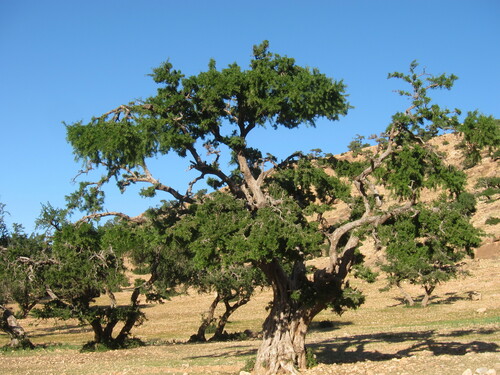
A tree. It grows up to 40 m high. The trunk can be 1 m across. It has buttresses 3 m high. The young shoots have soft golden-brown hairs. The leaves are spaced and usually alternate. Sometimes they are arranged in spirals. The leaves are 3.8-9.3 cm long by 1-3.4 cm wide. They are oval or sword shaped. The leaf stalk is 2-5 mm long. The flowers are of one sex. They occur in tufts of 3015 flowers in the axils of leaves. The flowers are pale green to cream coloured. The fruit is 1.2-3.2 cm long and rounded. The fruit matures yellow with a reddish tinge. The fruit is edible. There is one seed. The seeds is 1-1.5 cm long and wrinkled and shiny.
Other Uses
The wood is a source of a good quality hardwood known as 'curupixa'. We do not have a specific description for the wood of this species, but a general description of curupixa wood is as follows:- The heartwood is a yellow-brown to grey-brown, sometimes with pink or purplish glints; it is not demarcated from the sapwood. The texture is fine; the grain is straight. The wood is moderately heavy to heavy; moderately hard; not very durable, being susceptible to fungi, dry wood borers and termites. It seasons fairly quickly, with only a slight risk of checking or distortion; once dry it is poorly stable in service. It has a fairly high blunting effect, stellite-tipped and tungsten carbide tools are recommended; nailing and screwing are good; gluing is correct. The wood is used for making high class furniture, cabinet making, turnery, wood-ware, light carpentry, interior joinery and panelling, flooring, veneer etc.
Names & Synonyms
Abiu, Akayas, Bagassa, Bogenoemo, Bogiawe, Caimito, Capuli del monte, Capurillo, Chipiri sihica, Fogel kop, Kiudibushi, Menegowe, Menemo, Menigowae, Mimisa yek, Moraballi, Mulchi, Mulungu, Opoka bikina, Palo de chamanare, Palo peruana, Piramiry, Purquillo, Rosado, Sacha aviyu, Sachapua, Shaska-shakyas, Timuiri, Uvinha, Waitawa, Yarasillo, Yuquito, Zolive grand bois
References (12)
- Bendezu, Y. F., 2018, Arboles nativos de lad Region Ucayali. Instituto Nacional de Innovacion Agraria. p 301
- Grandtner, M. M., 2008, World Dictionary of Trees. Wood and Forest Science Department. Laval University, Quebec, Qc Canada. (Internet database http://www.wdt.qc.ca)
- Grandtner, M. M. & Chevrette, J., 2013, Dictionary of Trees, Volume 2: South America: Nomenclature, Taxonomy and Ecology. Academic Press p 414
- Kermath, B. M., et al, 2014, Food Plants in the Americas: A survey of the domesticated, cultivated and wild plants used for Human food in North, Central and South America and the Caribbean. On line draft. p 540
- Pennington, T.D., 1990, Sapotaceae in Flora Neotropica Monograph 52. New York Botanical Gardens. p 196
- Peres, M. K., 2011, Diasporos do Cerrado Atrativos para Fauna: Chave Interativa Caracterizacao Visual e Relacoes Ecologicas. Masters thesis. Universidade de Brasilia.
- Roa, J. A. G. & Boada, D. S. G., 2018, Fundación para el Fortalecimiento de la Fruticultura y Plantas Alimenticias no Convencionales en Colombia.
- Torre, de la, L., et al, 2008, Enciclopedia de las Plantas Útiles del Ecuador. Herbario QCA. Pontificia Universidad Católica del Ecuador. p 571
- Van den Eynden, V., et al, 2003, Wild Foods from South Ecuador. Economic Botany 57(4): 576-603
- Van den Eynden, V., 2004, Use and management of edible non-crop plants in southern Ecuador, Ph D dissertation. p 108
- Van Roosmalen, M.G.M., & Garcia, O. M., 2000, Fruits of the Amazonian Forest. Part 2: Sapotaceae. Acta Amazonica 30(2): 187-290
- Vasquez, R. and Gentry, A. H., 1989, Use and Misuse of Forest-harvested Fruits in the Iquitos Area. Conservation Biology 3(4): 350f