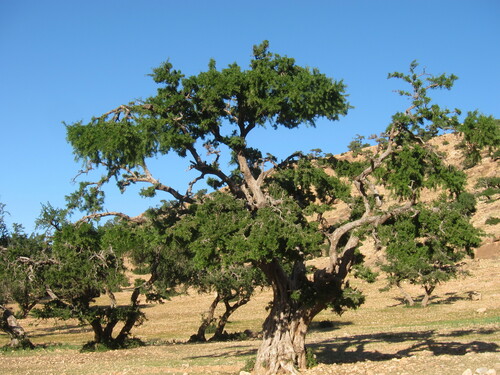
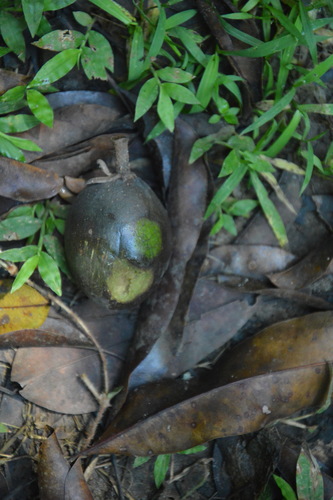
Micropholis obscura
Pennington
Obscure micropholis
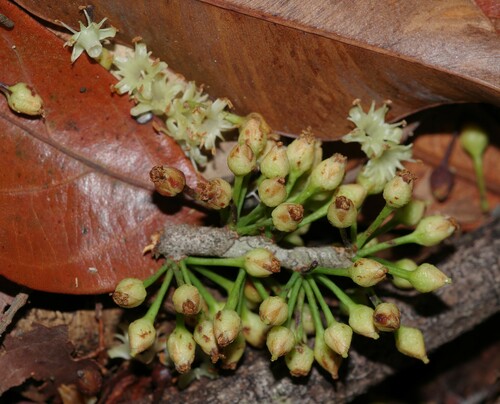
(c) Hervé GALLIFFET, some rights reserved (CC BY-NC), uploaded by Hervé GALLIFFET
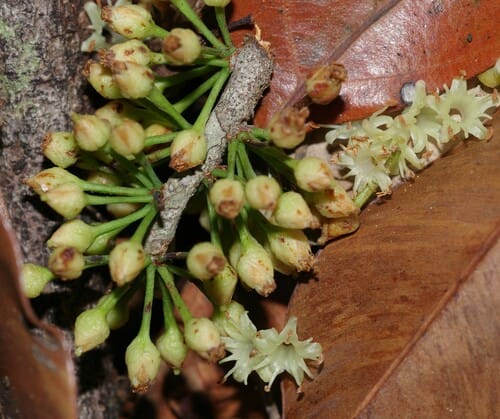
(c) Hervé GALLIFFET, some rights reserved (CC BY-NC)
What to Eat
Edible parts: Fruit
The fruit has sweet pulp and is eaten fresh.
Where to Find It
A tropical plant. It grows in forest which seasonally loses many leaves. It grows between 200-400 m altitude.
Amazon, Brazil, Colombia, Ecuador, French Guiana, Guyana, Peru, South America, Venezuela,
How to Identify
A tree. It grows up to 35 m high. The trunk can be 85 cm across. It has buttresses 1.5 m high. Young shoots have fine hairs. The leaves are spaced and alternate. They are 6.7-13 cm long by 3.5-5.3 cm wide. They are narrowly oval or sword shaped. The flowers have both sexes. They occur in tufts of 5-15 in the axils of leaves. The flowers are greenish-white or pale yellow. They have a scent. The fruit is 2-3 cm long. They are oval. The fruit are yellow. The fruit is edible. There is one seed. It is 1.8 cm long.
Names & Synonyms
Abiurana-de-massa, Bakouman, Balata blanc, Quinilla, Ufu, Zolive
References (5)
- Grandtner, M. M. & Chevrette, J., 2013, Dictionary of Trees, Volume 2: South America: Nomenclature, Taxonomy and Ecology. Academic Press p 414
- Kermath, B. M., et al, 2014, Food Plants in the Americas: A survey of the domesticated, cultivated and wild plants used for Human food in North, Central and South America and the Caribbean. On line draft. p 539
- Pennington, T.D., 1990, Sapotaceae in Flora Neotropica Monograph 52. New York Botanical Gardens. p 227
- Smith, N., Mori, S.A., et al, 2004, Flowering Plants of the Neotropics. Princeton. Plate 44 (Photo)
- Van Roosmalen, M.G.M., & Garcia, O. M., 2000, Fruits of the Amazonian Forest. Part 2: Sapotaceae. Acta Amazonica 30(2): 187-290