Pouteria gardneri
(Martius & Miquel) Baehni
Agauai grande, Gardner pouteria

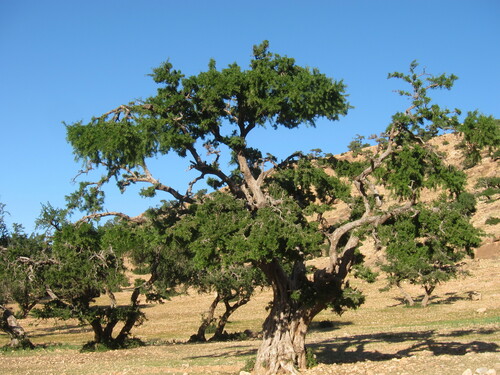
(c) Alex Popovkin, some rights reserved (CC BY), uploaded by Alex Popovkin

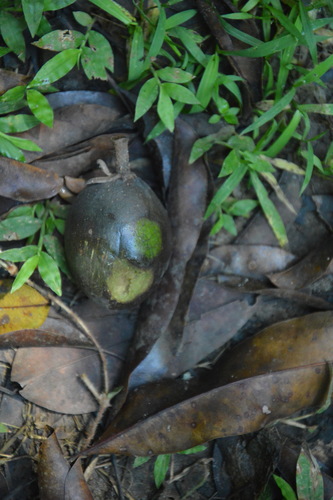
(c) Alex Popovkin, some rights reserved (CC BY-NC-ND), uploaded by Alex Popovkin

(c) Alex Popovkin, some rights reserved (CC BY), uploaded by Alex Popovkin
What to Eat
Edible parts: Fruit
Fruit - raw. The fruit contains a single seed surrounded by a slightly sweet, fleshy pulp. The fruit is about 2cm in diameter.
Where to Find It
A tropical plant. In Bolivia it grows up to 600-1000 m altitude. The rainfall is 1000 mm per year.
Andes, Bolivia, Brazil, Colombia, Paraguay, South America,
How to Identify
A tree. It grows 7-10 m high. The trunk is 30-40 cm across. The young shoots are hairy. The leaves are alternate and loosely clustered near the ends of branches. The leaves are 6-18 cm long by 3-4 cm wide. They taper towards the base. The leaf stalk is 3-9 mm long. The flowers are of one sex with different sexes on separate plants. The flowers occur in clusters of 1-3 flowers in the axils of leaves. The flowers are greenish. The fruit stalk is 0.4-1 cm long. It is slender and can be hairy. The fruit is fleshy with a hard stone. The fruit are 1-1.7 cm long. It is black when ripe. The fruit is edible. The seed is 0.9-1.4 cm long.
How to Grow
Plants are grown from seed. Ripe fruit are harvested and the seeds removed and planted fresh. They germinate in 40-70 days.
Propagation: Seed - best sown as soon as ripe. Sow in a nursery seedbed in a sunny position. Germination usually takes place in 6 - 10 weeks, though the percentage that germinate is normally low.
Other Uses
The wood is heavy, hard, straight grained and of medium to fine texture. It has good mechanical properties and is moderately durable. It is only used locally, being employed in construction, cabinet making and external work.
Wikipedia
Source ↗Pouteria gardneri is a species of plant in the family Sapotaceae. It is a tree native to Brazil, Bolivia, and Paraguay. Its conservation status is insufficiently known.
Other Information
The fruit are not very popular.
Notes
There are about 150-320 Pouteria species. They grow in the tropics.
Names & Synonyms
Aguai-guacu, Frutinha-de-veado, Iba disha, Ihvacurumbicha, Leitero folha miuda, Leiteiro-preto, Massaranduba vermelha, Sapotinha, Tadumo, Traponu-icha
References (9)
- Bortolotto, I. M., et al, 2018, Lista preliminar das plantas alimenticias nativas de Mato Grosso do Sul, Brasil. Iheringia, Serie Botanica, Porto Alegre, 73 (supl.):101-116
- Grandtner, M. M. & Chevrette, J., 2013, Dictionary of Trees, Volume 2: South America: Nomenclature, Taxonomy and Ecology. Academic Press p 525
- Kermath, B. M., et al, 2014, Food Plants in the Americas: A survey of the domesticated, cultivated and wild plants used for Human food in North, Central and South America and the Caribbean. On line draft. p 689
- Lorenzi, H., 2002, Brazilian Trees. A Guide to the Identification and Cultivation of Brazilian Native Trees. Vol. 02 Nova Odessa, SP, Instituto Plantarum p 334
- Lorenzi, H., Bacher, L., Lacerda, M. & Sartori, S., 2006, Brazilian Fruits & Cultivated Exotics. Sao Paulo, Instituto Plantarum de Estuados da Flora Ltda. p 303
- Martin, F. W. Campbell, C. W. & Ruberte, R. M., 1987, Perennial edible fruits of the tropics - An inventory. US Dept. Ag. Handbook No. 642 Washington. (As Pouteria suavis)
- Pennington, T.D., 1990, Sapotaceae in Flora Neotropica Monograph 52. New York Botanical Gardens. p 271
- Vasquez, Roberto Ch. & Coimbra, German S., 1996, Frutas Silvestres Comestibles de Santa Cruz. p 216
- www.colecionandofrutas.org