Pouteria simulans
Monachino
Trompillo

Royal Botanic Gardens, Kew

Conveyor Belt

Royal Botanic Gardens, Kew
What to Eat
Edible parts: Fruit
The fruit is edible.
Where to Find It
A tropical plant. It grows in evergreen lowland and mountain forest. It grows between 200-1500 m altitude.
Central America, Colombia, Ecuador, Panama, Peru, South America, Venezuela,
How to Identify
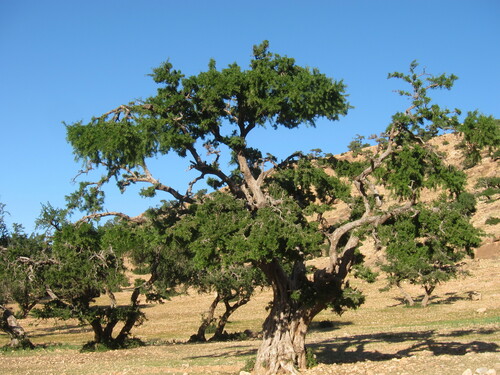
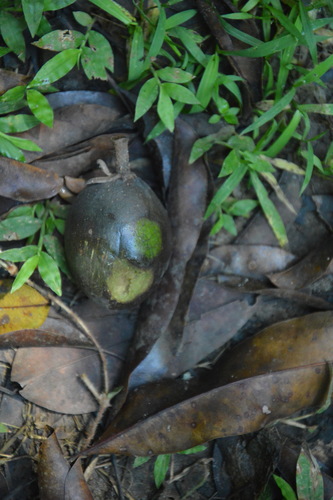
A tree. It grows to 25 m high. The young shoots are hairy. The leaves are spaced or loosely clustered. They are arranged in spirals. The leaves are 11.2-22 cm long by 3.2-9 cm wide. They are broadly oval. There are 10-12 pairs of secondary veins. The flowers contain both sexes. The flowers occur as 1-5 flowers in tufts in the axils of leaves. They are white. The fruit are 3.5-4 cm long. They are dull orange. There is one seed. It is 2.5-2.7 cm long.
Notes
There are about 150-320 Pouteria species. They grow in the tropics.
Names & Synonyms
Anumu, Purgo-macho, Similar pouteria, Trompillo
References (5)
- Grandtner, M. M., 2008, World Dictionary of Trees. Wood and Forest Science Department. Laval University, Quebec, Qc Canada. (Internet database http://www.wdt.qc.ca)
- Grandtner, M. M. & Chevrette, J., 2013, Dictionary of Trees, Volume 2: South America: Nomenclature, Taxonomy and Ecology. Academic Press p 530
- Kermath, B. M., et al, 2014, Food Plants in the Americas: A survey of the domesticated, cultivated and wild plants used for Human food in North, Central and South America and the Caribbean. On line draft. p 696
- Pennington, T.D., 1990, Sapotaceae in Flora Neotropica Monograph 52. New York Botanical Gardens. p 275
- Roa, J. A. G. & Boada, D. S. G., 2018, Fundación para el Fortalecimiento de la Fruticultura y Plantas Alimenticias no Convencionales en Colombia.