Pouteria collina
(Little) Pennington
Caimitillo

(c) Kai Yan, Joseph Wong, some rights reserved (CC BY-NC-SA)

Royal Botanic Gardens, Kew

(c) mavc, some rights reserved (CC BY-NC)

Wikimedia Commons (via Wikimedia Commons)
What to Eat
Edible parts: Fruit
The fruit is edible.
Where to Find It
A tropical plant. It grows in lowland forest near sea level. It can grow in wet forest up to 650 m altitude.
Colombia, Ecuador, South America*,
How to Identify
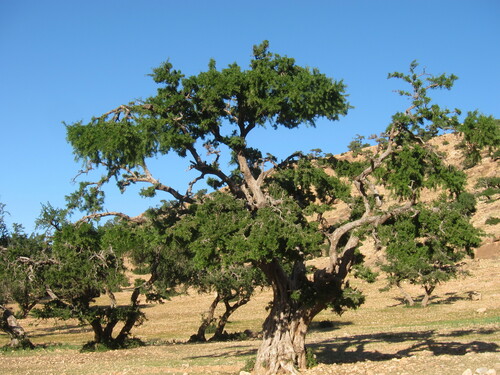
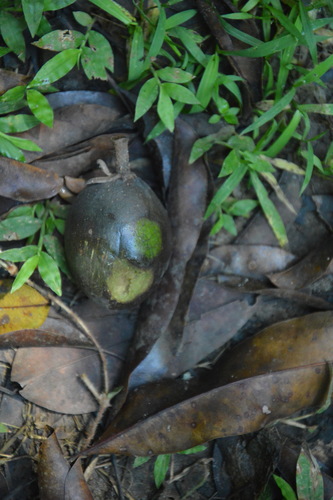
A tree. It grows 30 m high. The trunk can be 45 cm across. It can have low buttresses. The young shoots are hairy with golden brown hairs. The leaves are spaced and arranged in spirals. The leaves are 12.5-24 cm long by 5.7-10.1 cm wide. They are broadly oval. There are 13-18 pairs of secondary veins. The leaf stalk is 1-2 cm long. The flowers have both sexes. There are 5-10 flowers in tufts below the leaves. The fruit is 4-6 cm long. They become yellow-orange when ripe. The fruit are edible. There is one seed. The seed is 3.5-4.5 cm long.
Wikipedia
Source ↗Pouteria collina is a species of plant in the family Sapotaceae. It is found in Colombia and Ecuador.
Notes
There are about 150-320 Pouteria species. They grow in the tropics.
Names & Synonyms
Caimitillon, Cartagena, Kaimitu ainki, Kuaya chapte
References (6)
- Barfod, A. S. & Kvist, L. P., 1996, Comparative Ethnobotanical Studies of the Amerindian Groups in Coastal Ecuador. The Danish Academy of Sciences and Letters. p 79
- Grandtner, M. M. & Chevrette, J., 2013, Dictionary of Trees, Volume 2: South America: Nomenclature, Taxonomy and Ecology. Academic Press p 524
- Kermath, B. M., et al, 2014, Food Plants in the Americas: A survey of the domesticated, cultivated and wild plants used for Human food in North, Central and South America and the Caribbean. On line draft. p 687
- Pennington, T.D., 1990, Sapotaceae in Flora Neotropica Monograph 52. New York Botanical Gardens. p 277
- Roa, J. A. G. & Boada, D. S. G., 2018, Fundación para el Fortalecimiento de la Fruticultura y Plantas Alimenticias no Convencionales en Colombia.
- Torre, de la, L., et al, 2008, Enciclopedia de las Plantas Útiles del Ecuador. Herbario QCA. Pontificia Universidad Católica del Ecuador. p 572