Pouteria cuspidata subsp. robusta
(Martius & Eichler) Pennington
Robust cuspidate pouteria
SapotaceaeFruit
iNaturalist · cc-by-nc
(c) Leonardo Álvarez-Alcázar, some rights reserved (CC BY-NC), uploaded by Leonardo Álvarez-Alcázar
(c) Leonardo Álvarez-Alcázar, some rights reserved (CC BY-NC), uploaded by Leonardo Álvarez-Alcázar
iNaturalist · cc-by-nc
(c) Leonardo Álvarez-Alcázar, some rights reserved (CC BY-NC), uploaded by Leonardo Álvarez-Alcázar
(c) Leonardo Álvarez-Alcázar, some rights reserved (CC BY-NC), uploaded by Leonardo Álvarez-Alcázar
What to Eat
Edible parts: Fruit
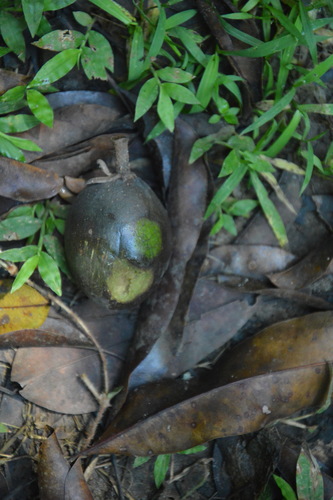
The fruit are eaten.
Where to Find It
A tropical plant. It grows in rainforest and savannah forest up to 2,000 m above sea level.
Amazon, Brazil, Central America, Colombia, Ecuador, French Guiana, Guianas, Panama, Peru, South America, Suriname, Venezuela,
How to Identify
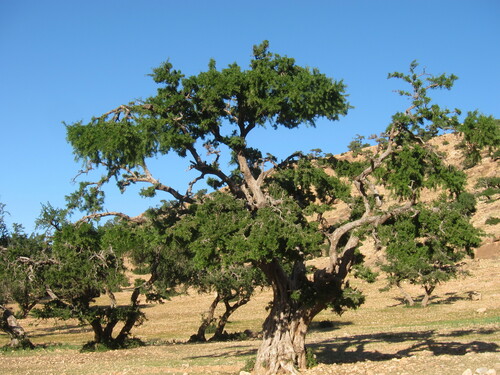
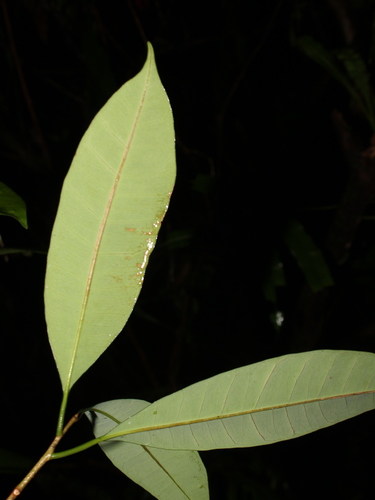
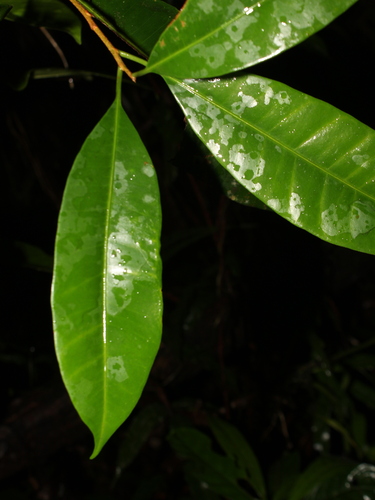
A tree. It grows 30 m tall. The trunk is 45 cm across. It has buttresses about 1 m high. The bark is pale grey and has slight cracks along it. The flowers are yellowish-white. The fruit are a yellowish-green to purple.
Production
It flowers are fruits throughout the year.
Notes
There are about 150-320 Pouteria species. They grow in the tropics.
Names & Synonyms
Abiurana, Balata singe rouge, Boroweballi, Cabecudo, Majarajuba, Maparajuba, Nispero, Temare, Yuquito
Neoxythece robusta (Mart. & Eichler) Aubrev. & Pellegr.Oxythece robusta (Mart. & Eichler) PierrePouteria robusta (Mart. & Eichler) EymaSideroxylon robustum Martius & Euchler
References (5)
- Grandtner, M. M., 2008, World Dictionary of Trees. Wood and Forest Science Department. Laval University, Quebec, Qc Canada. (Internet database http://www.wdt.qc.ca)
- Grandtner, M. M. & Chevrette, J., 2013, Dictionary of Trees, Volume 2: South America: Nomenclature, Taxonomy and Ecology. Academic Press p 524
- Kermath, B. M., et al, 2014, Food Plants in the Americas: A survey of the domesticated, cultivated and wild plants used for Human food in North, Central and South America and the Caribbean. On line draft. p 687
- Pennington, T.D., 1990, Sapotaceae in Flora Neotropica Monograph 52. New York Botanical Gardens. p 350
- Van Roosmalen, M.G.M., & Garcia, O. M., 2000, Fruits of the Amazonian Forest. Part 2: Sapotaceae. Acta Amazonica 30(2): 187-290