Pouteria cayennensis
(A. de Candolle) Eyma
Cayenne pouteria

Wikimedia Commons (via Wikimedia Commons)

Field Museum of Natural History - Botany Department | GDI 2013-2015

Field Museum of Natural History - Botany Department | GDI 2013-2015

Field Museum of Natural History - Botany Department | GDI 2013-2015
What to Eat
Edible parts: Fruit
The fruit is eaten.
Where to Find It
A tropical plant. It grows in lowland mixed forests and lower mountain forests. It grows up to 1,200 m above sea level.
Amazon, Brazil, Colombia, French Guiana, Guyana, South America, Venezuela,
How to Identify
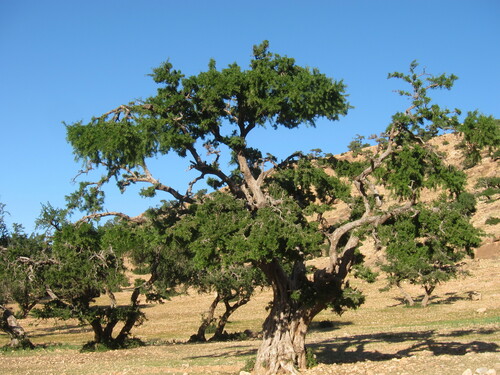
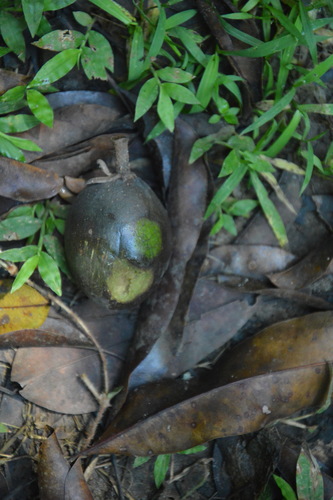
A tree. It grows 46 m tall. The trunk is 1 m across. It has 2 m high buttresses at the base. The bark is dark grey. Young shoots have rusty hairs. The leaves are in clusters and arranged in spirals. They are 9-17 cm long by 4-7 cm wide. They are broadly sword shaped. The flowers are in groups of 2-8. They are in the axils of leaves or clustered below the leaves. The fruit are 3.5 cm long by 2 cm wide. They are oval. There is one seed. It is about 2.3 cm long.
Wikipedia
Source ↗Pouteria cayennensis is a species of plant in the family Sapotaceae. It is found in French Guiana, Guyana, and Venezuela.
Notes
There are about 150-320 Pouteria species. They grow in the tropics.
Names & Synonyms
Amarun-yek
References (6)
- Grandtner, M. M. & Chevrette, J., 2013, Dictionary of Trees, Volume 2: South America: Nomenclature, Taxonomy and Ecology. Academic Press p 524
- Kermath, B. M., et al, 2014, Food Plants in the Americas: A survey of the domesticated, cultivated and wild plants used for Human food in North, Central and South America and the Caribbean. On line draft. p 687
- Pennington, T.D., 1990, Sapotaceae in Flora Neotropica Monograph 52. New York Botanical Gardens. p 366
- Reis, S. V. and Lipp, F. L., 1982, New Plant Sources for Drugs and Foods from the New York Botanical Garden herbarium. Harvard. p 235
- Roa, J. A. G. & Boada, D. S. G., 2018, Fundación para el Fortalecimiento de la Fruticultura y Plantas Alimenticias no Convencionales en Colombia.
- Van Roosmalen, M.G.M., & Garcia, O. M., 2000, Fruits of the Amazonian Forest. Part 2: Sapotaceae. Acta Amazonica 30(2): 187-290