Pouteria grandiflora
(A. de Candolle) Baehni
Largeflower pouteria

Wikimedia Commons - Alex Popovkin, Bahia, Brazil from Brazil

Wikimedia Commons - Alex Popovkin, Bahia, Brazil from Brazil
What to Eat
Edible parts: Fruit
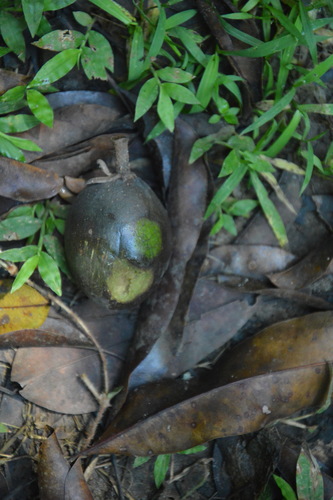
Fruit - raw. The fruit contains 1 - 4 seeds surrounded by a fleshy, floury pulp with a slightly sweet flavour. The fruits are around 9cm in diameter.
Where to Find It
A tropical plant. It grows in forests near the coast in Brazil.
Amazon,Brazil*, Central America, Panama, South America,
How to Identify
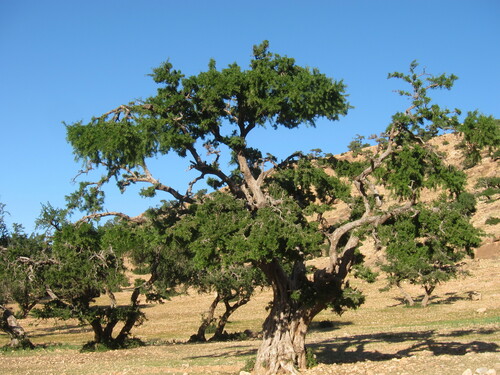
A tree. It grows 6-14 m high. The crown is elongated. The young branches have short hairs. The trunk is 15-30 cm across. The bark is thick and has cracks along it. The leaves are leathery with the edges of the leaves turned downwards. They are 9-19 cm long and 3-7 cm wide. There are 9-16 pairs of secondary veins. The flowers are in in the axils of the leaves with a bunch of 2-10 flowers with short stalks. The fruit is a round but flattened berry. It is 6-9 cm long and has a sweet mealy pulp. There are 1-4 seeds.
How to Grow
Plants are grown from seed. Ripe fruit are harvested and the seeds removed and washed. Fresh seed are planted and germinate in 4-7 weeks.
Propagation: Seed - best sown as soon as it is ripe in individual pots in a sunny position. More than 50% usually germinate in 4 - 7 weeks.
Other Uses
The wood is heavy, hard to cut, of medium texture, straight grained and uniform. It is resistant to insects and of good durability. It is used for small construction work such as scantlings and beams, and for external work such as fence posts, crosspieces, stakes etc.
Other Information
The fruit are not very popular.
Notes
There are about 150-320 Pouteria species. They grow in the tropics.
Names & Synonyms
Bapeba, Bapeba-da-restinga, Bapeba-preta
References (6)
- Fouqué, A., 1972, Espèces fruitières d'Amérique tropicale. Institut français de recherches fruitierès outre-mer (ifac)
- Grandtner, M. M. & Chevrette, J., 2013, Dictionary of Trees, Volume 2: South America: Nomenclature, Taxonomy and Ecology. Academic Press p 526
- Kermath, B. M., et al, 2014, Food Plants in the Americas: A survey of the domesticated, cultivated and wild plants used for Human food in North, Central and South America and the Caribbean. On line draft. p 691
- Lorenzi, H., 2002, Brazilian Trees. A Guide to the Identification and Cultivation of Brazilian Native Trees. Vol. 02 Nova Odessa, SP, Instituto Plantarum p 335
- Lorenzi, H., Bacher, L., Lacerda, M. & Sartori, S., 2006, Brazilian Fruits & Cultivated Exotics. Sao Paulo, Instituto Plantarum de Estuados da Flora Ltda. p 303
- Pennington, T.D., 1990, Sapotaceae in Flora Neotropica Monograph 52. New York Botanical Gardens. p 402