Pouteria dominigensis
(C. F. Gaertner) Baehni
Jocuma
SapotaceaeFruit
iNaturalist · cc-by-nc
(c) maxon_, some rights reserved (CC BY-NC)
(c) maxon_, some rights reserved (CC BY-NC)
iNaturalist · cc-by-nc
(c) maxon_, some rights reserved (CC BY-NC)
(c) maxon_, some rights reserved (CC BY-NC)
iNaturalist · cc-by-nc
(c) maxon_, some rights reserved (CC BY-NC)
(c) maxon_, some rights reserved (CC BY-NC)
What to Eat
Edible parts: Fruit
The fruit is eaten.
Where to Find It
A tropical plant.
Bahamas, Central America, Cuba, Dominican Republic, Haiti, North America, Panama, Puerto Rico, USA, West Indies,
Countries: Antigua & Barbuda, Barbados, Bahamas, Belize, Canada, Costa Rica, Cuba, Dominica, Dominican Republic, Grenada, Guatemala, Honduras, Haiti, Jamaica, St Kitts & Nevis, St Lucia, Mexico, Nicaragua, Panama, Puerto Rico, El Salvador, Trinidad & Tobago, United States, St Vincent
How to Identify
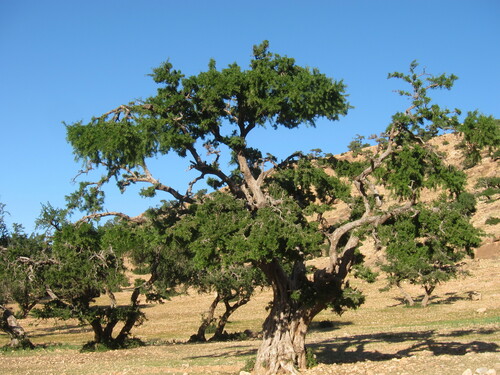
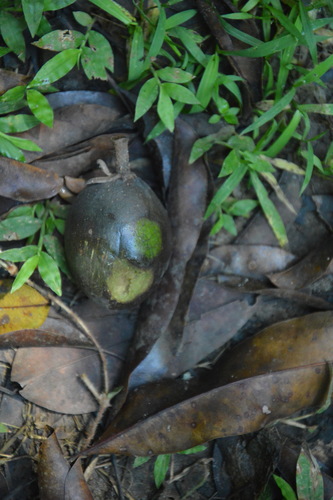
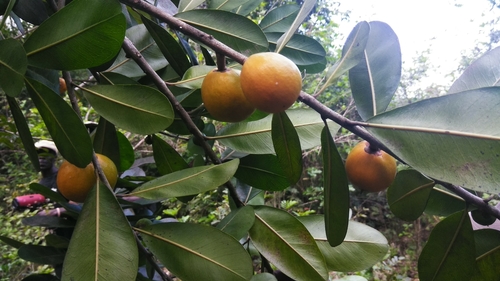
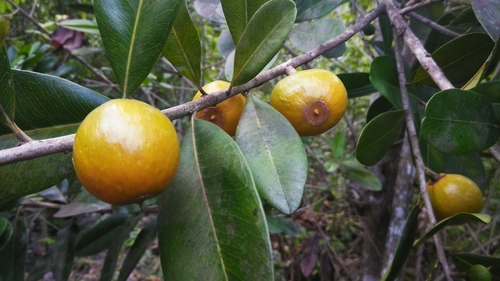
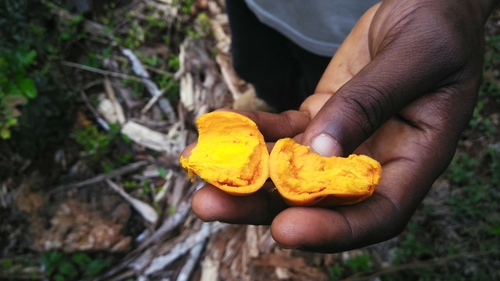
A tree. It grows 10 m tall. The leaves are 4-13 cm long. They are 2-6 cm wide. The flowers occur as several in a group in the axils of leaves. The fruit are yellow and fleshy. They are 2-5 cm long and 3-6 cm wide. There are 1 to several seeds.
Notes
There are about 150-320 Pouteria species. They grow in the tropics.
Names & Synonyms
Achras vitellina TussacLucuma dominigense C. F. GaertnerLucuma nitidula (Engl.) Engl.Lucuma pauciflora A.DC.Lucuma serpentaria KunthPouteria moaensis AlainRadlkoferella dominigensis (C. F. Gaertn.) PierreRadlkoferella nitidula (Engl.) PierreRadlkoferella pauciflora (A.DC.) PierreRadlkoferella serpentaria (Kunth) PierreVitellaria nitidula Engl.Vitellaria pauciflora (A.DC.) Radlk.Vitellaria serpentaria (Kunth) Radlk.
References (8)
- Grandtner, M. M., 2008, World Dictionary of Trees. Wood and Forest Science Department. Laval University, Quebec, Qc Canada. (Internet database http://www.wdt.qc.ca)
- Hedrick, U.P., 1919, (Ed.), Sturtevant's edible plants of the world. p 387 (As Lucuma serpentaria)
- Kermath, B. M., et al, 2014, Food Plants in the Americas: A survey of the domesticated, cultivated and wild plants used for Human food in North, Central and South America and the Caribbean. On line draft. p 688
- Pilz, G. E., 1981, Sapotaceae of Panama. Annals of Missouri Botanical Garden. Vol. 68. No. 1 p 177
- Pennington, T.D., 1990, Sapotaceae in Flora Neotropica Monograph 52. New York Botanical Gardens. p 407
- Plants of Haiti Smithsonian Institute http://botany.si.edu/antilles/West Indies
- Reis, S. V. and Lipp, F. L., 1982, New Plant Sources for Drugs and Foods from the New York Botanical Garden herbarium. Harvard. p 235
- F. W. H. A. von Humboldt et al., Nov. gen. sp. 3:190[folio]; 3:242[quarto]. 1819 (As Lucuma serpentaria)