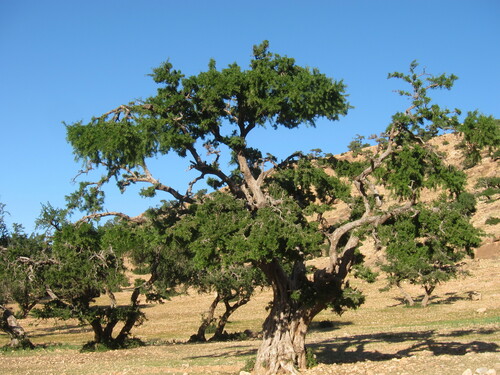
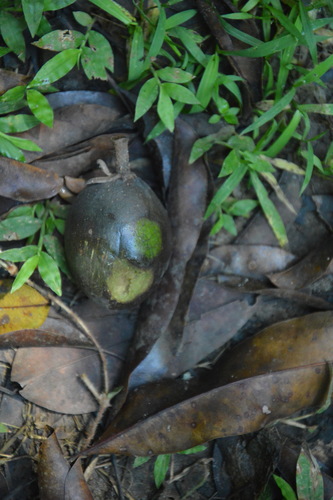
Pouteria glomerata subsp. stylosa
(Pierre) Pennington
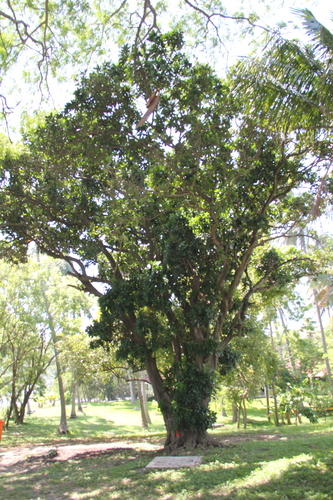
(c) Azul B.M, some rights reserved (CC BY-NC-ND), uploaded by Azul B.M

(c) mdelapuente, some rights reserved (CC BY-NC), uploaded by mdelapuente
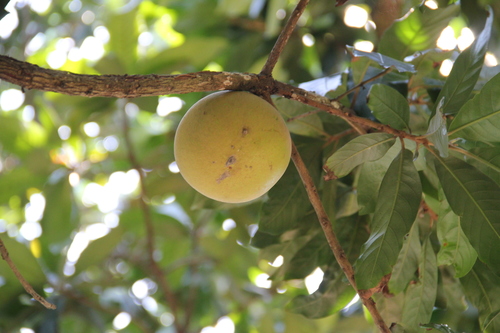
(c) Azul B.M, some rights reserved (CC BY-NC-ND), uploaded by Azul B.M
What to Eat
Edible parts: Fruit
The fruit are eaten fresh and are noted to be sweet.
Where to Find It
A tropical plant. It grows in wet lowland and mountain rain forest. It grows from sea level to 1,000 m above sea level. It can be in areas that are occasionally flooded.
Amazon, Brazil, Central America, Colombia, Costa Rica, Guianas, Panama, South America, Suriname, Venezuela,
How to Identify
A tree. It grows 25 m tall. The trunk is 50 cm across. The trunk is fluted. The bark is greyish brown and finely cracked. The leaves have a yellowish brown coating underneath. The flowers are greenish white and have a scent. The fruit are yellow to pale brown when ripe.
Wikipedia
Source ↗Pouteria glomerata is a species of plant in the family Sapotaceae. It is distributed from Mexico to North-East Argentina. Its greatest presence is in Brazil, where it is known as abiurana-do-igapó (wetland abiurana). Mature fruit has a smooth and yellow pericarp, with four ovary locules. The subspecies Pouteria glomerata subsp. stylosa is endemic to the Amazon Basin, where it is called abiurana-roxa (purple abiurana). The subspecies Pouteria glomerata subsp. glomerata, formerly known as Pouteria hypoglauca, is native to Central America, and an edible fruit (called cinnamon apple), grown in Florida.
Production
Trees flower throughout the year but ripe fruit are most common from January to June.
Other Information
The fruit are sweet.
Notes
There are about 150-320 Pouteria species. They grow in the tropics.
Names & Synonyms
Guayabito, Nispero mono
References (4)
- Grandtner, M. M. & Chevrette, J., 2013, Dictionary of Trees, Volume 2: South America: Nomenclature, Taxonomy and Ecology. Academic Press p 526
- Kermath, B. M., et al, 2014, Food Plants in the Americas: A survey of the domesticated, cultivated and wild plants used for Human food in North, Central and South America and the Caribbean. On line draft. p 690
- Pennington, T.D., 1990, Sapotaceae in Flora Neotropica Monograph 52. New York Botanical Gardens. p 420
- Van Roosmalen, M.G.M., & Garcia, O. M., 2000, Fruits of the Amazonian Forest. Part 2: Sapotaceae. Acta Amazonica 30(2): 187-290