Pouteria torta
(Martius) Radlkofer
Curiola, Twisted pouteria
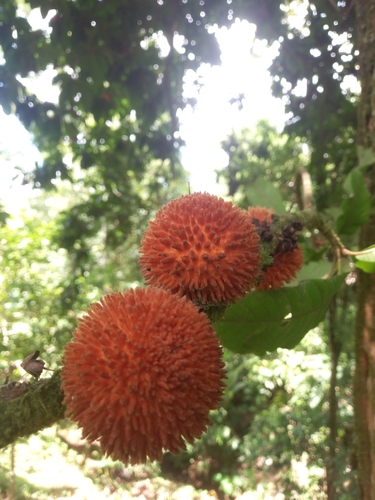
(c) Bayardo Alberto González Ñamendy, some rights reserved (CC BY-NC)
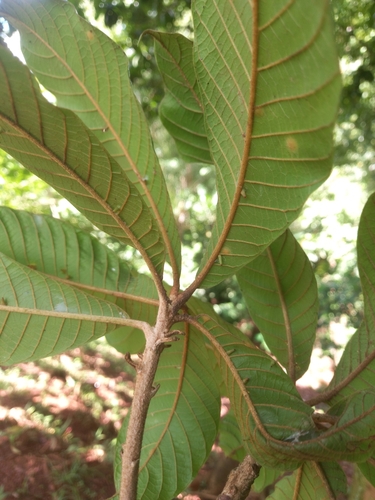
(c) Bayardo Alberto González Ñamendy, some rights reserved (CC BY-NC)
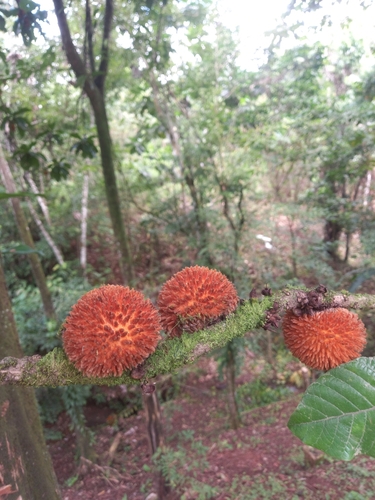
(c) Bayardo Alberto González Ñamendy, some rights reserved (CC BY-NC)
What to Eat
Edible parts: Fruit
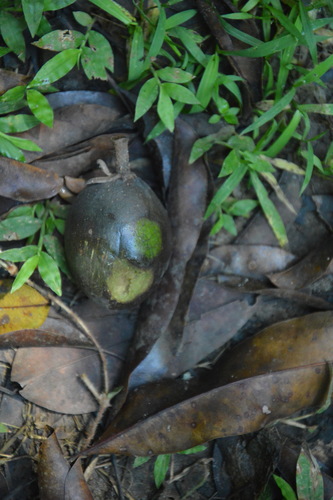
Fruit - raw or used in beverages and preserves. A thick, gelatinous pulp with a slightly sweet flavour. Very tasty.The ovoid fruits are about 5cm long and 4cm in diameter.
Where to Find It
A tropical plant. It grows naturally in wet tropical rainforests in Brazil. It is often near swamps and river banks. It grows in lowlands and uplands.
Amazon, Belize, Bolivia, Brazil*, Central America, Colombia*, Costa Rica, Ecuador*, El Salvador, Guatemala, Honduras, Mexico, Nicaragua, Panama, Paraguay, Peru, South America*,
How to Identify
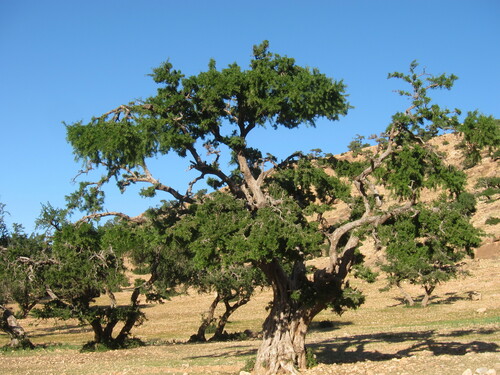
A small to medium sized tree. It grows up to 10 m high. It can be 40 m tall. The crown is round and the trunk is grooved. The trunk is short and 30-40 cm across. The leaves are leathery. They are in groups at the tips of the stems. The leaves are 20-25 cm long. The flowers are small and red. The fruit are small and egg shaped. They are 3-7 cm across. The skin is green to brown and the flesh is soft and white.
How to Grow
Plants are grown from seed. The ripe fruit are harvested and put in a heap to allow the flesh to rot. The seeds are washed out with running water. The seeds are only viable for a very short time. Fresh seed should be planted. They germinate in 25-50 days.
Propagation: Seed - it has a very short viability in storage and so is best sown as soon as it is ripe in individual pots. Germination usually occurs in 3 - 7 weeks, the germination rate is above 80% if the seed is sown fresh.
Other Uses
The wood is moderately heavy, hard, difficult to saw. It has a long durability if it is protected from humidity. It is used for construction, cabinet making and internal carpentry. A fast-growing tree that is tolerant of full sun and supplies a food appreciated by humans and many other species, this tree could be very useful in a mixed planting for restoring native woodland and also for establishing woodland gardens.
Wikipedia
Source ↗Pouteria torta is a species of tree native to Central and South America. It is found largely in the Brazilian cerrado and is commonly called guapeva and grão-de-galo.
Production
Plants grow quickly in the field. The fruit are picked off the ground during the rainy season.
Other Information
It is a cultivated fruit tree.
Notes
There are about 150-320 Pouteria species. They grow in the tropics.
Names & Synonyms
Abiu pilosa, Avio de monte, Grao-de-galo, Jaija'onasotoa, Laranjinha, Ontogamo, Pe'su toa, Piaste, Quinilla negra
References (18)
- Barfod, A. S. & Kvist, L. P., 1996, Comparative Ethnobotanical Studies of the Amerindian Groups in Coastal Ecuador. The Danish Academy of Sciences and Letters. p 79
- Bortolotto, I. M., et al, 2018, Lista preliminar das plantas alimenticias nativas de Mato Grosso do Sul, Brasil. Iheringia, Serie Botanica, Porto Alegre, 73 (supl.):101-116
- Condit, R., et al, 2011, Trees of Panama and Costa Rica. Princeton Field Guides. p 440
- Grandtner, M. M., 2008, World Dictionary of Trees. Wood and Forest Science Department. Laval University, Quebec, Qc Canada. (Internet database http://www.wdt.qc.ca)
- Grandtner, M. M. & Chevrette, J., 2013, Dictionary of Trees, Volume 2: South America: Nomenclature, Taxonomy and Ecology. Academic Press p 530
- Kermath, B. M., et al, 2014, Food Plants in the Americas: A survey of the domesticated, cultivated and wild plants used for Human food in North, Central and South America and the Caribbean. On line draft. p 699
- Lopez-Diago, D. & Garcia, N., 2021, Wild edible fruits of Colombia. Biota ColomBiana 22 (2) p 51
- Lorenzi, H., 2002, Brazilian Trees. A Guide to the Identification and Cultivation of Brazilian Native Trees. Vol. 01 Nova Odessa, SP, Instituto Plantarum p 341
- Lorenzi, H., Bacher, L., Lacerda, M. & Sartori, S., 2006, Brazilian Fruits & Cultivated Exotics. Sao Paulo, Instituto Plantarum de Estuados da Flora Ltda. p 307
- Paz, F. S., et al, 2021, Edible Fruit Plant Species in the Amazon Forest Rely Mostly on Bees and Beetles as Pollinators. Journal of Economic Entomology, XX(XX), 2021, 1–13
- Pennington, T.D., 1990, Sapotaceae in Flora Neotropica Monograph 52. New York Botanical Gardens. p 481
- Peres, M. K., 2011, Diasporos do Cerrado Atrativos para Fauna: Chave Interativa Caracterizacao Visual e Relacoes Ecologicas. Masters thesis. Universidade de Brasilia.
- Philips, O., 1992, The potential for harvesting fruits in tropical rainforests: new data from Amazonian Peru. Biodiversity and Conservation 2, 18-38
- Roa, J. A. G. & Boada, D. S. G., 2018, Fundación para el Fortalecimiento de la Fruticultura y Plantas Alimenticias no Convencionales en Colombia.
- Smith, N., et al, 2007, Amazon River Fruits. Flavors for Conservation. Missouri Botanical Gardens Press. p 235
- Torre, de la, L., et al, 2008, Enciclopedia de las Plantas Útiles del Ecuador. Herbario QCA. Pontificia Universidad Católica del Ecuador. p 573
- Van Roosmalen, M.G.M., & Garcia, O. M., 2000, Fruits of the Amazonian Forest. Part 2: Sapotaceae. Acta Amazonica 30(2): 187-290
- www.colecionandofrutas.org