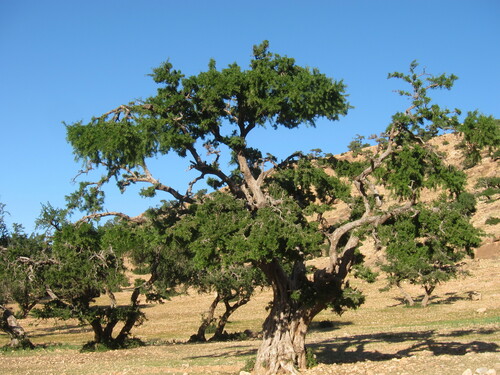
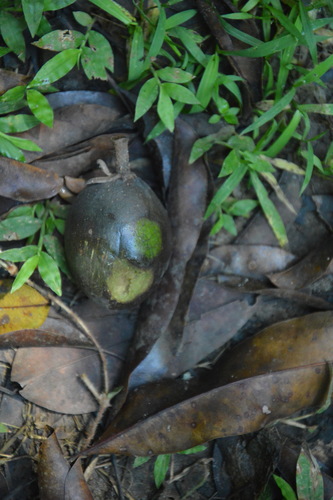
Pouteria hispida
Eyma
Hispid pouteria
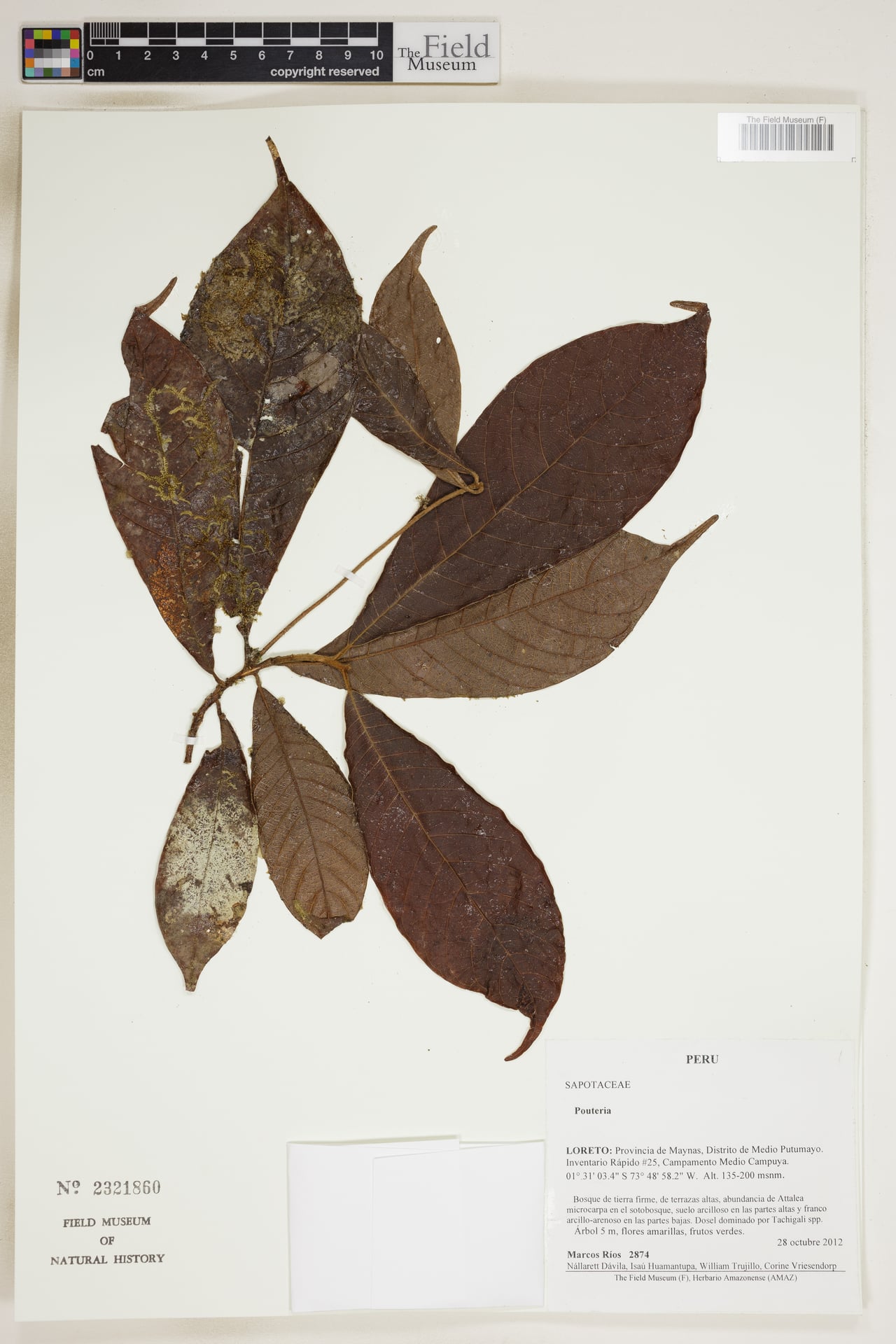
C. Dennis : Field Museum of Natural History - Botany Department

N. Dávila

N. Dávila
What to Eat
Edible parts: Fruit
The fruit are eaten.
Where to Find It
A tropical plant. It grows in rainforest and savanna forest. It grows on non flooded land. It grows from sea level to 900 m above sea level.
Amazon, Bolivia, Brazil, Central America, Colombia, Costa Rica, Ecuador, French Guiana, Guianas, Guyana, Panama, Peru, South America, Suriname, Venezuela,
How to Identify
A large tree. It grows 17-36 m tall. The trunk is 1 m across. The trunk is fluted and has buttresses 5 m high. The outer bark is grey and flaky. The young shoots have sharp hairs. The leaves are in clusters and arranged in spirals. They are 6-25 cm long by 3-9 cm wide. They are oval. There are stiff hairs on the midrib underneath. Flowers are in groups of 2-6 and are usually clustered below the leaves. The fruit are small yellow berries. They are 4-8 cm long. There are several seeds.
Other Information
It is cultivated.
Notes
There are about 150-320 Pouteria species. They grow in the tropics.
Names & Synonyms
Abuirana, Abuirana braba, Abuirana braba, Asipoko, Atakamaraballi, Aviyu, Black asepoko, Caimito negro, Curriola peluda, Dadarue, Dayahuetoa, Kamahora, Naso toa, Tuwonure, Yawaxihi
References (12)
- Grandtner, M. M., 2008, World Dictionary of Trees. Wood and Forest Science Department. Laval University, Quebec, Qc Canada. (Internet database http://www.wdt.qc.ca)
- Grandtner, M. M. & Chevrette, J., 2013, Dictionary of Trees, Volume 2: South America: Nomenclature, Taxonomy and Ecology. Academic Press p 526
- Kermath, B. M., et al, 2014, Food Plants in the Americas: A survey of the domesticated, cultivated and wild plants used for Human food in North, Central and South America and the Caribbean. On line draft. p 691
- Lopez-Diago, D. & Garcia, N., 2021, Wild edible fruits of Colombia. Biota ColomBiana 22 (2) p 51
- Pennington, T.D., 1990, Sapotaceae in Flora Neotropica Monograph 52. New York Botanical Gardens. p 488
- Roa, J. A. G. & Boada, D. S. G., 2018, Fundación para el Fortalecimiento de la Fruticultura y Plantas Alimenticias no Convencionales en Colombia.
- Torre, de la, L., et al, 2008, Enciclopedia de las Plantas Útiles del Ecuador. Herbario QCA. Pontificia Universidad Católica del Ecuador. p 572
- van Andel, T., 2000, Useful plants of Guyana. Non-timber forest products of the North-West District of Guyana. Part 2. A Field Guide. Tropenbos-Guyana Programme. p 306
- van Roosmalen, M.G.M., 1985, Fruits of the Guianan Flora. Utrecht Univ. & Wageningen Univ. p 410
- Van Roosmalen, M.G.M., & Garcia, O. M., 2000, Fruits of the Amazonian Forest. Part 2: Sapotaceae. Acta Amazonica 30(2): 187-290
- www.colecionandofrutas.org
- www.proyanomami.org