Ecclinusa lanceolata
(Martius & Eichler) Pierre
Coquirana, Lanceolate ecclinusa
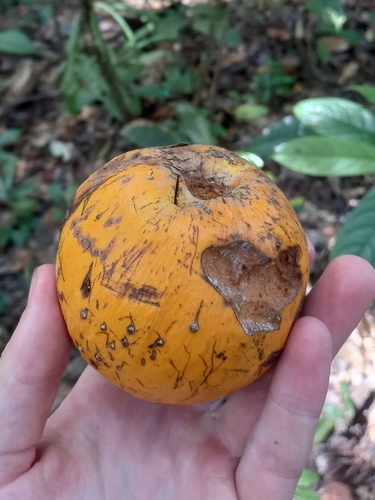
(c) Robin Heymans, some rights reserved (CC BY-NC), uploaded by Robin Heymans

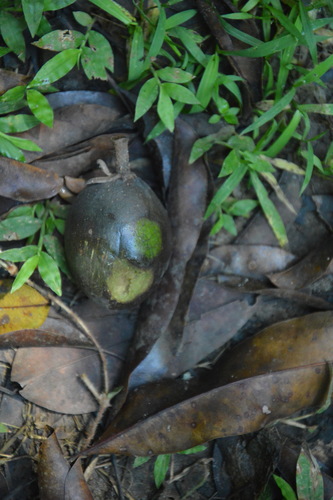
(c) Nils Servientis - Bivouac Naturaliste, some rights reserved (CC BY-NC)

(c) Nils Servientis - Bivouac Naturaliste, some rights reserved (CC BY-NC)
What to Eat
Edible parts: Fruit, Latex
The fruit is eaten raw. The latex is used as chewing gum.
Where to Find It
A tropical plant. It grows in the wet forests and occasionally flooded lowlands.
Amazon, Bolivia, Brazil, Central America, Colombia, Ecuador, French Guiana, Guyana, Panama, Peru, South America, Venezuela,
How to Identify
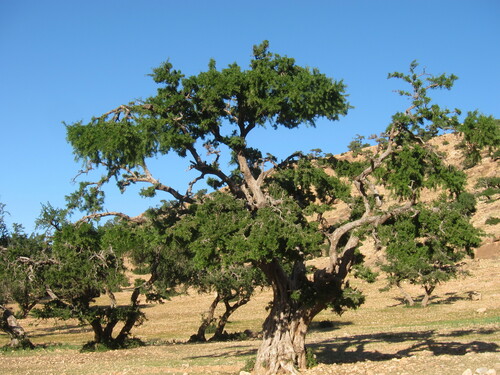
A tall tree. It grows 35 m tall and the trunk can be 50 cm across. There can be small buttresses at the base. The leaves are simple, alternate and shiny. They are clustered towards the ends of branches. There are 5-10 flowers in a group. The fruit are oval and 5-6 cm across.
Notes
There are 11 Ecclinisia in tropical America.
Names & Synonyms
Braba do igapo, Caimito de montana, Mameicillo, Nisperillo, Ontogamo, Toa acue ni, Toa ni
References (11)
- Bendezu, Y. F., 2018, Arboles nativos de lad Region Ucayali. Instituto Nacional de Innovacion Agraria. p 299
- Condit, R., et al, 2011, Trees of Panama and Costa Rica. Princeton Field Guides. p 438
- Gilmore, M. P., et al, 2013, The socio-cultural importance of Mauritia flexuosa palm swamps (aguajales) and implications for multi-use management in two Maijuna communities of the Peruvian Amazon. Journal of Ethnobiology and Ethnomedicine 2013, 9:29
- Grandtner, M. M., 2008, World Dictionary of Trees. Wood and Forest Science Department. Laval University, Quebec, Qc Canada. (Internet database http://www.WDT.QC.ca) (As Ecclinusa)
- Grandtner, M. M. & Chevrette, J., 2013, Dictionary of Trees, Volume 2: South America: Nomenclature, Taxonomy and Ecology. Academic Press p 214
- Kermath, B. M., et al, 2014, Food Plants in the Americas: A survey of the domesticated, cultivated and wild plants used for Human food in North, Central and South America and the Caribbean. On line draft. p 326
- Lopez-Diago, D. & Garcia, N., 2021, Wild edible fruits of Colombia. Biota ColomBiana 22 (2) p 51
- Pennington, T.D., 1990, Sapotaceae in Flora Neotropica Monograph 52. New York Botanical Gardens. p 635
- Roa, J. A. G. & Boada, D. S. G., 2018, Fundación para el Fortalecimiento de la Fruticultura y Plantas Alimenticias no Convencionales en Colombia.
- Torre, de la, L., et al, 2008, Enciclopedia de las Plantas Útiles del Ecuador. Herbario QCA. Pontificia Universidad Católica del Ecuador. p 570
- Van Roosmalen, M.G.M., & Garcia, O. M., 2000, Fruits of the Amazonian Forest. Part 2: Sapotaceae. Acta Amazonica 30(2): 187-290