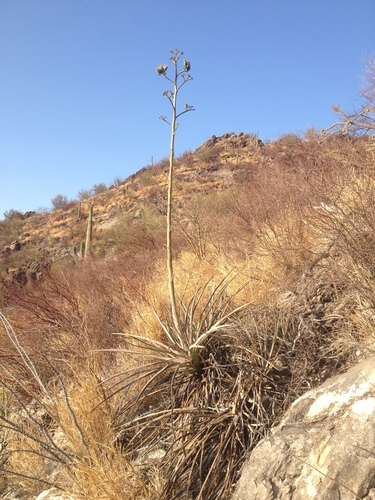
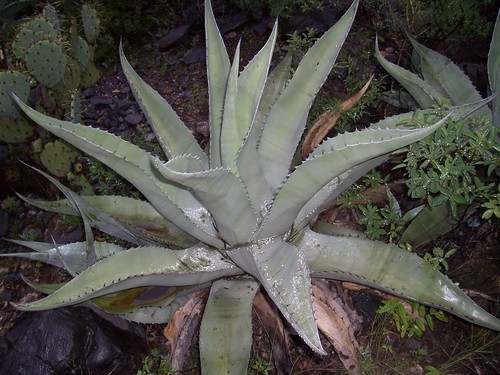
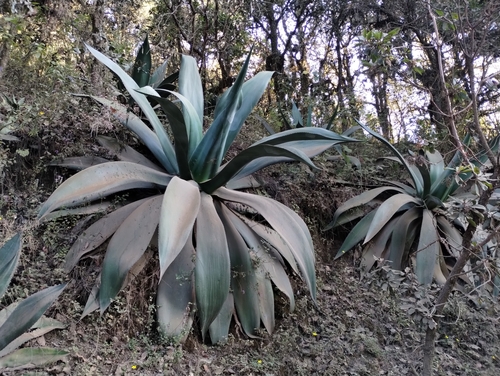
Dracaena sp. 2

Wikimedia Commons - Ton Rulkens from Mozambique

Wikimedia Commons - Akos Kokai
What to Eat
Edible parts: Leaves
The leaves are eaten.
Where to Find It
A tropical plant.
Asia, Indonesia, Malaysia, SE Asia,
How to Identify
A tropical plant in the Asparagaceae family with approximately 40-60 species in the genus.
Medicinal Uses
The trees can be harvested for their crimson red resin, called dragon's blood, which was highly prized in the ancient world and is still used today. Around the Mediterranean basin it is used as a dye and as a medicine, Socotrans use it ornamentally as well as dyeing wool, gluing pottery, a breath freshener, and lipstick. The root yields a gum-resin, used in gargle water as a stimulant, astringent and in toothpaste. The root is used in rheumatism, the leaves are a carminative. In 1883, the Scottish botanist Isaac Bayley Balfour identified three grades of resin: the most valuable were tear-like in appearance, then a mixture of small chips and fragments, with a mixture of fragments and debris being the cheapest. The resin of D. cinnabari is thought to have been the original source of dragon's blood until during the medieval and renaissance periods when other plants were used instead. Because of the belief that it is the blood of the dragon it is also used in ritual magic and alchemy. The local inhabitants of the city in the Socotra Island used the dragon's blood resin as a cure-all. Greeks, Romans, and Arabs used it in general wound healing, as a coagulant, cure for diarrhea, for dysentery diseases, for lowering fevers. It was also taken for ulcers in the mouth, throat, intestines and stomach. Dragon's blood from D. cinnabari was used as a source of varnish for 18th-century Italian violin-makers. It was also used as tooth-paste in the 18th century. It is still used as varnish for violins and for photoengraving. Dragon's blood is also listed in a 16th-century text, Von Stahel und Eysen, as an ingredient in a quenching bath for tempering steel.
Notes
There are about 40-60 species of Dracaena. Also put in the family Dracaenaceae.
References (1)
- Altschul, S.V.R., 1973, Drugs and Foods from Little-known Plants. Notes in Harvard University Herbaria. Harvard Univ. Press. Massachusetts. no. 307