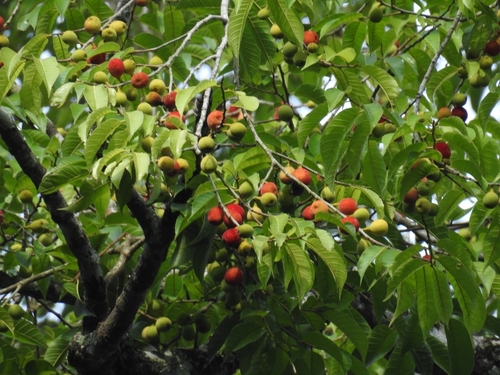
Ficus odoardi
King
Alafasu
MoraceaeLeaves
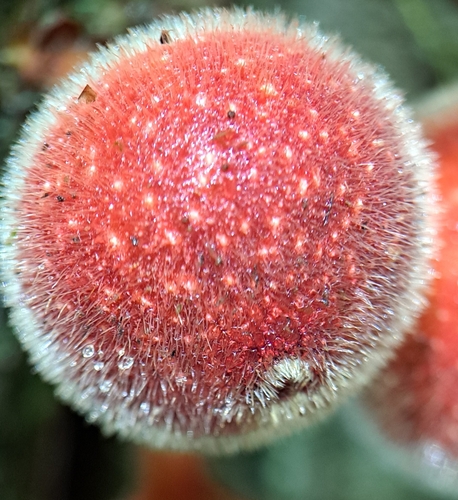
iNaturalist · cc-by-nc
(c) Imam Taufik Hidayat, some rights reserved (CC BY-NC), uploaded by Imam Taufik Hidayat
(c) Imam Taufik Hidayat, some rights reserved (CC BY-NC), uploaded by Imam Taufik Hidayat
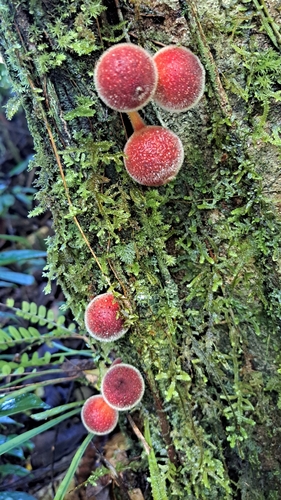
iNaturalist · cc-by-nc
(c) Imam Taufik Hidayat, some rights reserved (CC BY-NC)
(c) Imam Taufik Hidayat, some rights reserved (CC BY-NC)
What to Eat
Edible parts: Leaves
The leaves are chewed as a substitute for betel, typically prepared with lime and betel leaf.
Where to Find It
A tropical plant. It has been recorded in the Central Province in PNG and at Okapa. It grow in the rainforest.
Asia, Indonesia, Pacific, Papua, Papua New Guinea, PNG, SE Asia, Solomon Islands,
Countries: United Arab Emirates, Afghanistan, Armenia, Australia, Azerbaijan, Bangladesh, Bahrain, Brunei, Bhutan, China, Fiji, Micronesia, Georgia, Indonesia, Israel, India, Iraq, Iran, Jordan, Japan, Kyrgyzstan, Cambodia, Kiribati, North Korea, South Korea, Kuwait, Kazakhstan, Laos, Lebanon, Sri Lanka, Marshall Islands, Myanmar, Mongolia, Maldives, Malaysia, Nepal, Nauru, New Zealand, Oman, Papua New Guinea, Philippines, Pakistan, Palau, Qatar, Saudi Arabia, Solomon Islands, Singapore, Syria, Thailand, Tajikistan, Timor-Leste, Turkmenistan, Tonga, Turkey, Tuvalu, Taiwan, Uzbekistan, Vietnam, Vanuatu, Samoa, Yemen
How to Identify
A climbing fig. It grows 12 m tall. The leaves are oval and taper to the tip. The figs are in the axils of the leaves. They are red and 3-4 cm across.
Notes
There are about 800-1000 Ficus species. They are mostly in the tropics. There are 120 Ficus species in tropical America.
References (2)
- Altschul, S.V.R., 1973, Drugs and Foods from Little-known Plants. Notes in Harvard University Herbaria. Harvard Univ. Press. Massachusetts. no. 720
- French, B.R., 2010, Food Plants of Solomon Islands. A Compendium. Food Plants International Inc. p 82