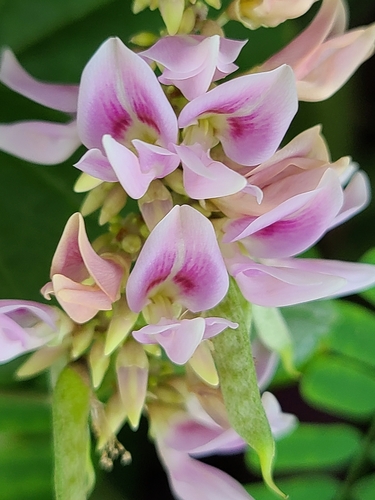
Inga calderonii
Standley

Rapid Reference Collection (RRC) | Field Museum of Natural History - Keller Science Action Center
What to Eat
Edible parts: Seeds
Although we have no specific information for this species, many members of this genus produce a sweet-tasting edible pulp around the seeds. The seedpod is about 50mm long and 35mm wide.
Where to Find It
A tropical plant.
Central America, El Salvador, Guatemala, Honduras, Mexico, North America,
How to Identify
A tropical tree in the Fabaceae family that produces seed pods approximately 5 cm long by 3.5 cm wide. Seeds germinate readily in 1-2 weeks with moisture and shade.
How to Grow
Plants grow easily from seeds. Seeds germinate in 1-2 weeks given moisture and shade.
Other Uses
The wood of Inga species is generally attractive, but it has a coarse texture, is susceptible to attack by dry-wood termites and is not durable in the soil. When grown as a shade tree, the plant is pruned on a regular basis, and these prunings are often burned as a fuel. The tree is used to provide shade in coffee plantations in El Salvador. It has been introduced into Honduras for agroforestry trials. Inga species generally have a number of factors that make them popular for use as shade trees in coffee and cacao plantations:- they grow quickly and so soon make an effecte shade; they respond well to drastic pruning and so are easy to keep within the required size and shade levels; they promote and maintain soil fertility; they are effective soil stabilizers.
Notes
There are 350 Inga species. Also as Mimosaceae.
References (3)
- Altschul, S.V.R., 1973, Drugs and Foods from Little-known Plants. Notes in Harvard University Herbaria. Harvard Univ. Press. Massachusetts. no. 1498
- Fern, K., 2012, Tropical Species Database http://theferns.info/tropical/
- ILDIS Legumes of the World http:www;ildis.org/Legume/Web