Inga ingoides
(L.C. Rich.) Willd.
Warako-sa
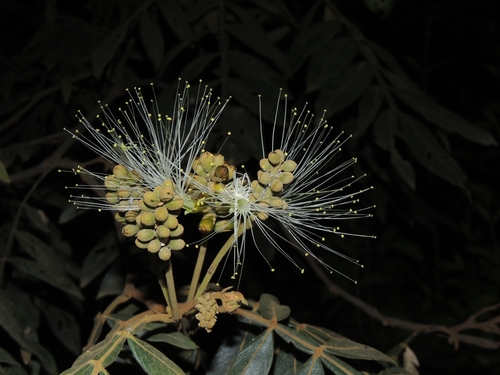
(c) Rogério Gribel, some rights reserved (CC BY-NC-ND), uploaded by Rogério Gribel

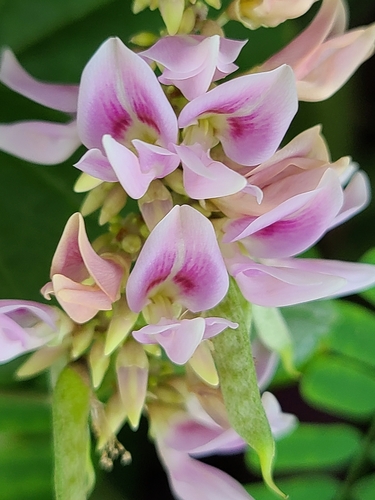
(c) Christine Delbouis, some rights reserved (CC BY-NC)

(c) Christine Delbouis, some rights reserved (CC BY-NC)
What to Eat
Edible parts: Fruit, Pod pulp, Seeds
The sweet white pulp surrounding the seeds in the pods is eaten, and the seeds themselves are also edible.
Known Hazards
Where to Find It
A tropical plant. In grows in the coastal plain in wet or dry areas.
Amazon, Bolivia*, Brazil*, Caribbean, Central America, Colombia, Dominican Republic, French Guiana, Guianas, Guyana, Haiti, Lesser Antilles, North America, Peru*, Puerto Rico, South America, Suriname, Trinidad, USA, Venezuela, West Indies,
How to Identify
A tree. It grows 10-25 m tall. The twigs are fairly thick. They are angular and have a reddish-brown covering when young. The leaves are compound. The leaflets are papery. They hang down when young. The flower heads are in the axils of leaves. They are short and dense. The fruit is a cylinder shaped pod. It is usually twisted. It is 35 cm long by 1 cm across. It has a yellow-brown covering. They have furrows along them. The seeds are in a sweet edible, white pulp.
How to Grow
Plants grow easily from seeds. Seeds germinate in 1-2 weeks given moisture and shade.
Medicinal Uses
I. edulis is widely used in native South American folk medicine. Decoctions of the leaves, bark, or root commonly are used as treatments for diarrhea, arthritis, and rheumatism. Crushed, boiled leaves are ingested to relieve coughing or applied to lip sores, possibly caused by herpes. Several studies have investigated I. edulis as a source of polyphenols for use as antioxidants and have shown promising results. .
Other Uses
There is a thin layer of dull brown heartwood surrounded by an oatmeal-coloured sapwood which has dark brown or black streaks. The wood is of medium density to moderately heavy, it splinters easily and is liable to check in drying. It is little used, other than as fuel.
Other Information
It is also cultivated.
Notes
There are 350 Inga species. Also as Mimosaceae.
Names & Synonyms
Coto chupa, Guama, Guamo cafetero, Guabilla, Inga, Pacae colorado, Pacai, Pacay, Warakosa
References (14)
- Altschul, S.V.R., 1973, Drugs and Foods from Little-known Plants. Notes in Harvard University Herbaria. Harvard Univ. Press. Massachusetts. no. 1509
- Bendezu, Y. F., 2018, Arboles nativos de lad Region Ucayali. Instituto Nacional de Innovacion Agraria. p 133
- Flores, Y., 2018, Arboles nativos de la Region Ucayili. Estacion Experimental Agragia Pucallpa. Pucallpa Peru, 375 p. p 133
- Grandtner, M. M. & Chevrette, J., 2013, Dictionary of Trees, Volume 2: South America: Nomenclature, Taxonomy and Ecology. Academic Press p 321
- ILDIS Legumes of the World http:www;ildis.org/Legume/Web
- Kermath, B. M., et al, 2014, Food Plants in the Americas: A survey of the domesticated, cultivated and wild plants used for Human food in North, Central and South America and the Caribbean. On line draft. p 440
- Lopez-Diago, D. & Garcia, N., 2021, Wild edible fruits of Colombia. Biota ColomBiana 22 (2) p 38
- Martin, F. W., et al, 1987, Perennial Edible Fruits of the Tropics. USDA Handbook 642 p 99
- NYBG herbarium "edible"
- Reis, S. V. and Lipp, F. L., 1982, New Plant Sources for Drugs and Foods from the New York Botanical Garden herbarium. Harvard. p 115
- Roa, J. A. G. & Boada, D. S. G., 2018, Fundación para el Fortalecimiento de la Fruticultura y Plantas Alimenticias no Convencionales en Colombia.
- Smith, N., et al, 2007, Amazon River Fruits. Flavors for Conservation. Missouri Botanical Gardens Press. p 124
- Sp. pl. 4(2):1012. 1806 (As ingoides)
- van Roosmalen, M.G.M., 1985, Fruits of the Guianan Flora. Utrecht Univ. & Wageningen Univ. p 238