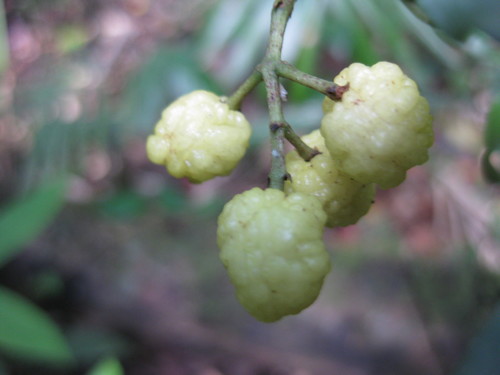
Pleiospermium littorale
(Miq.) Tanaka
RutaceaeFruit

wikimedia · cc-by
Wikimedia Commons - Thanh-Tu Thi Nguyen, Anh Viet Nguyen, Tai The Diep, Nhuan Ngoc Doan, Thao-Tran Thi Nguyen
Wikimedia Commons - Thanh-Tu Thi Nguyen, Anh Viet Nguyen, Tai The Diep, Nhuan Ngoc Doan, Thao-Tran Thi Nguyen

wikimedia · cc-by
Wikimedia Commons - Thanh-Tu Thi Nguyen, Anh Viet Nguyen, Tai The Diep, Nhuan Ngoc Doan, Thao-Tran Thi Nguyen
Wikimedia Commons - Thanh-Tu Thi Nguyen, Anh Viet Nguyen, Tai The Diep, Nhuan Ngoc Doan, Thao-Tran Thi Nguyen
What to Eat
Edible parts: Fruit
The fruit is eaten.
Where to Find It
A tropical plant.
Asia, Indochina, Indonesia,
Countries: United Arab Emirates, Afghanistan, Armenia, Azerbaijan, Bangladesh, Bahrain, Brunei, Bhutan, China, Georgia, Indonesia, Israel, India, Iraq, Iran, Jordan, Japan, Kyrgyzstan, Cambodia, North Korea, South Korea, Kuwait, Kazakhstan, Laos, Lebanon, Sri Lanka, Myanmar, Mongolia, Maldives, Malaysia, Nepal, Oman, Philippines, Pakistan, Qatar, Saudi Arabia, Singapore, Syria, Thailand, Tajikistan, Timor-Leste, Turkmenistan, Turkey, Taiwan, Uzbekistan, Vietnam, Yemen
How to Identify
A tropical tree in the Rutaceae family with edible fruit.
Wikipedia
Source ↗Pleiospermium littorale is a plant in the citrus family Rutaceae native to southeast Vietnam and the island of Java in Indonesia, where it inhabits coastal areas and plays a role in erosion prevention. In traditional Vietnamese medicine different parts of the plant have been used as an expectorant, cough suppressant, for exudation, and the treatment of colds and fevers. It is an endangered species threatened by habitat loss.
Names & Synonyms
Atalantia littoralis GuillauminLimnocitrus littoralis (Miq.) SwingleLimonia littoralis (Miq.) BackerParamignya littoralis Miq.
References (2)
- Altschul, S.V.R., 1973, Drugs and Foods from Little-known Plants. Notes in Harvard University Herbaria. Harvard Univ. Press. Massachusetts. no. 1940
- Stud. Citriol. 2:27. 1928