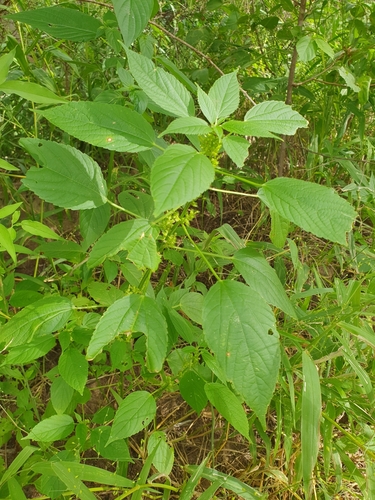
Acalypha matsudae
Hayata
EuphorbiaceaeLeaves

iNaturalist · cc-by-nc
(c) Han-Ting Liu, some rights reserved (CC BY-NC)
(c) Han-Ting Liu, some rights reserved (CC BY-NC)

iNaturalist · cc-by-nc
(c) Han-Ting Liu, some rights reserved (CC BY-NC)
(c) Han-Ting Liu, some rights reserved (CC BY-NC)
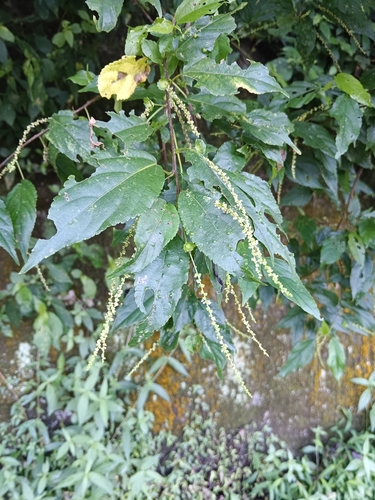
iNaturalist · cc-by-nc
(c) 你猜猜看, some rights reserved (CC BY-NC)
(c) 你猜猜看, some rights reserved (CC BY-NC)
What to Eat
Edible parts: Leaves ?
The leaves may be edible.
Where to Find It
It is a tropical plant. In southern Taiwan it grows up to 100 m above sea level.
Asia, Central America, Mexico, North America, Taiwan*,
Countries: United Arab Emirates, Afghanistan, Antigua & Barbuda, Armenia, Azerbaijan, Barbados, Bangladesh, Bahrain, Brunei, Bahamas, Bhutan, Belize, Canada, China, Costa Rica, Cuba, Dominica, Dominican Republic, Grenada, Georgia, Guatemala, Honduras, Haiti, Indonesia, Israel, India, Iraq, Iran, Jamaica, Jordan, Japan, Kyrgyzstan, Cambodia, St Kitts & Nevis, North Korea, South Korea, Kuwait, Kazakhstan, Laos, Lebanon, St Lucia, Sri Lanka, Myanmar, Mongolia, Maldives, Mexico, Malaysia, Nicaragua, Nepal, Oman, Panama, Philippines, Pakistan, Puerto Rico, Qatar, Saudi Arabia, Singapore, El Salvador, Syria, Thailand, Tajikistan, Timor-Leste, Turkmenistan, Turkey, Trinidad & Tobago, Taiwan, United States, Uzbekistan, St Vincent, Vietnam, Yemen
How to Identify
A shrub or small tree. It grows 5 m tall. There are prickles along the stem. The leaves are twice divided and there are 8-18 pairs of pinnae. There are up to 50 pairs of pinnules on each pinnae. The flowers are yellow. They are in large clusters at the ends of branches. The pods are flattened.
Notes
There are over 450 Acalypha species. They are tropical. There are 225 in tropical America.
References (1)
- Altschul, S.V.R., 1973, Drugs and Foods from Little-known Plants. Notes in Harvard University Herbaria. Harvard Univ. Press. Massachusetts. no. 2324