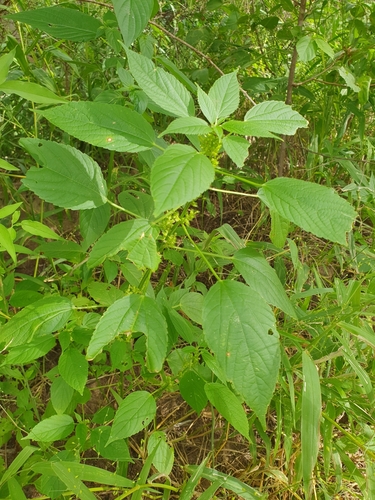
Micrandra glabra
(R. E. Schult.) R. E. Schult.
Glabrous micranda

Field Museum of Natural History - Botany Department | GDI 2013-2015

Rapid Reference Collection (RRC) | Field Museum of Natural History - Keller Science Action Center
What to Eat
Edible parts: Seeds
Seed - cooked. The seeds are poisonous raw and need careful preparation to render them safe to eat. They are boiled and then washed several times to leech out the toxic compounds, after which they are broken up by hand. A paste resembling cream-cheese in appearance and taste can be prepared from them. Alternatively, the damp mash can be gently toasted on a flat plate over the fire and reduced to a fine greyish white meal which is made into casabe or unleavened bread
Known Hazards
Where to Find It
A tropical plant. It grows in savannah and mixed forests.
Guianas, Guyana, South America, Suriname, Venezuela,
How to Identify
An evergreen tree. It grows 30 m tall. The trunk can be 40 cm across. It has white latex. The fruit is green outside and white inside.
Other Uses
A quantity of oil is collected from the seed when they are boiled in water. A very bitter flavour, it is burned in lamps to provide illumination.
Names & Synonyms
Suruba, Suru-wai-yek
References (5)
- Altschul, S.V.R., 1973, Drugs and Foods from Little-known Plants. Notes in Harvard University Herbaria. Harvard Univ. Press. Massachusetts. no. 2384
- Fern, K., 2012, Tropical Species Database http://theferns.info/tropical/
- Grandtner, M. M. & Chevrette, J., 2013, Dictionary of Trees, Volume 2: South America: Nomenclature, Taxonomy and Ecology. Academic Press p 412
- JSTOR Gobal Plants
- NYBG herbarium "edible" (As Cunuria glabra)