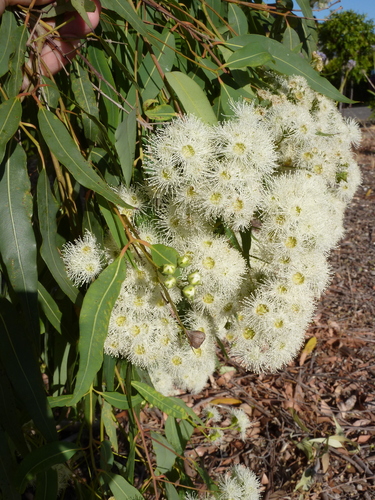
Psidium salutare
(Kunth.) O. Berg.
Arrayan pequena

(c) Martin Coronel Varela, some rights reserved (CC BY-NC), uploaded by Martin Coronel Varela

(c) Santiago Mailhos, some rights reserved (CC BY-NC), uploaded by Santiago Mailhos

(c) gra-moll, some rights reserved (CC BY-NC)
What to Eat
Edible parts: Fruit
Fruit - raw. The fruit contains a small amount of succulent pulp with an astringent, acid flavour. The fruit is about 15mm in diameter.
Where to Find It
A tropical plant. It grows naturally in the open savannas in Brazil.
Argentina, Belize, Bolivia, Brazil*, Central America, Colombia, Costa Rica, Cuba, Dominican Republic, Ecuador, El Salvador, Guatemala, Guianas, Guyana, Honduras, Mexico, Nicaragua, North America, Panama, Paraguay, South America, Suriname, Uruguay, Venezuela, West Indies,
How to Identify
A creeping bush. It grows 20 cm high. It forms a carpet over the ground. The leaves are simple and papery. They are 2-5.3 cm long and smooth on both surfaces. The flowers are usually solitary but can be in groups of 2-3. They are white and in the axils of leaves.
How to Grow
Plants are grown from seed.
Notes
There are about 150 Psidium species.