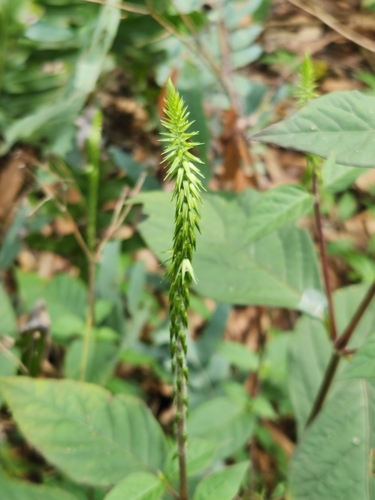
Atriplex canescens
(Pursh.) Nutt.
Four-winged Saltbush

(c) Bobby McCabe, some rights reserved (CC BY), uploaded by Bobby McCabe

(c) Tony Iwane, some rights reserved (CC BY-NC), uploaded by Tony Iwane

(c) Carol Blaney, some rights reserved (CC BY-NC), uploaded by Carol Blaney
What to Eat
Edible parts: Leaves, Seeds
Edible Parts: Leaves Seed Edible Uses: Colouring Drink Edible uses & rating: Leaves (only cooked; in moderation), flowers (as seasoning in small amounts), seeds (technically edible but extraction is difficult). Edibility rating: 3/5. Taste & processing notes: Cooked leaves ˜ “canned spinach rolled in salt,” throat-irritating liquor—discard. Fruits smell/taste woody-grainy with odd rubber/medical overtone; husks tough/fibrous; seed isolation problematic; raw fruits unpleasant and poky. Season/harvest: 4-winged fruits mature late autumn [2-3]. Leaves - cooked or raw[85, 94. A very acceptable taste with a salty tang. The leaves can be used at any time of the year though winter harvesting must be light because the plant is not growing much at this time of year. Seed - cooked. Ground into a powder, mixed with cereals and used in making cakes etc or used as a piñole. It is small and very fiddly to utilize. The ground up seed can also be mixed with water and drunk as a refreshing beverage. The burnt green herb yields culinary ashes high in minerals and these are used by the Hopi Indians to enhance the colour of blue corn products. The ashes can be used like baking soda.
Where to Find It
It grows in warm temperate places. It grows in areas with a rainfall between 100-518 mm per year. It can tolerate frost. It can grow in salty and alkaline soils. It can grow in arid places. It suits hardiness zones 7-10.
Africa, Asia, Australia, Canada, Central America, China, Egypt, Hawaii, Iran, Israel, Libya, Mediterranean, Mexico*, Middle East, North Africa, North America, Pacific, Pakistan, Saudi Arabia, USA,
How to Identify
A shrub. It grows 1.5 m high and spreads 1.5 m wide. There is a dense mass of stems. The leaves are narrow and have blunt tips. They have a mealy white appearance. The flowers are small and yellow. The fruit are papery and have 4 wings. They are crowded into short spikes.
How to Grow
Plants can be grown by seed or cuttings.
Propagation: Seed - sow April/May in a cold frame in a compost of peat and sand. Germination usually takes place within 1 - 3 weeks at 13°c. Pot up the seedlings when still small into individual pots, grow on in a greenhouse for the first winter and plant out in late spring or early summer after the last expected frosts. Cuttings of half-ripe wood, July/August in a very sandy compost in a frame. Very easy. Pot up as soon as they start to root (about 3 weeks) and plant out in their permanent positions late in the following spring. Cuttings of mature wood of the current season's growth, November/December in a frame. Very easy. Pot up in early spring and plant out in their permanent position in early summer.
Medicinal Uses
Skin Stings The leaves can be made into a soapy lather and used as a wash on itches and rashes such as chickenpox. A poultice of the crushed leaves can be applied to ant bites to reduce the pain and swelling.
Other Uses
Dye Fire retardant Fodder Hedge Hedge Potash Agroforestry uses: Saltbush is often used for erosion control, as a windbreak, and for soil stabilization. Its high salt tolerance makes it suitable for saline soils, and it can be used as forage for livestock. A good hedge in maritime areas, it responds well to trimming. The leaves and stems were burnt by the Hopi Indians and the alkaline ash used to maintain the blue colour when cooking blue corn. A yellow dye is obtained from the leaves and stems. The leaves can be made into a soapy lather and used as a hair wash. The plant has fire-retardant properties and can be used for barrier plantings to control bush fires. 1. Nectary - Flowers rich in nectar and pollen: No – Saltbush is wind-pollinated, so it doesn’t produce nectar-rich flowers to attract pollinators. 2. Wildlife - Food (Fruit, Seeds, Leaf litter, Shelter, Nesting, Roosting): Yes – Saltbush provides food for wildlife through its seeds and foliage. It is an important food source for herbivores like birds and small mammals. The dense, bushy form also provides shelter and cover for nesting birds and other small animals. 3. Invertebrate Shelter (Overwintering sites, Leaf litter, Groundcover): Yes – The dense, shrubby growth of Saltbush offers good ground cover for invertebrates, and the fallen leaves can serve as shelter and overwintering sites for beneficial insects. 4. Pest Confuser (Smell): No – Saltbush does not have a strong aromatic smell that repels pests, so it is not typically used as a pest confuser. Special Uses Carbon Farming Food Forest Hedge Hedge
Wikipedia
Source ↗Atriplex canescens (or chamiso, chamiza, four-wing saltbush) is a species of evergreen shrub in the family Amaranthaceae (subfamily Chenopodioideae) native to the western and midwestern United States.
Notes
There are about 100-300 Atriplex species. They have also been put in the family Chenopodiaceae.
Names & Synonyms
Chamisa, Chamizo, Grey sage brush
References (17)
- Beckstrom-Sternberg, Stephen M., and James A. Duke. "The Foodplant Database." http://probe.nalusda.gov:8300/cgi-bin/browse/foodplantdb.(ACEDB version 4.0 - data version July 1994)
- Bircher, A. G. & Bircher, W. H., 2000, Encyclopedia of Fruit Trees and Edible Flowering Plants in Egypt and the Subtropics. AUC Press. p 47
- Bodkin, F., 1991, Encyclopedia Botanica. Cornstalk publishing, p 117
- Brown, D., 2002, The Royal Horticultural Society encyclopedia of Herbs and their uses. DK Books. p 137
- Cundall, P., (ed.), 2004, Gardening Australia: flora: the gardener's bible. ABC Books. p 206
- Facciola, S., 1998, Cornucopia 2: a Source Book of Edible Plants. Kampong Publications, p 75
- Flora of Pakistan. www.eFlora.org
- Gen. N. Amer. pl. 1:197. 1818
- Kiple, K.F. & Ornelas, K.C., (eds), 2000, The Cambridge World History of Food. CUP p 1848
- Lord, E.E., & Willis, J.H., 1999, Shrubs and Trees for Australian gardens. Lothian. p 205
- Paczkowska, G. & Chapman, A.R., 2000, The Western Australian Flora. A Descriptive Catalogue. Western Australian Herbarium. p 200
- Piedra-Malagón, E. M. et al, 2022, Edible native plants of the Gulf of Mexico Province. Biodiversity Data Journal 10: e80565 p 8
- Plants for a Future database, The Field, Penpol, Lostwithiel, Cornwall, PL22 0NG, UK. http://www.scs.leeds.ac.uk/pfaf/
- Royal Botanic Gardens, Kew (1999). Survey of Economic Plants for Arid and Semi-Arid Lands (SEPASAL) database. Published on the Internet; http://www.rbgkew.org.uk/ceb/sepasal/internet [Accessed 7th April 2011]
- Seidemann J., 2005, World Spice Plants. Economic Usage, Botany, Taxonomy. Springer. p 59
- Saunders, C.F., 1948, Edible and Useful Wild Plants. Dover. New York. p 54
- van Wyk, B., 2005, Food Plants of the World. An illustrated guide. Timber press. p 79