Atriplex coronata
S. Watson
Crownscale
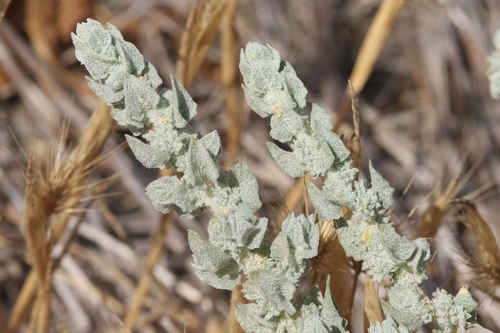
(c) James Bailey, some rights reserved (CC BY-NC), uploaded by James Bailey

(c) Pacific Southwest Region U.S. Fish and Wildlife Service, some rights reserved (CC BY)
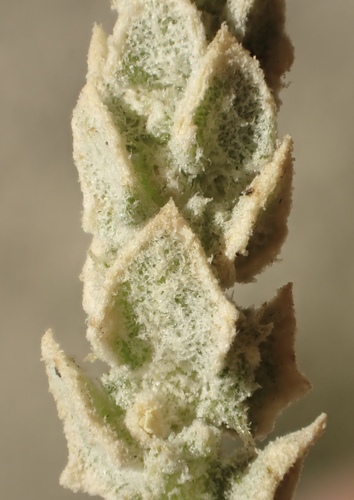
(c) Ron Vanderhoff, some rights reserved (CC BY-NC), uploaded by Ron Vanderhoff
What to Eat
Edible parts: Leaves, Seeds
Edible Parts: Leaves Seed Edible Uses: Leaves - cooked. They are boiled as a salty flavouring with other foods. Seed - used in piñole or ground into a meal and used as a thickener in making bread or mixed with flour in making bread.
Known Hazards
Where to Find It
It is a temperate plant.
North America, USA,
How to Identify
Atriplex coronata is an annual reaching 0.4 m tall. It flowers from July to September with seeds ripening August through October. The plant is monoecious with both male and female flowers on individual plants, pollinated by wind. It prefers light sandy to medium loamy, well-drained soils and tolerates poor fertility. Adaptable to mildly acidic through basic soils, including very alkaline and saline conditions. Full sun is required; drought and moist soils are both tolerated.
How to Grow
We have very little information on this species and do not know if it will be hardy in Britain, though it should be possible to grow it as a spring-sown annual. The following notes are based on the general needs of the genus. Succeeds in full sun in any well-drained but not too fertile soil. Most species in this genus tolerate saline and very alkaline soils.
Propagation: Seed - sow April/May in situ. Germination is usually rapid.
Medicinal Uses
None known
Other Uses
None known Special Uses
Wikipedia
Source ↗Atriplex coronata is a species of saltbush known by the common name crownscale. It is endemic to California.
Notes
There are about 100-300 Atriplex species. They have also been put in the family Chenopodiaceae.