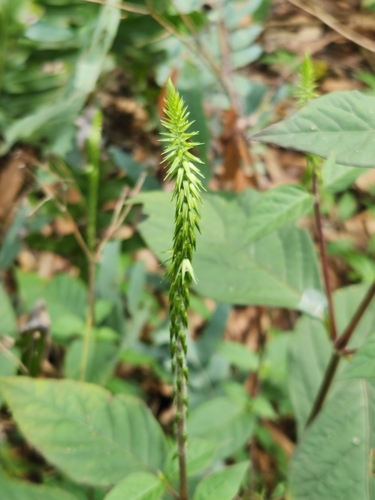
Atriplex hortensis
L.
Mountain spinach, Garden orache, Sea Purslane
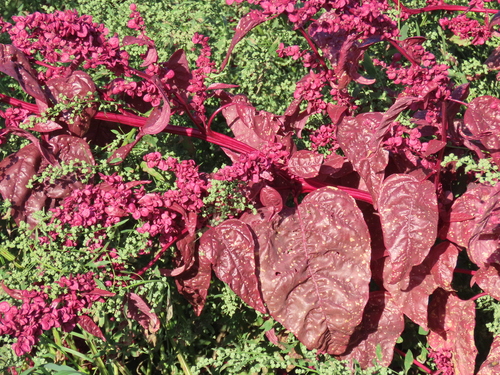
(c) Yelena, some rights reserved (CC BY-NC), uploaded by Yelena
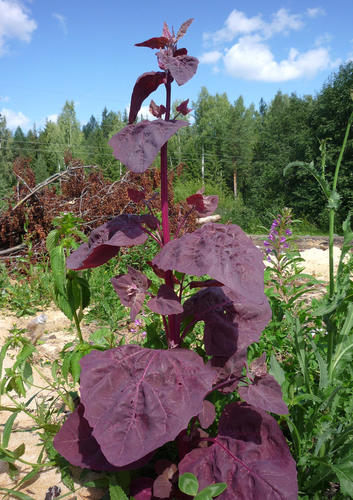
(c) Gennadiy Okatov, some rights reserved (CC BY-NC), uploaded by Gennadiy Okatov
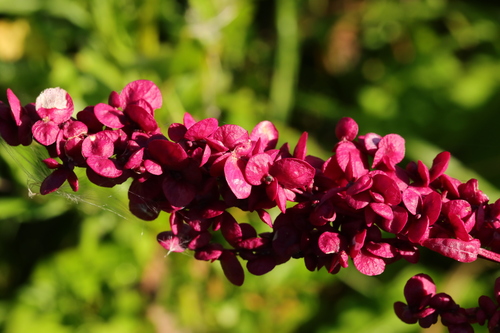
(c) Svetlana Nesterova, some rights reserved (CC BY-NC), uploaded by Svetlana Nesterova
What to Eat
Edible parts: Leaves, Seeds, Vegetable
Edible Parts: Leaves Seed Edible Uses: Edible uses & rating: Leaves (raw/cooked), tender shoots, seeds (grain adjunct). Edibility rating: 4/5. Taste & processing notes: Leaves spinach-like, less oxalic “bite” than many wild Atriplex; excellent potherb, good raw if tender. Seed can be used like quinoa adjunct after rinsing/boiling if bitter. Season/harvest: Spring–early summer; can bolt in heat; multiple cut-and-come-again harvests [2-3]. Leaves - raw or cooked. Used like spinach, they have a bland flavour and are traditionally mixed with sorrel leaves in order to modify the acidity of the latter. Another report says that the flavour is stronger than spinach. Seed - cooked. It can be ground into a meal and used in soups etc or be mixed with flour when making bread. The seed is said to be a good source of vitamin A. The seed is also said to contain some saponins. See the notes above on toxicity. The seed is small and fiddly to harvest and use.
Known Hazards
Where to Find It
It is a temperate or Mediterranean plant. It is best in nitrogen rich soils. It can tolerate salty conditions. It suits hardiness zones 6-11. Tasmania Herbarium.
Albania, Argentina, Asia, Australia, Austria, Balkans, Belarus, Bosnia, Britain, Bulgaria, Canada, Chile, China, Cuba, Czech Republic, Europe, France, Georgia, Germany, Greece, Hungary, India, Indochina, Iraq, Italy, Macedonia, Mediterranean, Middle East, Moldova, Netherlands, North America, Northeastern India, Poland, Portugal, Romania, Russia, SE Asia, Serbia, Siberia, Slovakia, Slovenia, South America, Spain, Tasmania, Turkey, Türkiye, USA, Vietnam, West Indies, Yugoslavia,
How to Identify
An annual herb. It grows up to 2 m tall and spreads 40-50 cm wide. The leaves are triangular. They are greyish green. They can be red or yellow. They are 10-15 cm long and have small teeth along the edge. The flowers are in clusters at the ends of the plant. These can be 20 cm long. They are green or red but insignificant. The fruit are very small brown plate like seeds. There are several named cultivated varieties.
Nutrition Score: 1/100
| Part | Moisture | kJ | kcal | Protein | Vit A | Vit C | Iron | Zinc |
|---|---|---|---|---|---|---|---|---|
| Leaves | 85 | 20 | 3.2 | — | — | — | — | — |
| Seeds | — | — | — | — | — | — | — | — |
How to Grow
Orach is a very easily grown plant, doing equally well in a wide variety of well-drained soils, though rich, moisture-retentive soils give the quick growth that is necessary for the production of tender leaves. Plants require a position in full sun and are tolerant of saline and very alkaline soils. They thrive in any temperate climate, and are drought resistant. Orach is reported to tolerate an annual precipitation of 30 to 140cm, an average annual temperature in the range of 6 to 24°C, and a pH of 5.0 to 8.2. Orach was formerly cultivated for its edible leaves, there are some named varieties. It can be grown as a warm weather substitute for spinach. Some forms of this species have bronze or deep red leaves and are occasionally grown as ornamental plants, their leaves taste the same as the green-leafed forms. Plants are fast-growing and usually self-sow quite freely if the surrounding soil is disturbed by hoeing etc. They tolerate hot weather well, but soon go to seed so successive sowings at 4 weekly intervals are required during the growing season if a continuous supply of leaves is required. Leaves can be harvested 40 - 60 days after sowing the seed. This species is a poor companion plant for potatoes, inhibiting their growth when growing close to them. Saltbush can be harvested for forage throughout the growing season, typically in late spring to early autumn. Saltbush generally flowers in late summer to early autumn, depending on the specific species and growing conditions. Hardiness: Grown as an annual; tolerates light frosts. Size & habit: 60–150 cm; green, red or purple strains. Habitat & range: Naturalized around farms/gardens; widely cultivated. Weed potential: Moderate self-seeder, easy to manage.
Propagation: Seed - sow March to August in situ, only just covering the seed. Germination is usually good and rapid. Sow cool weather; succession every 2–3 weeks; pinch to delay bolting.
Medicinal Uses
Antirheumatic Diuretic Emetic Purgative The leaves are diuretic, emetic and purgative. They are also said to be a stimulant to the metabolism and an infusion is used as a spring tonic and a remedy for tiredness and nervous exhaustion. They have been suggested as a folk remedy for treating plethora and lung ailments. The leaves are said to be efficacious when used externally in the treatment of gout. The seeds, mixed with wine, are said to cure yellow jaundice. They also excite vomiting. The fruits are purgative and emetic. Liniments and emollients prepared from the whole plant, like the juice of the plant, are said to be folk remedies for indurations and tumours, especially of the throat.
Other Uses
Biomass Companion Dye Agroforestry uses: Saltbush is often used for erosion control, as a windbreak, and for soil stabilization. Its high salt tolerance makes it suitable for saline soils, and it can be used as forage for livestock. A blue dye is obtained from the seed. The plant is a potential source of biomass. Yields of 14 tonnes per hectare have been achieved near Landskrona and Lund, Sweden. Higher yields might be expected farther south. If the leaf-protein were extracted, this should leave more than 13 tonnes biomass as by-product, for potential conversion to liquid or gaseous fuels. 1. Nectary - Flowers rich in nectar and pollen: No – Saltbush is wind-pollinated, so it doesn’t produce nectar-rich flowers to attract pollinators. 2. Wildlife - Food (Fruit, Seeds, Leaf litter, Shelter, Nesting, Roosting): Yes – Saltbush provides food for wildlife through its seeds and foliage. It is an important food source for herbivores like birds and small mammals. The dense, bushy form also provides shelter and cover for nesting birds and other small animals. 3. Invertebrate Shelter (Overwintering sites, Leaf litter, Groundcover): Yes – The dense, shrubby growth of Saltbush offers good ground cover for invertebrates, and the fallen leaves can serve as shelter and overwintering sites for beneficial insects. 4. Pest Confuser (Smell): No – Saltbush does not have a strong aromatic smell that repels pests, so it is not typically used as a pest confuser. Special Uses Food Forest
Wikipedia
Source ↗Atriplex hortensis, known as garden orache, red orache or simply orache (; also spelled orach), mountain spinach, French spinach, or arrach, is a species of plant in the amaranth family used as a leaf vegetable that was common before spinach; it is still grown as a warm-weather alternative to spinach. For many years, it was classified in the goosefoot family (Chenopodiaceae), but it has now been absorbed into the Amaranthaceae. It is Eurasian, native to Asia and Europe, and widely naturalized in Canada, the United States, Australia, and New Zealand.
Production
It is fast growing. Leaves are harvested after 30-35 days.
Other Information
It is a commercially cultivated vegetable.
Notes
There are about 100-300 Atriplex species. They have also been put in the family Chenopodiaceae.
Names & Synonyms
Armuelle, Butter leaves, Chakotte soppu, Chakwat, Chandanbatva, Fat hen, French spinach, Garden orache, Juri, Korake, Labada, Labat, Lebeda, Loboda, Natina, Paharipalang, Pahari palak, Pepeljuga, Pezik otu, Suraka, Surake, Thoya kura, Thoyah-keeray, Tuinmelde, Yu qian bo cai
References (66)
- Ambasta S.P. (Ed.), 2000, The Useful Plants of India. CSIR India. p 61
- Arora, R. K., 2014, Diversity in Underutilized Plant Species - An Asia-Pacific Perspective. Bioversity International. p 36
- Bircher, A. G. & Bircher, W. H., 2000, Encyclopedia of Fruit Trees and Edible Flowering Plants in Egypt and the Subtropics. AUC Press. p 47
- Bremness, L., 1994, Herbs. Collins Eyewitness Handbooks. Harper Collins. p 232
- Brickell, C. (Ed.), 1999, The Royal Horticultural Society A-Z Encyclopedia of Garden Plants. Convent Garden Books. p 155
- Brown, D., 2002, The Royal Horticultural Society encyclopedia of Herbs and their uses. DK Books. p 137
- Bussman, R. W., et al, 2016, A comparative ethnobotany of Khevsureti, Samtskhe-Javakheti, Tusheti, Svaneti, and Racha-Lechkhumi, Republic of Georgia (Sakartvelo), Caucasus. Journal of Ethnobiology and Ethnomedicine (2016) 12:43
- Bussman, R. W., et al, 2021, Unity in diversity—food plants and fungi of Sakartvelo (Republic of Georgia), Caucasus. Journal of Ethnobiology and Ethnomedicine (2021) 17:72 p 4
- Centofanti, T. & Banuelos, G., 2019, Practical uses of Halophytic Plants as Sources of Food and Fodder. CAB International. p 331
- Cerne, M., 1992, Wild Plants from Slovenia used as Vegetables. Acta Horticulturae 318
- Cheifetz, A., (ed), 1999, 500 popular vegetables, herbs, fruits and nuts for Australian Gardeners. Random House p 36
- Ciocarlan, N. & Ghendov, V., 2015, Ethnobotanical and Ecological Studies of Wild Edible Plants from Bugeac Steppe, Republic of Moldova. Journal of EcoAgriTourism. Cailta terra Vol. 11(2):
- Cribb, A.B. & J.W., 1976, Wild Food in Australia, Fontana. p 135
- Cundall, P., (ed.), 2004, Gardening Australia: flora: the gardener's bible. ABC Books. p 206
- Curtis, W.M., 1993, The Student's Flora of Tasmania. Part 3 St David's Park Publishing, Tasmania, p 576
- Dobriyal, M. J. R. & Dobriyal, R., 2014, Non Wood Forest Produce an Option for Ethnic Food and Nutritional Security in India. Int. J. of Usuf. Mngt. 15(1):17-37
- Dogan, Y., et al, 2015, Of the importance of a leaf: the ethnobotany of sarma in Turkey and the Balkans. Journal of Ethnobiology and Ethnomedicine, 11:56
- Esperanca, M. J., 1988. Surviving in the wild. A glance at the wild plants and their uses. Vol. 2. p 118
- Facciola, S., 1998, Cornucopia 2: a Source Book of Edible Plants. Kampong Publications, p 76
- Flora of Australia, Volume 4, Phytolaccaceae to Chenopodiaceae, Australian Government Publishing Service, Canberra (1984) p 91
- Flora of China. www.eFloras.org. Gelin, Z, et al, 2003, Chenopodiaceae p
- GUPTA, (As Atriplex heterantha)
- Hedrick, U.P., 1919, (Ed.), Sturtevant's edible plants of the world. p 85
- Heywood, V. H. & Zohary, D.,1995, A Catalogue of the Wild Relatives of Cultivated Plants Native to Europe. Flora Mediterranea 5 - 1995, p 381
- Hibbert, M., 2002, The Aussie Plant Finder 2002, Florilegium. p 36
- HOOPER, (As Atriplex heterantha)
- Hu, Shiu-ying, 2005, Food Plants of China. The Chinese University Press. p 375
- Irving, M., 2009, The Forager Handbook, A Guide to the Edible Plants of Britain. Ebury Press p 187
- Joshi, A., et al, 2018, Halophytes of Thar Desert: Potential source of nutrition and feedstuff. International Journal of Bioassays 8.1 (2018) pp. 5674-5683
- Kays, S. J., and Dias, J. C. S., 1995, Common Names of Commercially Cultivated Vegetables of the World in 15 languages. Economic Botany, Vol. 49, No. 2, pp. 115-152
- Kiple, K.F. & Ornelas, K.C., (eds), 2000, The Cambridge World History of Food. CUP p 1826
- Kiran, K. C., et al, 2019, Diversity and Seasonal Availability of Potential Wild Edible Plants from Vidarbha Region of Maharashtra State, India. Int.J.Curr.Microbiol.App.Sci (2019) 8(2): 1434-1446
- Lazarides, M. & Hince, B., 1993, Handbook of Economic Plants of Australia, CSIRO. p 28
- Luczaj, L., 2012, Ethnobotanical review of wild edible plants of Slovakia. Acta Societatis Botanicorum Poloniae 81(4):245-255
- MacKinnon, A., et al, 2009, Edible & Medicinal Plants of Canada. Lone Pine. p 307
- Martin, F.W. & Ruberte, R.M., 1979, Edible Leaves of the Tropics. Antillian College Press, Mayaguez, Puerto Rico. p 121
- Paczkowska, G. & Chapman, A.R., 2000, The Western Australian Flora. A Descriptive Catalogue. Western Australian Herbarium. p 200
- Patiri, B. & Borah, A., 2007, Wild Edible Plants of Assam. Geethaki Publishers. p 110
- Pham-Hoang Ho, 1999, An Illustrated Flora of Vietnam. Nha Xuat Ban Tre. p 723
- Pieroni, A., et al, 2005, Food for two seasons: Culinary uses of non-cultivated local vegetables and mushrooms in a south Italian village. International Journal of Food Sciences and Nutrition, 56(4): 245-272
- Pieroni, A., et al, 2012, "We are Italians!": The Hybrid Ethnobotany of a Venetian Diaspora in Eastern Romania. Human Ecology 40:435-451
- Pieroni, A. et al, 2013, One century later: the folk botanical knowledge of the last remaining Albanians of the upper Reka Valley, Mount Korab, Western Macedonia. Journal of Ethnobiology and Ethnomedicine. 9:22
- Plants for a Future database, The Field, Penpol, Lostwithiel, Cornwall, PL22 0NG, UK. http://www.scs.leeds.ac.uk/pfaf/
- Rana, J.C. et al, 2011, Genetic resources of wild edible plants and their uses among tribal communities of cold arid regions of India. Genetic Resources and Crop Evolution. 59:135-149
- Redzic, S. J., 2006, Wild Edible Plants and their Traditional Use in the Human Nutrition in Bosnia-Herzegovina. Ecology of Food and Nutrition, 45:189-232
- Reis, S. V. and Lipp, F. L., 1982, New Plant Sources for Drugs and Foods from the New York Botanical Garden herbarium. Harvard. p 53
- Schneider, E., 2001, Vegetables from Amaranth to Zucchini: The essential reference. HarperCollins. p 451
- Self, M., 199, Phoenix Seeds catalogue. p 6
- Senkardes, I & Tuzlaci, E., 2016, Wild Edible Plants of Southern Part of Nevsehir inTurkey. Marmara Pharmaceutical Journal 20:34-43
- Sharma, B.B., 2005, Growing fruits and vegetables. Publications Division. Ministry of Information and broadcasting. India. p 197
- SHORTT, (As Atriplex heterantha)
- Soukand, R., et al, 2017, Multi-functionality of the few: current and past uses of wild plants for food and healing in Liubań region, Belarus. Journal of Ethnobiology and Ethnomedicine (2017) 13:10
- Sp. pl. 2:1053. 1753
- Tardio, J., et al, 2006, Ethnobotanical review of wild edible plants in Spain. Botanical J. Linnean Soc. 152, 27-71
- Tasmanian Herbarium Vascular Plants list p 21
- Terra, G.J.A., 1973, Tropical Vegetables. Communication 54e Royal Tropical Institute, Amsterdam, p 27
- Tronickova, E. & Krejcova, Z., 1987, Ortaggi, Instituto Geografico de Agostini, Cecoslovacchia. p 106
- Tozer, F., 2007, The Uses of Wild Plants. Green Man Publishing. p 43
- USDA, ARS, National Genetic Resources Program. Germplasm Resources Information Network - (GRIN). [Online Database] National Germplasm Resources Laboratory, Beltsville, Maryland. Available: www.ars-grin.gov/cgi-bin/npgs/html/econ.pl (10 April 2000)
- van Wyk, B., 2005, Food Plants of the World. An illustrated guide. Timber press. p 79
- Vorstenbosch, T., et al, 2017, Famine food of vegetal origin consumed in the Netherlands during World War II. Journal of Ethnobiology and Ethnomedicine (2017) 13:63
- www.eFloras.org Flora of China
- WATT, (As Atriplex heterantha)
- Wiersema, J. H. & Leon, B., 2013, World Economic Plants. A Standard Reference CRC Press. 2nd Ed. p 84
- World Checklist of Useful Plant Species 2020. Royal Botanic Gardens, Kew
- Zhu Gelin (Chu Ge-ling); Steven E. Clemants, CHENOPODIACEAE [Draft], Flora of China