Atriplex tatarica
L.
Tatarian Orache

(c) Diana V. Tretyakova, some rights reserved (CC BY-NC), uploaded by Diana V. Tretyakova

(c) Diana V. Tretyakova, some rights reserved (CC BY-NC), uploaded by Diana V. Tretyakova
(c) Ермолаева Ольга, some rights reserved (CC BY-NC), uploaded by Ермолаева Ольга
What to Eat
Edible parts: Leaves, Seeds
Edible Parts: Leaves Seed Edible Uses: Leaves and young plants - cooked. An emergency food, only used when all else fails. Seed - cooked. Used in piñole or ground into a meal and used as a thickener in making bread or mixed with flour in making bread. The small seed is 1.5 - 2.5mm in diameter.
Known Hazards
Where to Find It
It is a temperate plant. It grows in salty and alkaline deserts. It can grow in soil that is occasionally water logged. It can grow in arid places.
TEMPERATE ASIA: Afghanistan, Cyprus, Egypt (Sinai), Iran, Israel, Jordan, Turkey, Russian Federation-Ciscaucasia (Ciscaucasia), Armenia, Azerbaijan, Russian Federation (Dagestan), Russian Federation-Western Siberia (Western Siberia), Russian Federation (Altay), Kazakhstan, Kyrgyzstan, Tajikistan, Turkmenistan, Uzbekistan, Mongolia, China (Gansu Sheng (west), Qinghai Sheng (north), Xinjiang Uygur Zizhiqu, Xizang Zizhiqu) TROPICAL ASIA: Pakistan EUROPE: Austria, Germany, Hungary, Slovakia, Russian Federation (European part), Belarus, Ukraine (incl. Krym), Albania, Bulgaria, Greece, Croatia, Italy (incl. Sardinia, Sicily), North Macedonia, Montenegro, Romania, Serbia, Slovenia, Spain, France (incl. Corsica) AFRICA: Algeria, Egypt, Morocco, Tunisia
How to Identify
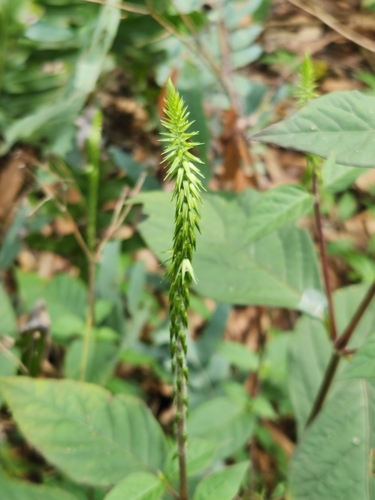
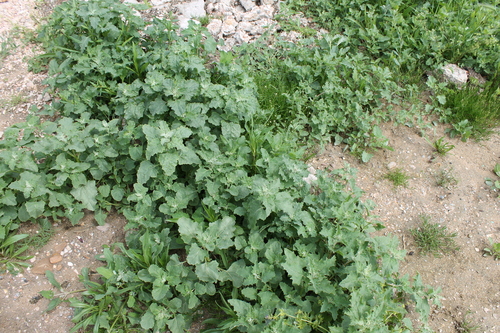
Annual herb reaching 1.5 m tall with male and female flowers on the same plant, blooming July to September with seeds ripening during the same period. Grows in light sandy to medium loamy soils with good drainage; tolerates poor nutrition and thrives in mildly acid to very alkaline and saline conditions. Requires full sun and handles both drought and moist soil well.
How to Grow
We have very little information on this species and do not know if it will be hardy in Britain, though it should be possible to grow it as a spring-sown annual. It is a polymorphic species. The following notes are based on the general needs of the genus. Succeeds in full sun in any well-drained but not too fertile soil. Most species in this genus tolerate saline and very alkaline soils.
Propagation: Seed - sow April/May in situ. Germination is usually rapid.
Medicinal Uses
None known
Other Uses
None known Special Uses
Wikipedia
Source ↗Atriplex tatarica is a species of plant belonging to the family Amaranthaceae. Its native range spans a large area of Middle and western Central Asia, Asia Minor, North Africa, and Eastern Europe.
Names & Synonyms
Da dan bin li, Feher ;aboda, Sirlenotu, Unluca
References (8)
- Denes, A., et al, 2012, Wild plants used for food by Hungarian ethnic groups living in the Carpathian Basin. Acta Societatis Botanicorum Poloniae 81 (4): 381-396
- Ertug, F, Yenen Bitkiler. Resimli Türkiye Florası -I- Flora of Turkey - Ethnobotany supplement
- Flora of Pakistan. www.eFlora.org
- Plants for a Future database, The Field, Penpol, Lostwithiel, Cornwall, PL22 0NG, UK. http://www.scs.leeds.ac.uk/pfaf/
- Royal Botanic Gardens, Kew (1999). Survey of Economic Plants for Arid and Semi-Arid Lands (SEPASAL) database. Published on the Internet; http://www.rbgkew.org.uk/ceb/sepasal/internet [Accessed 8th April 2011]
- Sp. pl. 2:1053. 1753
- World Checklist of Useful Plant Species 2020. Royal Botanic Gardens, Kew
- Zhu Gelin (Chu Ge-ling); Steven E. Clemants, CHENOPODIACEAE [Draft], Flora of China