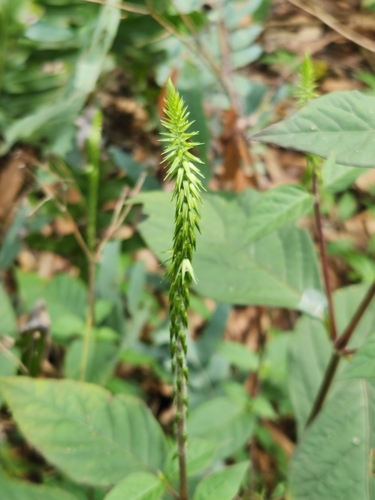
Atriplex truncata
(Torr. ex S. Watson) A. Gray
Wedgescale saltbush
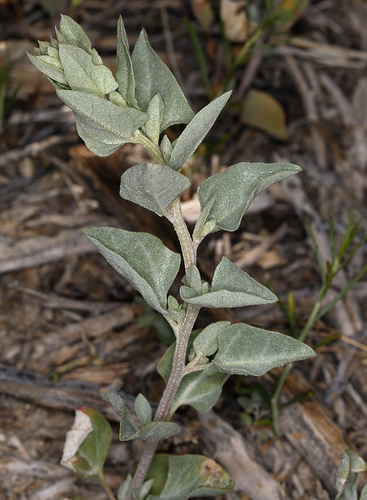
(c) Steve Matson, some rights reserved (CC BY), uploaded by Steve Matson
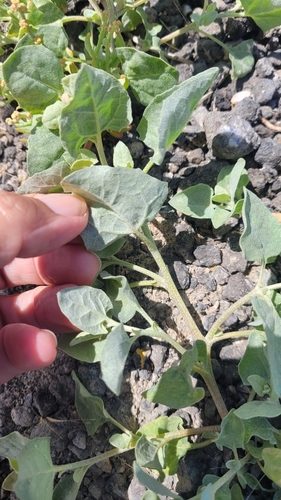
(c) Elizabeth Lockhart, some rights reserved (CC BY-NC), uploaded by Elizabeth Lockhart
What to Eat
Edible parts: Leaves, Seeds
Edible Parts: Leaves Seed Edible Uses: Edibility (summary & rating). Seeds gathered and eaten by the Goshiute. Leaves not highlighted here; if used, boil. Edibility rating: 3/5 (seed resource; modest flavor). Parts used & preparation. Seeds (utricles): Collect dry heads; thresh/winnow; grind; cook as mush or add to breads. Leaves: If tried, use as small boiled greens [2-3]. Leaves and young plants - cooked. A salty flavour. Seed - cooked. Used in piñole or ground into a meal and used as a thickener in making bread or mixed with flour in making bread.
Where to Find It
It is a temperate plant.
North America, USA,
How to Identify
Compact annual herb growing to 0.5 m tall and wide, hardy to UK zone 5. Flowers appear July to September with seeds maturing August to October. Wind-pollinated with both sexes on individual plants. Tolerates light sandy and medium loamy soils with preference for good drainage and poor fertility. Grows in mildly acid to very alkaline and saline soils in full sun only, handling both dry and moist conditions with drought tolerance.
How to Grow
Plants can be grown by seed or cuttings.
Propagation: Propagation. By seed; shallow sow; fall or spring; optional 12–24 h soak.
Medicinal Uses
None known
Other Uses
Fodder A good fodder crop. Special Uses Carbon Farming
Wikipedia
Source ↗Atriplex truncata is a species of saltbush known by the common names wedgeleaf saltbush, wedgescale, and wedge orach, native to western North America from British Columbia to California and to New Mexico. It grows in montane to desert habitats with saline soils, such as dry lake beds.
Notes
There are about 100-300 Atriplex species. They have also been put in the family Chenopodiaceae.
Names & Synonyms
References (3)
- Beckstrom-Sternberg, Stephen M., and James A. Duke. "The Foodplant Database." http://probe.nalusda.gov:8300/cgi-bin/browse/foodplantdb.(ACEDB version 4.0 - data version July 1994)
- Plants for a Future database, The Field, Penpol, Lostwithiel, Cornwall, PL22 0NG, UK. http://www.scs.leeds.ac.uk/pfaf/
- Proc. Amer. Acad. Arts 8:398. 1873