Rubus cochinchinensis
Tratt.

(c) Luan Mai Sy, some rights reserved (CC BY-NC)
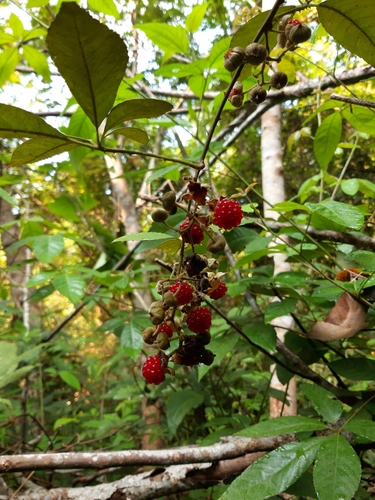
(c) Luan Mai Sy, some rights reserved (CC BY-NC)
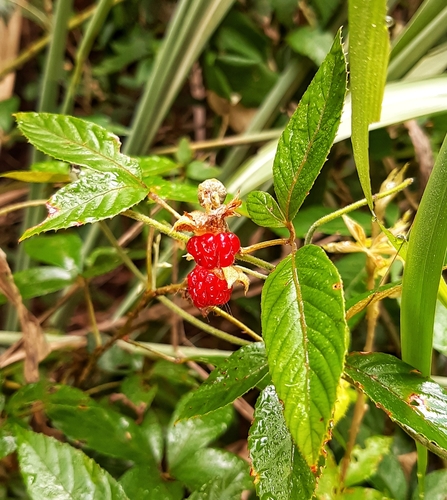
(c) Luan Mai Sy, some rights reserved (CC BY-NC)
What to Eat
Edible parts: Fruit
The fruit are eaten raw.
Dangerous Lookalikes
This plant can be confused with the following toxic species. Always verify identification carefully before consuming any wild plant.


Red Baneberry: Short herbaceous plant (no thorns), berries on thick red stems, each berry has a single seed, compound sharply-toothed leaves.
Rubus cochinchinensis: Thorny woody canes (brambles), aggregate berry made of many drupelets, berries pull easily from receptacle.
Where to Find It
A tropical plant. It grows in thickets and slopes at low and medium elevations in China. In Vietnam it occurs at 1,000 m above sea level. In Sichuan and Yunnan.
Asia, Cambodia, China, Indochina, Laos, SE Asia, Thailand, Vietnam,
How to Identify
A climbing shrub. The branches are brown but have a yellow coating when young. There are a few small prickles. The leaves are compound with 5 leaflets arranged like fingers on a hand. The leaflets are narrowly oval and 5-10 cm long by 2-4 cm wide. The fruit are red to black and about 1 cm across.
How to Grow
Species in this genus are generally easily grown in a good well-drained loamy soil in sun or semi-shade.
Propagation: Seed - germinates best if given a period of cold stratification prior to sowing in containers. Stored seed requires one month stratification at about 3°c and is best sown as early as possible in the growing season. Prick out the seedlings when they are large enough to handle and grow on until large enough to plant out. Cuttings of half-ripe wood in a frame. Tip layering towards the end of the growing season Division just before the plant comes into new growth or as it enters dormancy.
Medicinal Uses
The fruits and root are used medicinally. A decoction of the plant is used to treat hepatitis and constipation An infusion of the dried leaves is used as an aperient at childbirth
Names & Synonyms
Nam bo, Ngay, Ngay huong, Ngu-gia-bong
References (4)
- Fern, K., 2012, Tropical Species Database http://theferns.info/tropical/
- Flora of China @ efloras.org Volume 9
- Martin, M.A., 1971, Introduction L'Ethnobotanique du Cambodge. Centre National de la Recherche Scientifique. Paris.
- Van Sam, H. et al, 2008, Uses and Conservation of Plant Species in a National Park. A case study of Ben En, Vietnam. Economic Botany 62:574-593
More from Rosaceae


