Cyclea peltata
(Lam.) Hook.f. & Thomson
Pata root, Raj patha
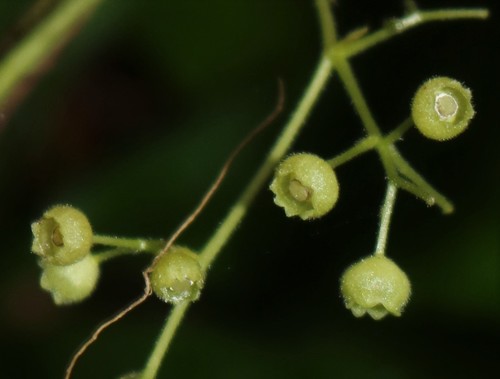
(c) Shiwalee Samant, some rights reserved (CC BY-NC), uploaded by Shiwalee Samant
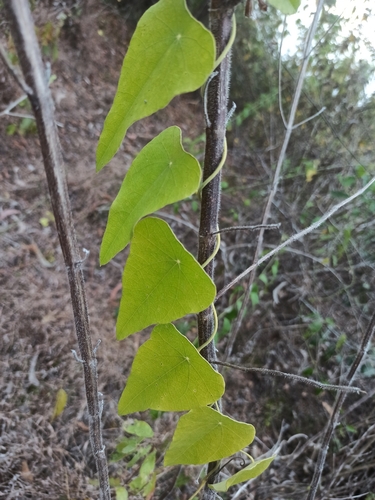
(c) Sindhu Haridas, some rights reserved (CC BY)
What to Eat
Edible parts: Tubers
The tubers are cooked and eaten as a vegetable.
Known Hazards
Where to Find It
A tropical plant.
Asia, India, Indochina, Myanmar, SE Asia, Sri Lanka, Thailand, Vietnam,
How to Identify
A slender twining shrub. It can climb tall trees. It has tubers. The leaves are alternate and heart shaped. They are 3-10 cm long by 3-4 cm wide. The flowers are pale yellow. They are in groups in the axils of leaves. The fruit are oval and fleshy. They are brown or red.
How to Grow
A dioecious species, both male and female forms need to be grown if fruit and seed are required.
Medicinal Uses
The Ayurvedic medication ‘patha’ consists of two distinct plants that appear to be used interchangeably. Cyclea peltata is known as rajpatha, whilst Cissampelos pareira is known as laghupatha. Patha is a commonly used medication and an ingredient in many herbal formulations, both the leaves and the roots are utilized. It is one of the best brain tonics used in Ayurveda along with other drugs. The roots are antiinflammatory, appetizer, astringent, bitter tonic, blood purifier, digestive, diuretic, expectorant, vermifuge. They are considered to have great medicinal value and to be an effective stimulant for the digestive system. Taken internally, a decoction is used in the treatment of a wide range of conditions including anorexia, dyspepsia, diarrhoea, dysentery, worms, abdominal pain, heart disorders etc. It is one of the best herbs for use as a blood purifier, and is said to purify breast milk and so is used in various disorders of breast milk secretion. Mashed with buttermilk the roots are beneficial in the treatment of diarrhoea. The roots are also very useful in the treatment of urinary ailments such as dysuria, haematuria and cystitis. The roots are used in the treatment of smallpox, bone fractures, malarial fever, jaundice and stomachaches. Whole plant, root, and leaves are used in the treatment of joint pain, bodyache, cooling effects, stomachache, eczema, toothache boils, dandruff, intestinal disorder and dysentery. Applied externally, a paste made from the roots and leaves is extremely beneficial in the treatment of infected wounds, sinus problems, and skin diseases such as erysipelas and pruritus. It is also said to be useful in relieving snake bites. The root juice is used as nasal drops to relieve headaches. The pulped leaves render water ropy and gelatinous, hence the plant is used as a remedy for cough. (As Cyclea burmannii). The leaf juice is collected in a copper bowl, allowed to set and then eaten in the early morning as a treatment for gastric ulcers The leaves are dipped in castor oil, mildly heated and then applied on boils and blisters. A decoction of the stem is used in the treatment of fevers. The root yielded tetrandrine as the major alkaloid. Tetrandrine (0.1g/day) was found effective in the treatment of chloroquine resistant malaria. Tetrandrine possesses antioxidant, cytotoxic and immunomodulatory properties and is indicated in the treatment of chronic inflammatory diseases. It shows antihypertensive, cardiac depressant and vasodilator effect. It also exhibits antiallergic activity. The roots have been shown to have a range of activities. For example, they can reduce the build-up of calcium oxalate and help prevent the formation of kidney stones. They have a lowering effect upon blood cholesterol levels, reducing LDL cholesterol and triglycerides, whilst increasing levels of beneficial HDL cholesterol. They have a protective action upon the liver, help protect the lining of the stomach wal and have significant antibacterial activity Aqueous extract significantly decreased both the fasting and postprandial blood glucose of type 2 diabetes The leaves contain a range of alkaloids including cycleanine, berberine, hayatinin, hayatidin and hayatin. They have been shown to have a diuretic and antioxidant action and help protect the kidneys from damage.
Wikipedia
Source ↗Cyclea peltata, also called patha or Indian moon-seed (not to be confused with Tinospora cordifolia or "heart-leaved moonseed", from the same family Menispermaceae), is a climbing shrub found across India and Sri Lanka, in habitats ranging from Moist Deciduous Forests to Tropical Forests and Plains.
Notes
It is used as medicine.
Names & Synonyms
Gwedauk-hmwe-sok, Kruamanoi, Mothi pahadvel, Paachi, Pada-kelengu, Para, Paduvala balli, Patakkilannu, Phalani, Raj patha, Thorali padval
References (4)
- Ambasta, S.P. (Ed.), 2000, The Useful Plants of India. CSIR India. p 154 (As Cyclea arnottii)
- Ramachandran,V. S., & Udhayavani, C., 2013, Knowledge and uses of wild edible plants by Paniyas and Kurumbas of Western Nilgiris, Tamil Nadu. Indian Journal of Natural Products and Resources. 4(4) December 2013, pp 412-418
- Somnasang, P., Moreno, G and Chusil K., 1998, Indigenous knowledge of wild hunting and gathering in north-east Thailand. Food and Nutrition Bulletin 19(4) p 359f
- Somnasang, P., et al, 2000, Knowing gathering and eating: Knowledge and attitudes about wild food in an Isan Village in north eastern Thailand. Journal of Ethnobiology 20(2):197-216


