Careya herbacea
Roxb.
Kradon
iNaturalist · cc-by-nc
(c) David Thomas, some rights reserved (CC BY-NC), uploaded by David Thomas
(c) David Thomas, some rights reserved (CC BY-NC), uploaded by David Thomas
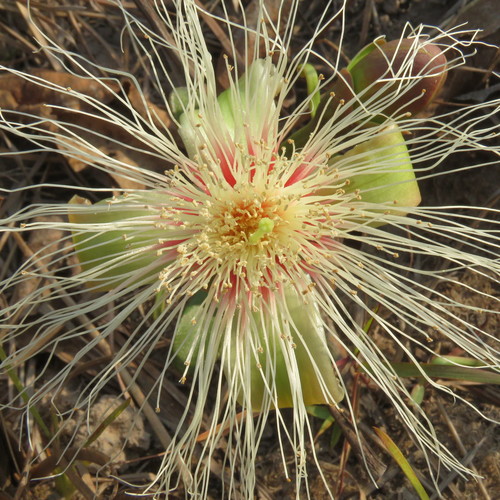
iNaturalist · cc-by-nc
(c) David Thomas, some rights reserved (CC BY-NC), uploaded by David Thomas
(c) David Thomas, some rights reserved (CC BY-NC), uploaded by David Thomas
What to Eat
Edible parts: Leaves, Flowers, Fruit
The leaves, flowers, and fruit are all eaten.
Where to Find It
A tropical plant. It grow in the savannah. It often grows after fires.
Asia, Bangladesh, Bhutan, Himalayas, India, Indochina, Laos, Myanmar, Nepal, Northeastern India, SE Asia, Sikkim, Thailand,
Countries: United Arab Emirates, Afghanistan, Armenia, Azerbaijan, Bangladesh, Bahrain, Brunei, Bhutan, China, Georgia, Indonesia, Israel, India, Iraq, Iran, Jordan, Japan, Kyrgyzstan, Cambodia, North Korea, South Korea, Kuwait, Kazakhstan, Laos, Lebanon, Sri Lanka, Myanmar, Mongolia, Maldives, Malaysia, Nepal, Oman, Philippines, Pakistan, Qatar, Saudi Arabia, Singapore, Syria, Thailand, Tajikistan, Timor-Leste, Turkmenistan, Turkey, Taiwan, Uzbekistan, Vietnam, Yemen
How to Identify
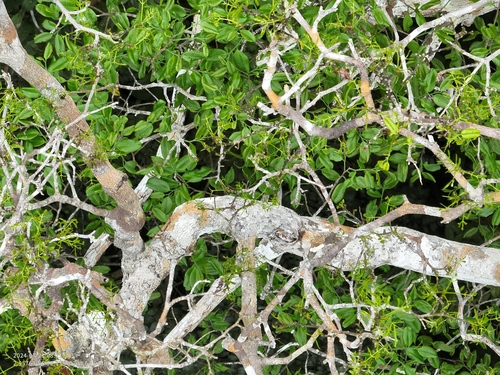
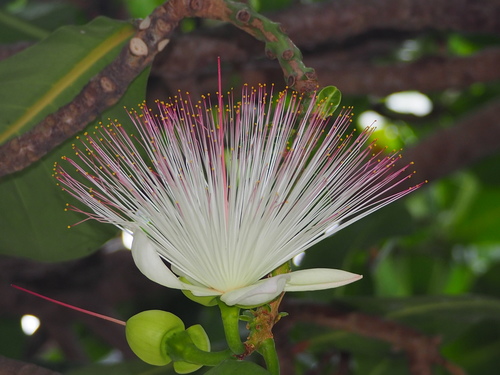
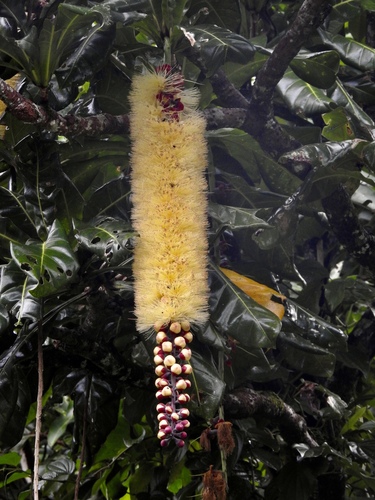
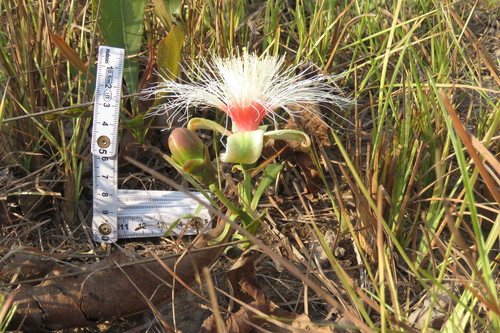
A herb or small shrub. The leaves are 17 cm long by 5 cm wide. The flowering shoots are 15-20 cm long. The flower petals are greenish purple. The fruit are 2-3 cm across.
Notes
There are about 5 Careya species.
References (1)
- Somnasang, P., Moreno, G and Chusil K., 1998, Indigenous knowledge of wild hunting and gathering in north-east Thailand. Food and Nutrition Bulletin 19(4) p 359f