Gustavia augusta
L.
Majestic heaven lotus

(c) Tarciso Leão, some rights reserved (CC BY-NC-SA)
(c) islayne, some rights reserved (CC BY-NC), uploaded by islayne

(c) Diego Monsores, some rights reserved (CC BY-NC), uploaded by Diego Monsores
What to Eat
Edible parts: Fruit
The fruit are occasionally eaten.
Where to Find It
It is a tropical plant. It can tolerate dry seasons. It grows in river forests along the Amazon and also in the uplands. It suits hardiness zones 10-12.
Amazon, Asia, Australia, Bolivia, Brazil, Colombia, Guiana*, Guianas, Guyana, Indonesia, Myanmar, Peru, SE Asia, South America*, Suriname, Venezuela,
How to Identify
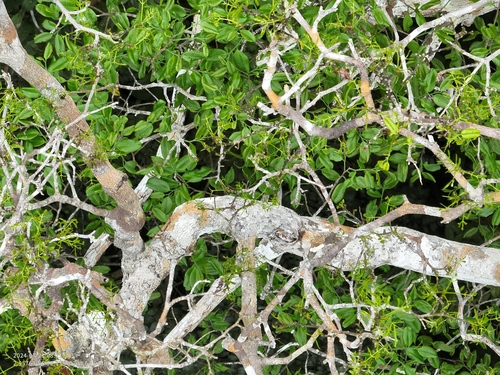
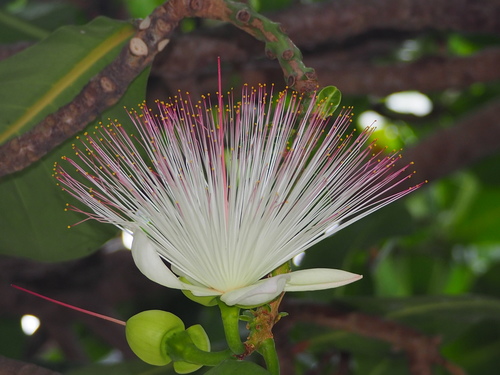
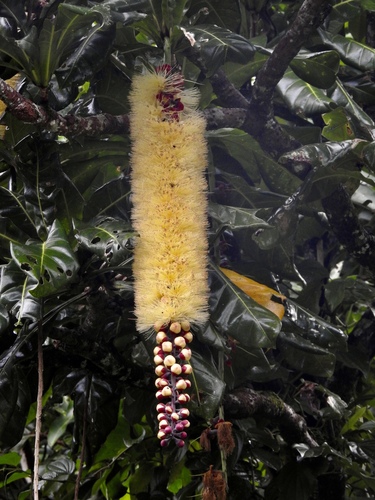
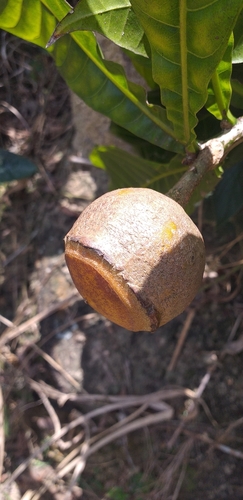
An evergreen shrub. It grows 6 m tall. It spreads 2 m wide. It can be 22 m tall. It has a stiff erect habit. The leaves are shaped like a paddle and are coarse. They can be 45 cm long and have fine teeth along the edge. The flowers are large and showy. They can be 15 cm across. The petals are pink or white. The fruit capsule can be 3-7 cm long by 3-8 cm wide.
How to Grow
Plants can be grown by seeds or layering. They can be grown from cuttings.
Propagation: Seed - best sown as soon as it is ripe in a partially shaded position in individual containers. A germination rate in excess of 80% can be expected, with the seed sprouting within 40 - 60 days. The seedlings should be ready to plant out 8 - 9 months later. The seeds have a viability in excess of 3 months in storage.
Medicinal Uses
The inner bark is mixed with kaolin in cold water to make a remedy for treating vomiting in infants. The young leaves can be used like the bark, mixed with kaolin in cold water to make a remedy for treating vomiting in infants. The stem-bark, leaves or fruit are used in a plaster to treat leishmaniasis.
Other Uses
The wood is moderately heavy, hard, moderately durable when protected from the elements. It has a foul smell when freshly harvested. It is useful for building construction and joinery.
Production
Fruit are produced in the rainy season.
Other Information
The fruit are only occasionally eaten.
Notes
There are 41 Gustavia species. They grow in tropical America.
References (12)
- Barwick, M., 2004, Tropical and Subtropical Trees. A Worldwide Encyclopedic Guide. Thames and Hudson p 211
- Cundall, P., (ed.), 2004, Gardening Australia: flora: the gardener's bible. ABC Books. p 658
- Etherington, K., & Imwold, D., (Eds), 2001, Botanica's Trees & Shrubs. The illustrated A-Z of over 8500 trees and shrubs. Random House, Australia. p 361
- Grandtner, M. M. & Chevrette, J., 2013, Dictionary of Trees, Volume 2: South America: Nomenclature, Taxonomy and Ecology. Academic Press p 284
- JSTOR Global Plants (As Grias mexiana)
- Kermath, B. M., et al, 2014, Food Plants in the Americas: A survey of the domesticated, cultivated and wild plants used for Human food in North, Central and South America and the Caribbean. On line draft. p 401
- Lamont, S.R., et al, 1999, Species composition, and use of Homegardens among three Amazonian Villages. Economic Botany 53(3) pp 312-326
- Pl. surin. 17-18, t. 12. 1775 (Amoen. Acad. 8:266. 1785)
- Roa, J. A. G. & Boada, D. S. G., 2018, Fundación para el Fortalecimiento de la Fruticultura y Plantas Alimenticias no Convencionales en Colombia.
- Smith, N., et al, 2007, Amazon River Fruits. Flavors for Conservation. Missouri Botanical Gardens Press. p 134
- Sukarya, D. G., (Ed.) 2013, 3,500 Plant Species of the Botanic Gardens of Indonesia. LIPI p 637
- www.colecionandofrutas.org