Begonia josephi
A. DC.
Jajew
BegoniaceaeLeaves
iNaturalist · cc-by-nc
(c) Rinzin Dorji, some rights reserved (CC BY-NC), uploaded by Rinzin Dorji
(c) Rinzin Dorji, some rights reserved (CC BY-NC), uploaded by Rinzin Dorji
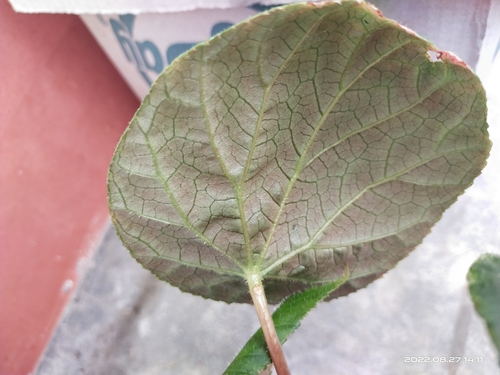
iNaturalist · cc-by-nc
(c) Rinzin Dorji, some rights reserved (CC BY-NC)
(c) Rinzin Dorji, some rights reserved (CC BY-NC)
What to Eat
Edible parts: Leaves, Vegetable
The leaves are eaten as a vegetable.
Where to Find It
It is a subtropical plant. It grows on the edges of forests on rocks in moist places between 2,600-2,800 m above sea level.
Asia, Bhutan, China, Himalayas, India, Nepal, Northeastern India, Tibet,
Countries: United Arab Emirates, Afghanistan, Armenia, Azerbaijan, Bangladesh, Bahrain, Brunei, Bhutan, China, Georgia, Indonesia, Israel, India, Iraq, Iran, Jordan, Japan, Kyrgyzstan, Cambodia, North Korea, South Korea, Kuwait, Kazakhstan, Laos, Lebanon, Sri Lanka, Myanmar, Mongolia, Maldives, Malaysia, Nepal, Oman, Philippines, Pakistan, Qatar, Saudi Arabia, Singapore, Syria, Thailand, Tajikistan, Timor-Leste, Turkmenistan, Turkey, Taiwan, Uzbekistan, Vietnam, Yemen
How to Identify
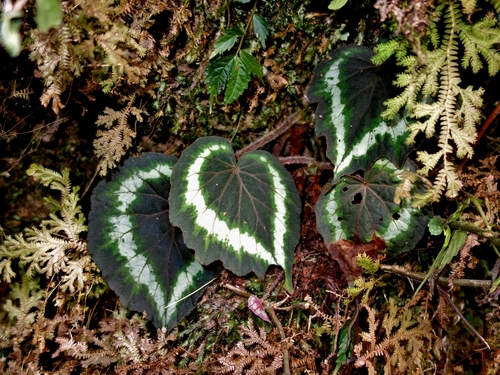
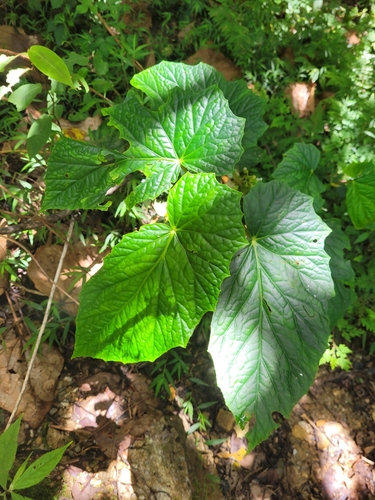
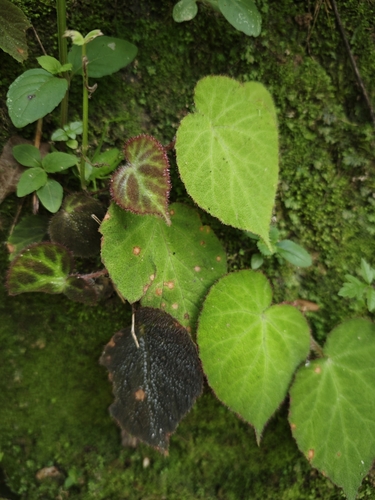
A herb. It loses its leaves during the year. It has tubers 1-2 cm across. There is one leaf. The leaf stalk is 10-22 cm long. The leaves are broadly oval and 10-16 cm long by 9-13 cm wide.
Notes
There are 900-1,000-1,500 Begonia species.
Names & Synonyms
Gumbolopang
References (3)
- Angami, A., et al, 2006, Status and potential of wild edible plants of Arunachal Pradesh. Indian Journal of Traditional Knowledge 5(4) October 2006, pp 541-550
- Ann. Sci. Nat. Bot. ser. 4, 11:126. 1859 "josephi"
- Rao, R.R. & Neogi, B., 1980, Observation on the Ethnobotany of the Khasi and Garo tribes in Meghalaya (India). J. Econ. Tax. Bot. Vol. 1 pp 157-162