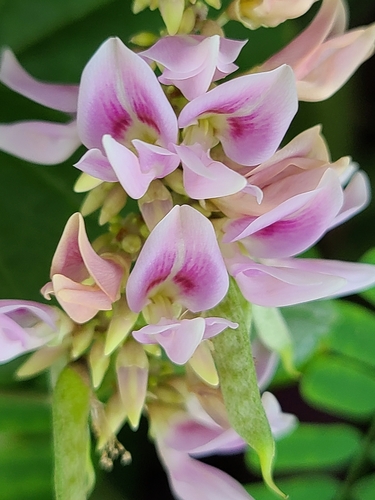
Smithia hirsuta
Dalz.
Pivla-kaula
FabaceaeLeaves
iNaturalist · cc-by-nc
(c) Suyash Sawant, some rights reserved (CC BY-NC), uploaded by Suyash Sawant
(c) Suyash Sawant, some rights reserved (CC BY-NC), uploaded by Suyash Sawant

iNaturalist · cc-by-nc
(c) Anil Kumar Verma, some rights reserved (CC BY-NC)
(c) Anil Kumar Verma, some rights reserved (CC BY-NC)
iNaturalist · cc-by-nc
(c) Prasad Gopalkrishna Gond, some rights reserved (CC BY-NC)
(c) Prasad Gopalkrishna Gond, some rights reserved (CC BY-NC)
What to Eat
Edible parts: Leaves
The leaves are used as a vegetable.
Where to Find It
A tropical plant. It grows in high rainfall regions in monsoons.
Asia, India, Northeastern India,
Countries: United Arab Emirates, Afghanistan, Armenia, Azerbaijan, Bangladesh, Bahrain, Brunei, Bhutan, China, Georgia, Indonesia, Israel, India, Iraq, Iran, Jordan, Japan, Kyrgyzstan, Cambodia, North Korea, South Korea, Kuwait, Kazakhstan, Laos, Lebanon, Sri Lanka, Myanmar, Mongolia, Maldives, Malaysia, Nepal, Oman, Philippines, Pakistan, Qatar, Saudi Arabia, Singapore, Syria, Thailand, Tajikistan, Timor-Leste, Turkmenistan, Turkey, Taiwan, Uzbekistan, Vietnam, Yemen
How to Identify
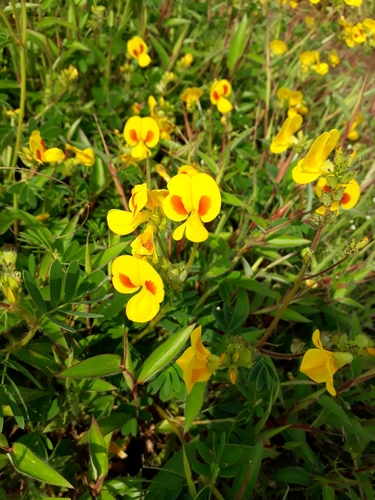
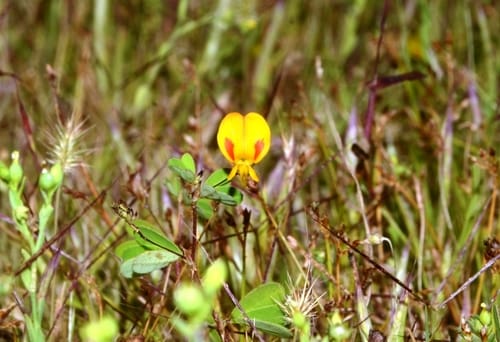
An erect annual plant. It grows 20-30 cm high. The stem and branches have bristly spreading hairs. The leaves have 3-4 pairs of leaflets along the stalk. The flowers are bright yellow. They occur as 4-10 in a compact group.
Names & Synonyms
Smithia blanda var. humilis Prain
References (2)
- Gunjatkar, N., & Vartak, V.D., 1982, Enumeration of wild edible legumes from Pune District, Maharashtra State. J.Econ. Tax. Bot. Vol 3 pp 1-9
- Kew Plants of the World On line